
Old Saigon, detail by detail: inside a cultural design hotel Saigon can call its own
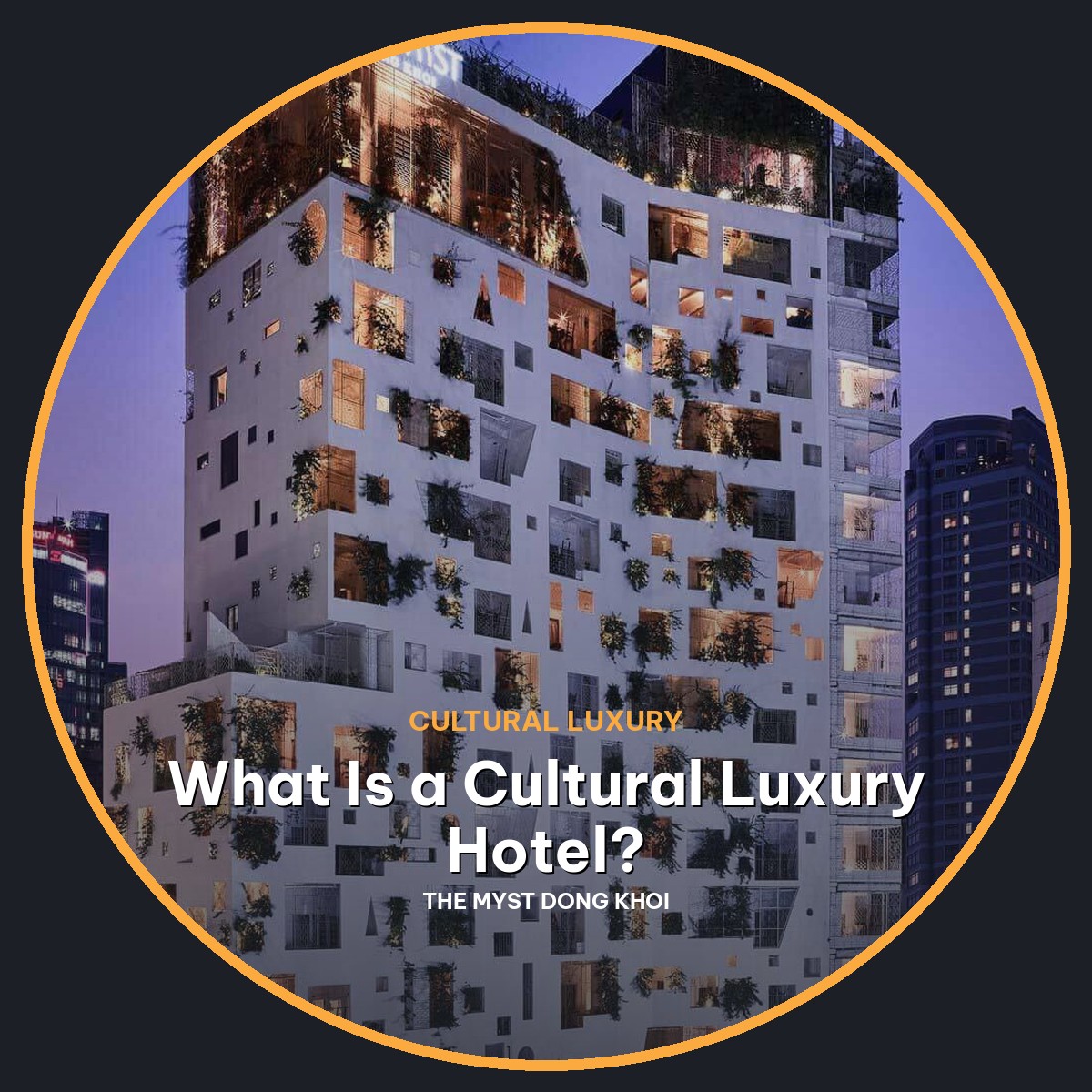
Turn off Đồng Khởi into Hồ Huấn Nghiệp street and within a minute you reach a tall building with greenery on e […]

Turn off Đồng Khởi into Hồ Huấn Nghiệp street and within a minute you reach a tall building with greenery on every balcony. Look closer and it gets stranger. The entrance to this five-star hotel sits under a plain tiled roof like an old house’s, and the lobby holds timber piles, steel roof trusses and an iron anchor, all traced to the Ba Son shipyard. Put simply, The Myst Dong Khoi is a cultural design hotel in the most literal sense. Architect Nguyễn Hòa Hiệp built its 108 rooms from things Saigon people know by heart: winding alleys, wrought-iron flowers, the furniture of southern Vietnamese homes, and timber and steel salvaged from Ba Son. It opened in 2017. Below, each detail in turn: where it came from, and where to find it.
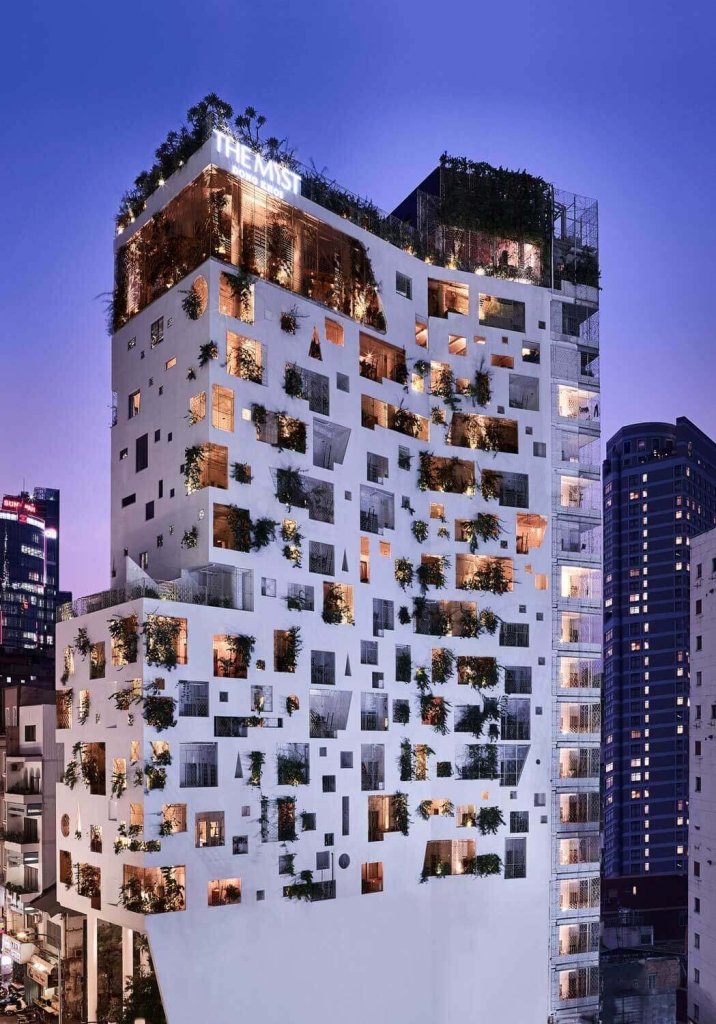
At a glance. Opened in 2017; architect Nguyễn Hòa Hiệp of A21 Studio. The Bason lobby uses timber piles, steel trusses and Marseille tiles from the Ba Son shipyard, demolished in 2015. The recurring motif is the wrought-iron flower, clearest at The Nest on the 12th floor. Rooms carry southern Vietnamese furniture and Đông Gia ceramics. World Luxury Hotel Awards 2025: Global Winner, Luxury Cultural Hotel.
In this guide
An alley, and a thank-you to the city
The owners were not born in Saigon, but they grew up and built their careers here, and they wanted the hotel to say thank you. A thank-you like that has to get the city right. The building was designed by Nguyễn Hòa Hiệp of A21 Studio, and when it opened in 2017 the Vietnamese magazine Người Đô Thị wrote that he had brought Saigon’s alleys into the hotel’s architecture.
The hẻm, Saigon’s back alley, is where the idea starts: it twists and forks, every house keeps a potted plant by the door, each front has its own colour, and old shops wear distinctive iron frames. The design team gathered those images into a modern shell of concrete ceilings, exposed water pipes and vaulted roofs recalling Champa architecture. How the alley became corridors, balconies and planting is covered in a hotel built like an old Saigon neighbourhood.
The wrought-iron flower you keep meeting
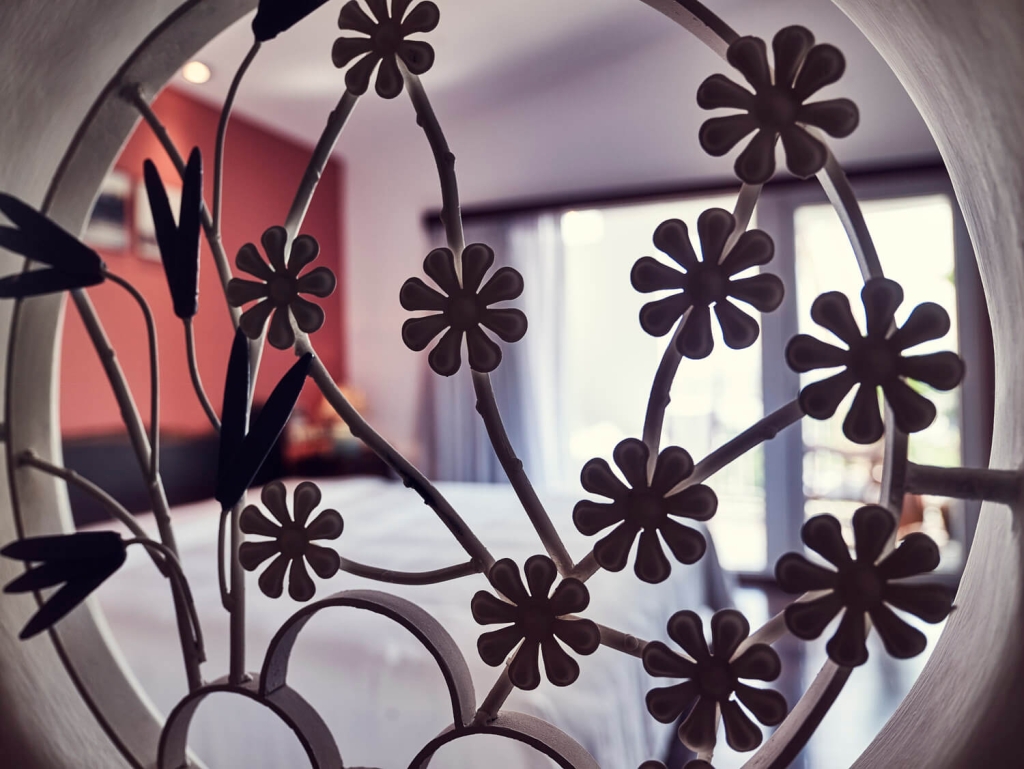
Walk any older street in Saigon and look up. Window grilles, balcony rails and gates are bent into petals and leaves, and Saigon people know them at a glance. The Myst Dong Khoi took that iron flower and made it the motif that runs through the hotel.
The easiest place to see it is The Nest, the restaurant on the 12th floor. Its windows are shaped like wrought-iron flowers, surrounded by climbing plants and a broad tiled roof, so a meal there feels like eating in the courtyard of a house with a garden.
Stained glass and a Marseille-tiled roof
Stained glass belongs to the Saigon of churches and French-era villas, and the hotel lists stained-glass details right beside its iron flowers and local artefacts. Coloured glass needs sunlight to look its best, so give each pane a moment when you pass.
The roof is hard to miss, because it covers the entrance. Guests are often surprised by how plain it is for a five-star hotel, yet those tiles have a proper history: they are Marseille tiles, bought from the Ba Son shipyard. How they reached Saigon’s rooftops belongs to the story of Marseille roof tiles in Saigon.
The Bason lobby: what the hotel kept from a shipyard
Ba Son was a shipyard on the Saigon River, founded around 1788 under Lord Nguyễn Phúc Ánh and turned into a naval arsenal by the French. It closed and was demolished in 2015. Its full story is in the Ba Son shipyard from 1788 to 2015, and the Ba Son Shipyard entry on Wikipedia has the key dates.
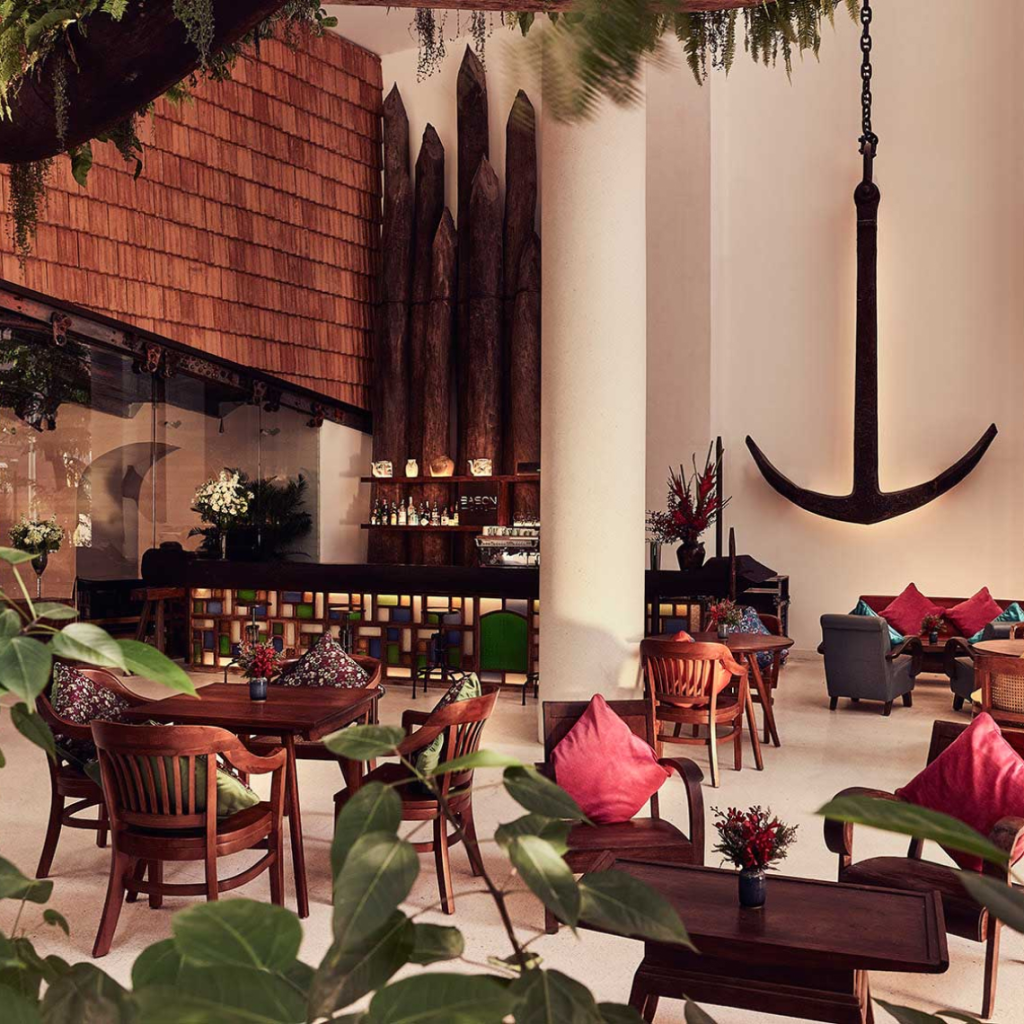
When Ba Son came down, The Myst Dong Khoi was still being built. According to the hotel’s records, the owners scrapped their existing lobby design, bought structural pieces from the yard and rebuilt the lobby as an exhibition space called Bason, opening onto Bason Café. The article “Dư vị Ba Son” in Tạp chí Kiến Trúc (in Vietnamese) names three materials: local timber once used to reinforce the yard’s foundations, steel roof trusses specially made in Toulon, and Marseille tiles. They form part of the structure and double as exhibits.
The timber piles have their own story. The hotel’s records say that before reinforced concrete piles existed, the French drove local tree trunks into Ba Son’s swampy ground to steady the foundations, and the wood kept its shape through all those years underground. While the piles were being gathered, workers dug up an iron anchor, which now rests in the lobby. Order a coffee at Bason Café and you are sitting among all of it.
Inside the rooms: a southern Vietnamese home
If the corridor is the alley, each room is a house along it. No two rooms are furnished alike. Depending on the room, you might find a ván ngựa platform, a wooden chest, an old-style mirror, folk paintings or a terrazzo bathtub.
The ván ngựa deserves a longer look. It is three wooden planks laid across two wooden trestles, the “horses” of its name, yet before sofas and daybeds reached the countryside, a family that owned one was doing well. Meals were eaten on it. Grandparents napped on it in the midday heat with a palm-leaf fan while children played hide-and-seek underneath, and on death anniversaries it became a long table laid with bánh hỏi, roast pork and chicken curry.
Now look at the bathroom door, where a wooden frame holds bamboo rods strung with wooden beads. It is an old abacus, the kind Chinese merchants used in Cholon, where a few herbal medicine shops still keep one; on the door it is both decoration and a vent. The tea set has its reason too. Saigon people offer tea without fuss, and jugs of free iced tea still sit under shade trees around the city.
The ceramics come from Đông Gia, a workshop in Gò Công Tây, Tiền Giang province, built up by the French potter François Jarlov and his wife Phan Thị Thùy Mai. For the hotel the workshop chose four glazes, celadon green, sea blue, pale yellow and cream white, one for each season. The six room types run from 40 to 70 m², each with a private balcony; compare them in which rooms have private balconies and bathtubs.
Details for the nose and the palate
Some of the design is invisible. The air carries the scent of ngọc lan, or ylang-ylang, from the Cananga odorata tree. The welcome drink is shiso water. On the 15th floor, the mosaic tiles around the 24-metre pool are Bát Tràng ceramics, according to the hotel’s records, a nod to a city that welcomes people from everywhere. For more, read a stay that engages all five senses.
Where each detail comes from
| Detail | Where to find it | Where it comes from |
|---|---|---|
| Winding corridors, plants by doors | Guest-room floors | The Saigon hẻm and its potted plants |
| Planted balconies | The facade, every floor | Setbacks left open for greenery |
| Wrought-iron flower | Windows at The Nest, 12th floor | Iron grilles and rails on old shophouses |
| Stained glass | Decorative details | Churches and French-era villas |
| Marseille-tiled roof | Entrance and Bason lobby | Bought from the Ba Son shipyard |
| Timber piles, steel trusses | Bason lobby and Bason Café | Ba Son; trusses made in Toulon |
| Iron anchor | Bason lobby | Dug up while Ba Son’s piles were gathered |
| 9-metre wooden boat | Buffet counter, The Nest | Flower boats at Bình Đông market before Tết |
| Ván ngựa, chest, old mirror | In the rooms, varying by room | Southern Vietnamese family homes |
| Antique abacus | Bathroom doors | Chinese merchants’ shops in Cholon |
| Đông Gia ceramics | In the rooms | Four glazes for four seasons |
Two nights: what to look for, and when
- On arrival, from 3:00 pm. Do not head straight upstairs. Spend a few minutes under the Bason lobby ceiling finding the piles, trusses and anchor, and ask staff about the rest.
- The first evening. Make a pot of tea, find the abacus on the bathroom door and guess which season your ceramics stand for. If the room has a ván ngựa, drink the tea there.
- Next morning, at The Nest. Breakfast on the 12th floor, walk once around the 9-metre wooden boat, then take a table by an iron-flower window.
- In the afternoon. Nguyễn Huệ walking street is about 4 minutes away on foot; look up at older balconies as you go. The old Ba Son site is a 15 to 20 minute walk.
- Before check-out at 12:00 noon. Step out onto Hồ Huấn Nghiệp street and look back at the building. Every detail on it has a story now.
Why the real thing matters
Reproduction antiques can be bought at any time. Foundation piles from Ba Son could not: someone had to be there when the yard came down, buy them, move them and redraw the lobby around them. The hotel’s records say the owners wanted to keep a piece of the city’s history for the next generation. That is roughly where the line falls between a cultural luxury hotel and a merely themed one.
In 2025 the World Luxury Hotel Awards named The Myst Dong Khoi Global Winner for Luxury Cultural Hotel and Country Winner Vietnam for Luxury Art Boutique Hotel, two titles explained in the hotel’s awards and what each one recognises.
Frequently asked questions
Where does the design of The Myst Dong Khoi come from?
The design draws on old Saigon: winding back alleys, shophouses with wrought-iron grilles, the furniture of southern Vietnamese homes and the Ba Son shipyard, demolished in 2015. Architect Nguyễn Hòa Hiệp set these references inside a modern building with concrete ceilings, exposed water pipes and vaulted roofs recalling Champa architecture.
Who was the architect of The Myst Dong Khoi?
The hotel was designed by architect Nguyễn Hòa Hiệp of A21 Studio and his collaborators, and opened in 2017. According to Người Đô Thị magazine and the journal Tạp chí Kiến Trúc, he brought Saigon’s alleys into the building, shaping the corridors like winding alleys and turning the lobby into a display of materials salvaged from Ba Son.
What is the wrought-iron flower motif at The Myst Dong Khoi?
The wrought-iron flower recalls the grilles, rails and gates bent into petals and leaves on Saigon’s older houses. It is clearest at The Nest, the 12th-floor restaurant, where the windows are shaped like iron flowers and framed by climbing plants and a tiled roof. The motif is a generic flower worked in iron, not a rose.
What did the hotel salvage from the Ba Son shipyard?
According to Tạp chí Kiến Trúc, the hotel bought local timber once used to reinforce the shipyard’s foundations, steel roof trusses and Marseille tiles as Ba Son was demolished. They are built into the Bason lobby, part structure and part exhibit. The lobby also holds an iron anchor that workers dug up while gathering the timber piles.
How are the rooms at The Myst Dong Khoi furnished?
Each room is furnished like a small old Saigon home, and no two are identical. Depending on the room, you may find a ván ngựa platform, a wooden chest, an old-style mirror, folk paintings, Đông Gia ceramics and an antique abacus on the bathroom door. The six room types run from 40 to 70 m², all with a private balcony.
Can non-residents see the hotel’s design?
Yes. Stop at Bason Café on the ground floor, which opens onto the Bason lobby with its timber piles and anchor, or book a table at The Nest on the 12th floor to see the 9-metre wooden boat and the iron-flower windows. The furniture inside the rooms, such as the abacus, you will only see by staying.
Stay long enough to find the details
Two nights give you time to explore the Bason lobby, and breakfast beside the wooden boat at The Nest. The Myst Dong Khoi has 108 rooms at 6-8 Hồ Huấn Nghiệp, Sài Gòn Ward.
Curated by Silverland Hospitality.
Others
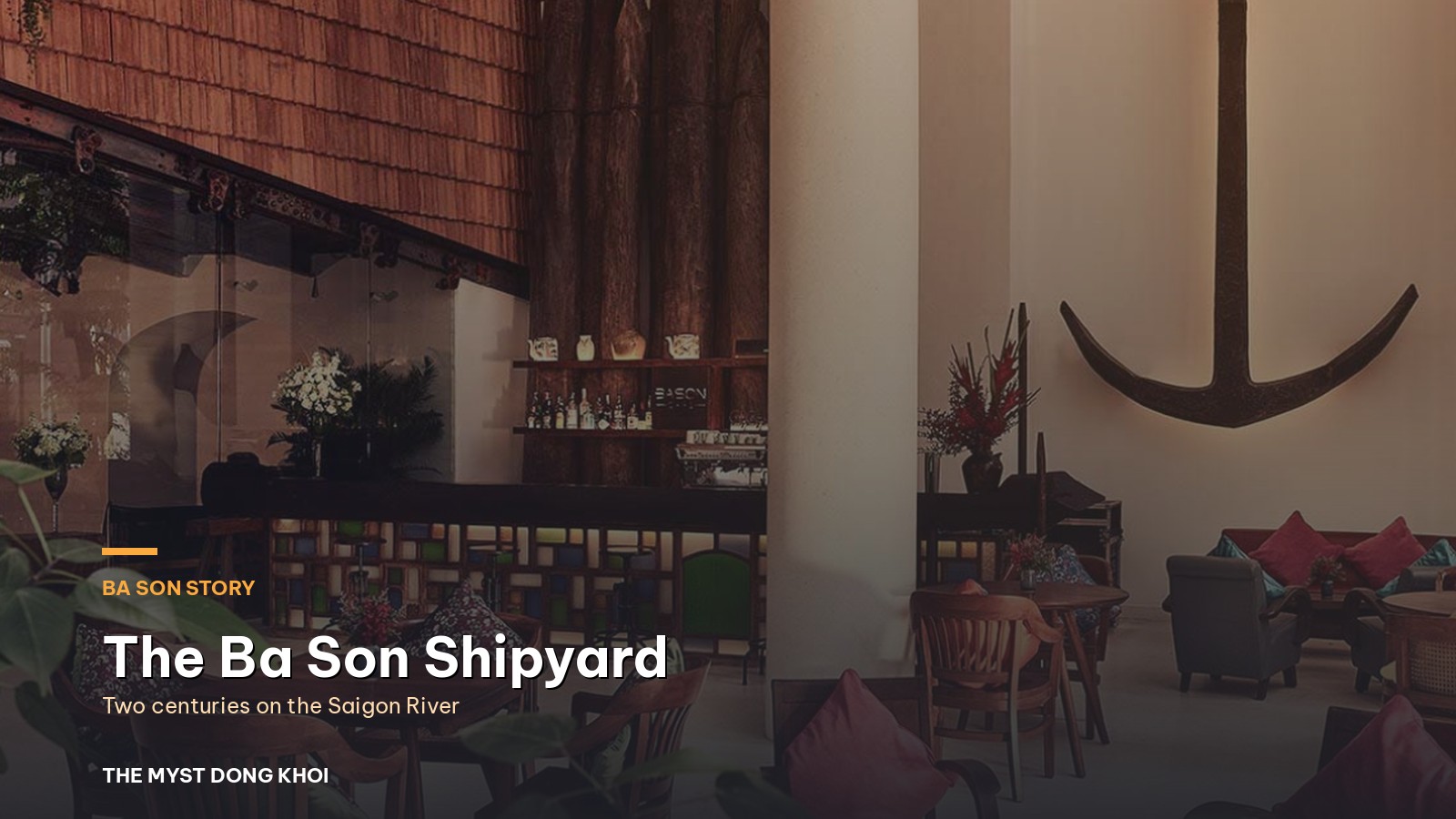
The Ba Son Shipyard: Two Centuries on the Saigon River
Ride Saigon’s ...
The Myst Dong Khoi awards: what each recognition tells you before you book
Stand on Hồ Huấn Ngh...
What Is a Cultural Luxury Hotel? How to Spot One Before You Book
It is eleven at nigh...

Wedding Color Palette 2026 and 2027: Six Schemes to Love
Color is the first d...

Wedding Trends 2026-2027: Where Celebrations Are Heading
Weddings are quietly...

7 Year-End Party Mistakes Companies Make (and How to Avoid Them)
Every December, the ...