Blog, Blog
Color is the first decision that touches everything else. Before the flowers are chosen or the invitations are printed, a couple settles on a mood, and that mood is almost always a color. It shows up on the save the date, in the bridesmaids' dresses, on the napkins folded at each place, in the light that pools on the tables at dusk.
Get the palette right and the whole day feels of a piece. This guide walks through six wedding color palettes for the 2026 and 2027 season, what each one feels like, the season and setting it flatters, and how to carry it from paper to plate to what everyone wears.
At a glance. A wedding color palette is usually two or three lead shades plus a metallic or neutral to hold them together. For 2026 and 2027 the mood is warm and grounded: soft neutrals, sage and terracotta, dusty blue, burgundy and gold, blush and copper, deep emerald. Choose yours around your venue, your season, the quality of the light, and the two of you. The rest, from florals to table settings, follows from there.
Table of Contents
How a wedding color palette holds the day together
A palette is not decoration for its own sake. It is the thread that runs through a day made of dozens of small pieces, most of them ordered from different people at different times. The stationer, the florist, the tailor, the cake maker and the venue team rarely sit in the same room, yet their work has to look like it belongs together. A clear palette is what makes that happen. When everyone is working from the same two or three shades, a room that was assembled in parts reads as one considered whole.
The strongest palettes are simple. One or two lead colors carry the mood, a softer shade supports them, and a metallic or a neutral, gold, cream, ivory, ties everything off. Trends move slowly here, and the season ahead leans warm and natural rather than bright and graphic. Below are six schemes worth living with, each with the feeling it creates and the practical ways to wear it through the day.
1. Soft neutrals and cream
This is the quietest palette on the list and, for many couples, the most enduring. Think oat, sand, greige, oyster and warm white, layered so the difference between them is felt more than seen. Nothing shouts. The effect is calm, timeless and quietly luxurious, the kind of room that photographs as beautifully in ten years as it does on the day.
It suits a light-filled celebration best, a morning ceremony or an early afternoon reception where daylight can do the work, and it flatters almost any setting, from a pared-back modern space to a heritage room with character of its own. On paper, choose thick cream stock with soft taupe ink and perhaps a single pressed detail.
Florals stay textural rather than colorful: cream roses, ranunculus, dried grasses, a little foliage for depth. Dress the tables in linen with unpolished ceramics and clear glass. For attire, undyed and champagne tones keep the party in the same gentle key. If you worry it reads too plain, let texture be your color, raw silk, rattan, candle wax, wood.
2. Sage green and terracotta
Sage and terracotta are the palette of a long lunch that runs into evening. Muted green meets warm clay, an earthy pairing that feels relaxed and grounded without tipping into rustic. It is one of the most versatile schemes of the season because it borrows from nature, and nature rarely clashes.
This one loves an outdoor or half-outdoor setting and the warmer months, a garden ceremony, a terrace dinner, a rooftop as the heat softens. Terracotta gives it enough warmth for the golden hour; sage keeps it fresh. For stationery, pair a sage envelope with terracotta ink or a clay-toned seal. Florals are where it sings: olive and eucalyptus foliage, dusty pink and rust blooms, the odd dried element. On the table, mix terracotta candles and amber glass with green-tinged linen. Bridesmaids in sage, groomsmen with a terracotta pocket square or tie, and the two colors carry effortlessly across the party.
3. Dusty blue and champagne
Dusty blue is a soft, greyed-down blue that reads as calm rather than cool, and champagne warms it just enough to keep it from feeling formal or wintry. Together they are elegant and a little romantic, a palette for a couple who want something classic without the expected navy-and-white.
It works beautifully across seasons and leans towards an indoor celebration, a ballroom, an evening reception, anywhere candlelight and a little sparkle belong. Champagne is a gift here because it doubles as your metallic, so glassware, chargers and stationery accents all pull in the same direction. Print invitations in soft blue on cream, or reverse it. Choose florals in white, pale blue and cream with silver-green foliage, delphinium, hydrangea, dusty miller. Set the table with champagne linen, gold or antique-silver flatware and blue glass water goblets. Dress the party in dusty blue for a scheme that flatters a wide range of complexions and photographs cleanly under warm light.
4. Burgundy and gold for a warm evening
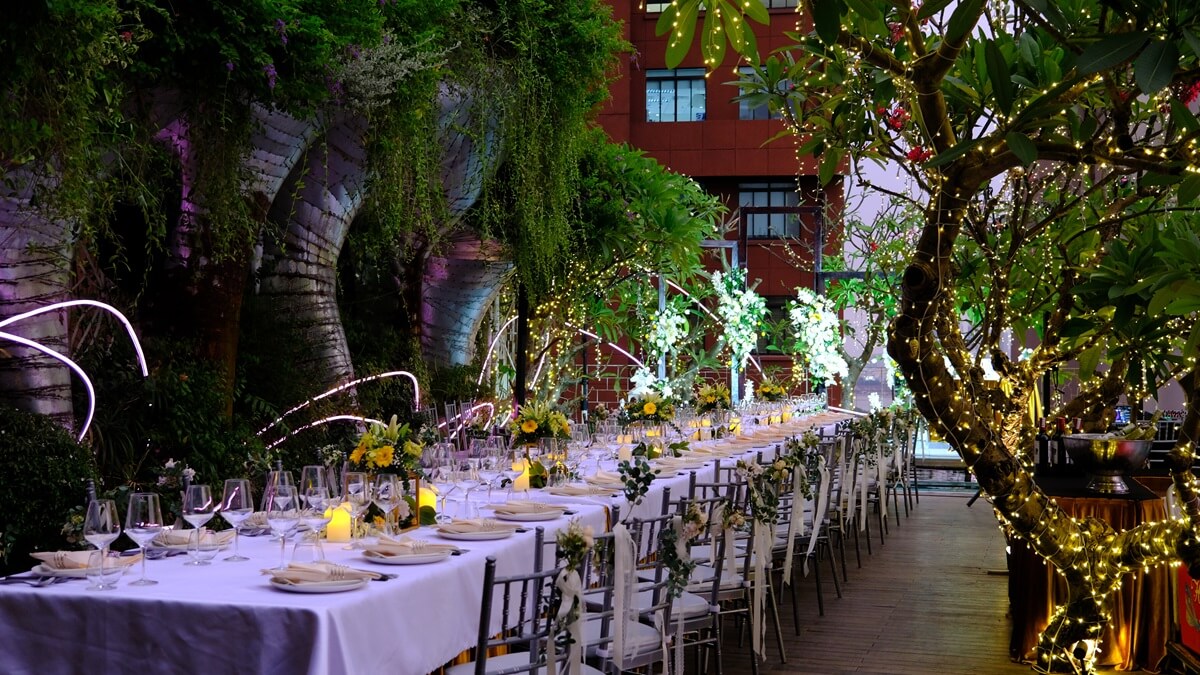
When the celebration belongs to the evening, few palettes carry candlelight like burgundy and gold. Deep wine red with warm metallic gold is rich, grown-up and unmistakably festive, a scheme built for a room after dark. It has real drama, so it rewards restraint: let burgundy lead and gold accent, not the other way around.
This is a cooler-months and evening palette, well suited to a late-year wedding or a reception that flows into the night, and it belongs indoors or on a covered rooftop where lighting can be controlled. It also sits naturally alongside a year-end celebration mood, the same warmth you would want at a festive gathering. Print on ivory with burgundy and gold foil. Florals go deep and lush: burgundy dahlias and roses, dark berries, gold-brushed foliage. Dress the tables in burgundy runners over ivory, gold-rimmed glassware and plenty of tapers. Groomsmen in charcoal or deep green, bridesmaids in burgundy, and the whole room glows once the candles are lit.
5. Blush and copper
Blush and copper is the warm cousin of the old blush-and-rose-gold pairing, a touch earthier and a touch more modern. Soft pink meets a burnished metallic that has more depth than gold and more warmth than silver. The result is romantic without being sweet, which is exactly why it has aged so well.
It suits an autumn celebration or a warm evening indoors, and it flatters low, warm lighting, copper practically comes alive by candle. Stationery works in blush with copper foil or a copper wax seal. Keep florals soft and abundant: blush and peach roses, dahlias, a little dusty foliage, with copper carried through in the vessels rather than the blooms. On the table, copper candlesticks, amber or smoked glass, and blush linen or napkins. Dress bridesmaids in blush and let copper appear in the details, a belt, a cuff, the stem of every glass. It is a gentle palette that still feels current heading into 2027.
6. Deep emerald and ivory
Emerald and ivory is the boldest scheme here and the most classic at the same time. A jewel-deep green against soft ivory is striking, confident and a little regal, a palette with heritage in its bones. Emerald carries weight, so ivory is essential to let it breathe.
It works year round and suits a formal, indoor celebration, a ballroom, an evening reception, a room with architecture worth answering. There is something naturally at home about deep green in a space with heritage detail, dark wood, ironwork, tall windows. Print on ivory with emerald and a whisper of gold. Florals lean lush and green with white blooms: white roses, greenery, a few gold touches. Dress the tables in emerald over ivory with gold flatware and crystal. Groomsmen in emerald velvet or dark suiting, bridesmaids in emerald, and the palette does all the work, no other color required.
How to choose your palette
Six schemes, and every one of them can be beautiful. The question is which is right for your day, and four things decide it.
- Your venue. Look at the room before you fall for a palette. A space with strong character, heritage detail, colored walls, a view, already has a color story, and the best palettes answer it rather than fight it. Bring a swatch and hold it up in the actual light.
- Your season. Warm months carry sage, terracotta, dusty blue and blush; cooler months and the year-end stretch suit burgundy, gold and emerald. The season also sets what your florist can source at their best.
- Your light. A daytime celebration in natural light flatters soft neutrals and pastels; an evening lit by candle and warm bulbs brings the deeper, metallic palettes to life. Decide when your day peaks, then choose for that hour.
- The two of you. A palette should feel like you, not like a trend you will tire of. If neither of you would wear a color, be cautious about wrapping a whole day in it. The schemes that endure are the ones a couple actually loves.
For where these palettes sit within the wider picture of the season, our guide to wedding trends for 2026 and 2027 is a good companion read. And if your celebration falls at the close of the year, the same warm, candlelit mood runs through our guide to year-end events.
A word on setting
A palette needs a room to live in, and the room shapes the palette as much as the other way round. At The Myst Dong Khoi, a boutique heritage hotel in the heart of District 1, the settings do some of the work for you: a rooftop that catches the golden hour, the twelfth-floor calm of The Nest, and a ballroom that holds candlelight well.
Deep emerald finds its match in heritage detail; burgundy and gold warm to an evening on the rooftop; soft neutrals glow in daylight. Whichever scheme you land on, the events team can help you carry it through the day, and shape a boutique wedding around it.
Frequently asked questions
What is the most popular wedding color palette for 2026?
How many colors should a wedding palette have?
How do I choose a wedding color palette?
What wedding colors work best for an evening reception?
Are dusty blue and sage green still in for 2026 and 2027?
Can The Myst Dong Khoi help me plan a wedding around a palette?
Talk to us about your wedding
The Myst Dong Khoi is a boutique heritage hotel in the heart of District 1, with a rooftop, the twelfth-floor Nest and a ballroom for celebrations. Whatever palette you have fallen for, our events team is glad to help you shape a wedding around it, from the setting to the smallest detail.
→ Talk to our events team about a boutique wedding
→ [email protected] · +84 28 3520 3040
→ Read our guide to wedding trends for 2026 and 2027
Crafted by Silverland Hotels.
Blog, Blog
Weddings are quietly changing shape. The five hundred guest banquet is no longer the default, the flower budget is being spent with more thought, and couples are asking a simple question of every choice on the plan: does this actually feel like us? This is an editorial look at the wedding trends taking hold across 2026 and 2027, set out as concrete, named ideas rather than vague predictions. Read it as inspiration for your own celebration, whatever its size, and take from it only the parts that fit your story.
At a glance. The clearest wedding trends for 2026 and 2027 point in one direction: smaller, more personal and more considered. Couples are choosing intimate boutique celebrations over vast banquets, telling their own story through the details, sourcing locally and wasting less, treating dinner as an experience, and favouring city and rooftop venues that let a single day unfold across several spaces. This is an inspiration piece, not a rulebook, so borrow what suits you and leave the rest.
Table of Contents
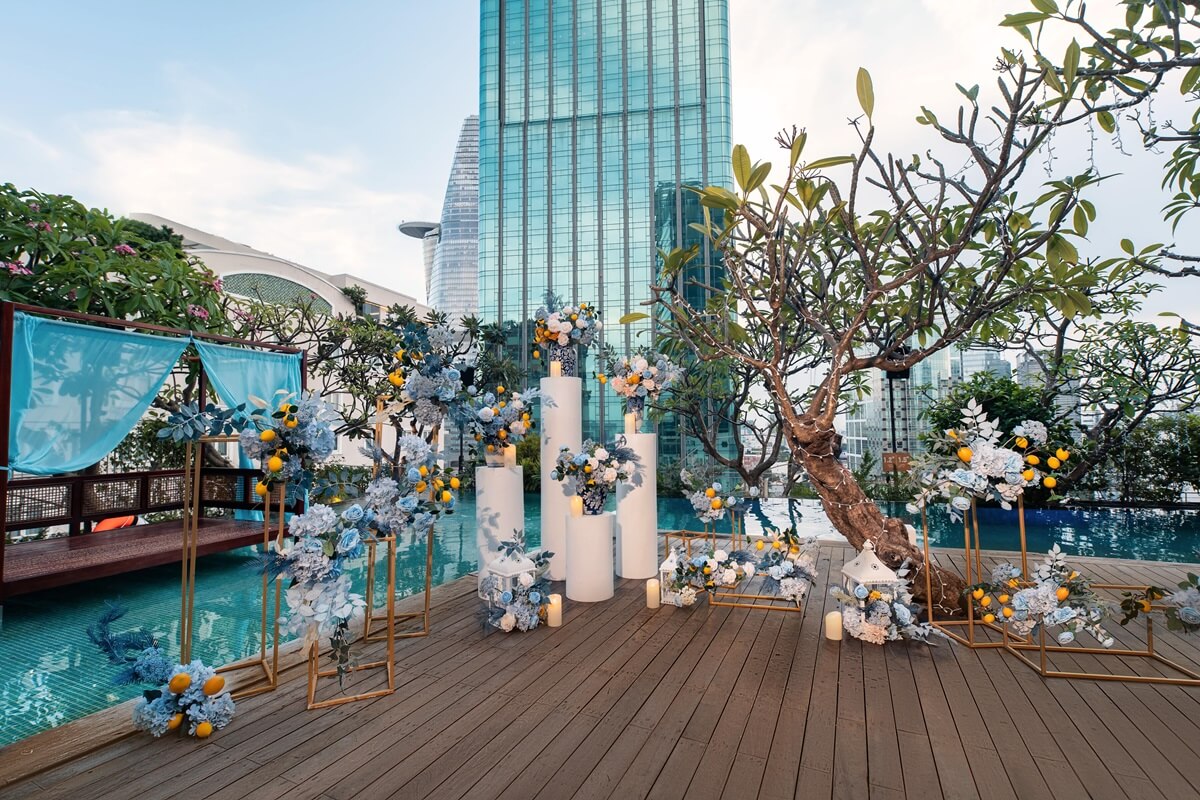
Intimate and boutique celebrations over huge banquets
The biggest shift of all is one of scale. For years the measure of a wedding was the guest count, and a full banquet hall was the goal. That logic has softened. More couples now want the fifty or eighty people who genuinely matter to them, gathered in one warm room, rather than a crowd of near strangers filling a space too large to feel personal. A smaller list is not a smaller celebration. It simply moves the money and the attention away from sheer numbers and toward the things guests actually remember: the food, the setting, the time spent together.
A boutique venue suits this instinct because it was never built for the crowd in the first place. A heritage building in the centre of the city, a rooftop, an intimate ballroom that seats a wedding party without swallowing it. If you are drawn to this idea, the practical move is to fix your real guest list early, then choose a room that fits it snugly rather than one you have to fill. The Myst Dong Khoi is a boutique heritage venue in District 1, and this is exactly the kind of celebration its spaces are shaped around.
Personalisation and storytelling
The second trend runs through everything else. Couples want their wedding to read as theirs and no one else's, which means the day is increasingly built around a story rather than a template. That story shows up in the small decisions: a signature cocktail named after the street where you first met, a menu that nods to the dish from an early date, a playlist that is genuinely yours instead of the standard reception rotation, place cards that say something true about each guest.
The useful way to work with this is to start from your own history before you look at a single inspiration board. Write down the moments, places and flavours that belong to the two of you, then let the planning grow from that list outward. Colour is one of the easiest places to make a wedding feel personal and coherent, and it is worth thinking through early; our guide to wedding colour palettes for 2026 and 2027 is a good place to begin.
Sustainability, done quietly
Sustainability has moved from a talking point to a design principle, and the version that is taking hold for 2026 and 2027 is refreshingly practical rather than preachy. The clearest example is flowers. Instead of blooms flown in out of season from the other side of the world, couples are working with what grows locally and close to the date, which reads as more honest, costs less to move and often looks more alive on the day. Fewer imported stems, more seasonal foliage, more reusable installations that do not end the night in a skip.
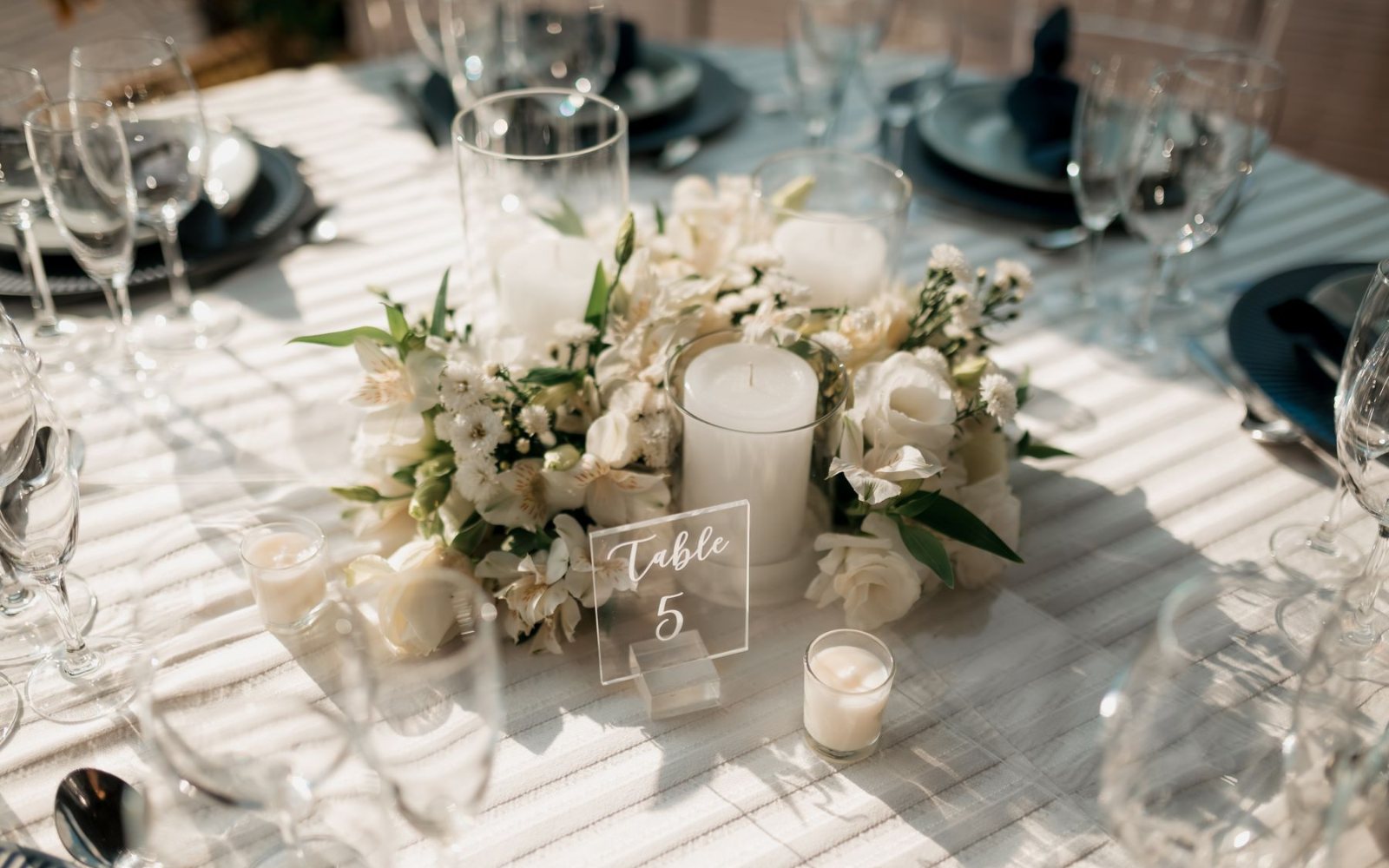
The same thinking extends across the day. Local sourcing for the menu, portions planned to cut waste, decor that is hired or repurposed rather than bought and binned, favours guests will actually use. None of this asks a couple to compromise on beauty. It asks them to make choices with a little more intent. A simple starting point is to ask any venue or planner one question early: where does this come from, and where does it go afterwards. The answers tell you a great deal.
Experiential dining and interactive stations
Dinner is no longer just something served to seated guests. Increasingly it is part of the entertainment. Interactive stations, chefs finishing a dish in front of you, a raw bar or a dessert counter that people gather around, a cocktail being built to order rather than poured from a jug. The point is to give guests something to do and somewhere to move, turning the meal into a reason to mingle instead of a stretch of sitting still between speeches.
If this appeals, think about the flow of the evening as much as the flavours. One or two well placed live stations create a natural gathering point and take the pressure off a rigid seating plan. This experiential instinct is not unique to weddings; it runs through the way good celebrations are catered now, from tasting menus to the kind of hosted evenings we cover in our guide to year end parties and events. The lesson carries straight across to a wedding reception.
City and rooftop venues: the wedding trends shaping 2026
The destination wedding is being quietly rivalled by the city wedding. A central location is easy for guests to reach, close to hotels and the airport, and it lets a wedding lean on the character of the place rather than a blank marquee in a field. Rooftops in particular have become a signature of the 2026 and 2027 look. There is a reason: an open sky, a skyline that lights up as the evening turns, and a ceremony or cocktail hour that needs almost no decoration because the view is doing the work.
A rooftop suits the golden hour especially well, which is worth planning your timeline around if you choose one. The Myst Dong Khoi has its own rooftop, ROOTY, high above District 1, and if you would like a sense of how a space like this feels after dark, our note on the rooftop bar in Saigon gives a flavour of the outlook and the mood. For a city celebration, the venue and the view become part of the storytelling rather than a backdrop you have to dress.
A relaxed, multi-part day
One of the more liberating trends is the move away from a single fixed room for the whole event. Instead, couples are letting the day travel. A ceremony in one space, cocktails and canapes in another, dinner somewhere different again, each part with its own light and mood. The shift feels less like a rigid programme and more like a good evening out with the people you love, unfolding at an easy pace.
This is where a venue with several distinct spaces earns its place. A rooftop for the vows and the golden hour, a restaurant floor for dinner, a ballroom for the later celebration. The practical benefit is rhythm: guests are never stuck in one seat for five hours, and the natural change of scene keeps the energy up without anyone forcing it. If you are planning this way, map the transitions carefully so each move feels like an occasion rather than a queue, and give guests a drink in hand as they walk between spaces.
Documentary-style photography
Finally, the way weddings are remembered is changing. The stiff, posed album is giving way to documentary-style photography that catches the day as it actually happened. Real laughter, the quiet moment before the ceremony, a grandmother wiping her eyes, the dance floor at midnight. Fewer lined up group shots, more of the story told honestly. The same instinct is pushing couples toward unfiltered, film-inspired and candid imagery over heavily retouched perfection.
To make the most of this, brief your photographer on the moments and the people that matter to you rather than a shot list of formal set pieces, and build a little unhurried time into the schedule so those real moments have room to happen. It ties back to the first trend on this list: a wedding built around a genuine story photographs as one, and the pictures you keep are the ones that feel true.
Frequently asked questions
What are the biggest wedding trends for 2026?
Are small weddings still a trend in 2027?
What does a sustainable wedding actually involve?
Why are rooftop weddings so popular now?
How do I make my wedding feel personal?
Is a boutique venue suitable for a wedding?
Planning a boutique wedding? Talk to our events team
The Myst Dong Khoi is a boutique heritage venue in the heart of District 1, with a rooftop, a twelfth floor restaurant and a ballroom, and an events team that shapes each wedding around the couple. If any of these ideas feel like yours, we would be glad to talk them through and tailor a celebration to your story, your guest list and your date.
→ Plan your wedding with our events team
Or reach us directly at [email protected] or +84 28 3520 3040.
→ Next, explore wedding colour palettes for 2026-2027
Crafted by Silverland Hotels.
Blog, Blog
Every December, the same story plays out in offices across Saigon. The year-end party gets talked about in October, half-planned in November, and scrambled together in the last fortnight before the date. Most of what goes wrong on the night was actually decided weeks earlier, in a booking that came too late or a headcount nobody pinned down. This guide walks through the seven year end party mistakes that come up again and again, why each one hurts, and the simple move that avoids it.
At a glance. Most year-end party problems trace back to seven avoidable mistakes: booking the venue too late, guessing the headcount, running a weak or unscripted programme, picking the wrong food format, ignoring what staff actually want, underestimating the AV and stage, and having no plan B. Almost all of them are cheaper to fix in planning than on the night. A venue with a real events team catches most of them before they reach you.
Table of Contents
Mistake 1: Booking the venue too late
This is the one that starts all the others. December is the single busiest month for event spaces in District 1, and the good rooms on the good Fridays are spoken for long before most companies pick up the phone. A team decides in mid-November to hold their party on the third Saturday of December, calls around, and finds every suitable room already booked. Now they are choosing between a date nobody likes and a venue that was never right.
Why it hurts. Late booking quietly removes all your best options. You lose the date, then you lose the room, then you start compromising on everything downstream because the calendar is driving the decision instead of you.
How to avoid it. Lock the venue and the date first, before the menu, before the theme, before anything. For a December party, that means reaching out in September or October. If you want a sense of how the whole run of tasks sequences, our 90-day year-end party planning timeline lays it out week by week.
Mistake 2: Getting the headcount wrong
Headcount is the number every other number leans on, and it is the one companies are loosest with. Two failures show up. Some teams over-promise, book for 200, and 140 turn up because the date clashed with three other parties and a long weekend. The room looks empty and the catering is wasted. Others do the reverse, quietly assume "about a hundred," never confirm plus-ones, and forty extra partners arrive to a room with no seats for them.
Why it hurts. A soft headcount inflates cost when it runs high and creates a visible, awkward shortfall when it runs low. Either way, guests notice.
How to avoid it. Run a real RSVP with a hard deadline, decide the plus-one policy in writing up front, and give the venue a confirmed number with a small buffer rather than a hopeful one. A good events team will tell you how a given count actually sits in a given room, which is exactly the sort of judgement covered in our guide to choosing a year-end party venue in Saigon.
Mistake 3: No clear programme, or a weak MC
A year-end party is not a dinner that happens to have a stage. It is a show with a shape, and when that shape is missing the night sags. Picture the version everyone has sat through: guests eat within forty minutes, the awards were never rehearsed so they run long and flat, the playlist is whatever someone queued on their phone, and by half past eight the room has thinned out because there was nothing holding it together.
Why it hurts. Without a run sheet the evening has no momentum. A weak or under-briefed MC makes it worse, because the person meant to carry the energy is instead reading names off a crumpled list.
How to avoid it. Build a minute-by-minute run sheet: welcome, first course, the speech, awards, the performance or lucky draw, then open floor. Brief the MC properly and give them the full sheet. Decide in advance where the energy peaks and protect that moment.
Mistake 4: The wrong food format for the group
Buffet or set menu is not a coin toss, it is a decision about how you want the room to behave. A formal set menu keeps everyone seated for speeches and awards, which is right for a company that wants a dignified, structured evening. A buffet gets people up, mingling and moving between tables, which suits a younger crowd that came to socialise. The mistake is choosing the format for the wrong reason, usually cost alone, and then fighting the room all night.
Why it hurts. A set menu forced on a crowd that wanted to mingle feels stiff and slow. A buffet dropped into an evening built around a long awards ceremony leaves half the room queuing while the MC is mid-speech.
How to avoid it. Match the format to the group and the programme. Talk it through with the kitchen, ask about dietary needs early, and let the food service and the run sheet be designed together rather than in separate rooms. The Myst runs both buffet and set menu across its event spaces precisely so the format follows the party, not the other way round.
Mistake 5: Ignoring what staff actually want
Year-end parties are planned by a committee of three and attended by two hundred, and the gap between what the committee assumes and what the room wants can be wide. The classic misses: an 18:00 start that strands parents who need to collect children, no plus-ones for a team full of people who would rather bring a partner, a menu with nothing for the vegetarians and no-pork colleagues, and a playlist pitched for the organisers' taste rather than the crowd's.
Why it hurts. When people feel the night was not built with them in mind, they leave early or do not come at all, and the party that was meant to say thank you lands flat.
How to avoid it. Ask before you plan. A two-minute poll on start time, plus-ones, dietary needs and music tells you more than a committee guess ever will. Then hold the venue to those answers.
Mistake 6: Underestimating AV, stage and sound
The part guests remember most vividly when it fails is the technical one. A speech no one at the back can hear. A lucky-draw slide that will not load because nobody tested the laptop against the projector. A band that turns up to find the stage is half the size their kit needs. These are not bad-luck stories, they are unrehearsed ones.
Why it hurts. AV failure happens in front of everyone, at the exact moment the room is paying attention. A dead microphone during the CEO's toast is the kind of thing people still mention next year.
How to avoid it. Treat the stage, screen and sound as first-class items in planning, not an afterthought. Confirm what the venue provides, what you bring, and who runs it on the night. Do a real technical run-through before doors open, with the actual laptop, the actual slides and a live microphone check.
Mistake 7: No plan B, and loose budgeting
The last mistake is assuming everything goes to plan, because it rarely does. Rain arrives and the outdoor cocktail hour has nowhere to go. Thirty confirmed guests do not show and the seating chart collapses. The programme overruns and the venue is chasing you out at eleven. Underneath all of it sits a budget with no line for the extras that always appear: overtime, a bigger cake, the surprise gift, the taxis home.
Why it hurts. Without contingencies, one ordinary hiccup becomes the story of the night. Loose budgeting turns small surprises into awkward, on-the-spot decisions in front of guests.
How to avoid it. Ask every plan a simple question: what if this does not happen as expected? Have a wet-weather fallback, a seating plan that flexes for no-shows, a clear finish time with the venue, and a budget with a genuine buffer line. A venue that runs events week in and week out will have seen every one of these and will walk you through the contingencies before you have to think of them.
The reassuring part
Read as a list, seven mistakes sound daunting. In practice, almost every one is prevented by two decisions made early: choosing a venue with a real events team, and starting the conversation in good time rather than in December. The team that has run parties every year already knows how a headcount sits in a room, how a run sheet flows, which format suits which crowd, and what breaks when it rains. Their job is to catch these before they reach you. The bigger picture, from first idea to the night itself, is laid out in our complete guide to planning a year-end party.
Frequently asked questions
What is the most common year-end party mistake?
How far in advance should we book a year-end party venue?
Buffet or set menu for a company year-end party?
How do we get the headcount right?
Why does a year-end party need a run sheet and an MC?
What should be in a year-end party plan B?
Plan a year-end party that avoids all seven
The Myst Dong Khoi hosts year-end parties across the ballroom, Galaxy, ERY, The Nest and ROOTY, in the heart of District 1, with buffet or set menu and an events team that has seen every one of these pitfalls. Tell us your date, your headcount and the kind of night you want, and we will help you sidestep the rest.
→ Enquire about meetings & events at The Myst Dong Khoi
→ Email [email protected] or call +84 28 3520 3040
→ Read the complete year-end party planning guide
Crafted by Silverland Hotels.
Blog, Blog
The year end party looks effortless only when the work behind it started early. Three months out, a good venue in central Saigon still has December dates open and your budget is still a blank page you can shape. Leave it to November and you are choosing from what nobody else wanted. This is a milestone-by-milestone countdown, from ninety days before the night to the morning after, with the reason each deadline matters so nothing slips through.
At a glance. Start roughly ninety days out. Lock goals, budget and headcount first, then secure the venue and date before December fills. Confirm catering and the programme around T-60, send invitations and build the run-of-show by T-45 to T-30, take final numbers at T-14, brief everyone at T-7, then run the day and close the accounts after. The Myst Dong Khoi hosts year-end parties in District 1 across the ballroom, Galaxy, ERY, The Nest and ROOTY, buffet or set menu. Events: [email protected], +84 28 3520 3040.
Table of Contents
T-90 days: lock the goals, budget, headcount and venue
Everything downstream depends on four decisions you make now. What is the party for, who is coming, what can you spend, and where does it happen. Skip these and you spend the next two months guessing.
Start with the purpose, because it quietly settles a dozen later arguments. A night to thank a team that ground through a hard year is not the same event as a client-facing showcase or a family day with children in the room. Once you know the intent, put a headcount range on it. Not an exact number, that comes later, but a floor and a ceiling, because eighty guests and one hundred and sixty guests are different venues, different budgets, different rooms.
Then the budget. Set a total, then split it into venue and food, drinks, programme and entertainment, decor and printing, gifts and awards, and a genuine contingency of around ten percent for the things you cannot see yet. A budget with no slack is a budget that breaks in week eleven.
Now secure the venue and the date, and do it first, not last. This is the single most time-sensitive task on the whole list. In District 1 the good rooms for the second half of December book out well before the month arrives, and once your preferred Friday or Saturday is gone, it is gone. Shortlist two or three venues, visit them, and confirm one in writing.
At The Myst Dong Khoi that choice also shapes the mood: the ballroom for a full sit-down gala, Galaxy or ERY for something more social, The Nest on the twelfth floor for a smaller group with the city below, ROOTY for a relaxed rooftop feel. If you want the wider picture before you commit, our complete year end party guide walks through venue types and formats.
T-60 days: confirm catering, programme and vendors
With the room held, the party takes shape. Around two months out you turn a booking into an actual event.
Settle the catering format first, because it drives the floor plan and the timing of the whole night. A buffet keeps people moving and mixing and suits a larger, livelier crowd; a set menu paced in courses suits a seated programme with speeches and awards. A venue that does both, as The Myst does, lets you match the food to the kind of evening you are building rather than the other way round. Confirm the format, then hold a tasting if you can and flag dietary needs early, since vegetarian, halal and allergy requirements are far easier to solve now than in the final week.
This is also the window to book everyone whose calendar fills fast. An MC or host, a band or DJ, a photographer and videographer, and any performers. The best of them are reserved for December weekends months ahead, so a name you want at T-60 may already be unavailable at T-30. Lock your theme too, because it steers decor, invitation design, dress code and the small run of props and printing that follow.
T-45 to T-30 days: invitations, run-of-show, AV and awards
Six to four weeks out, the plan meets your guests and your production crew. Two jobs run in parallel here.
Send the invitations and open RSVPs. Give people a real deadline, usually around T-14, and make it easy to reply, because a headcount you can trust is what everything downstream is costed against. Chase the quiet ones; a name that never replies is a place setting you either waste or scramble to fill.
At the same time, build the run-of-show. This is the minute-by-minute spine of the night: doors and welcome drinks, seating, opening words, the first course or the buffet call, speeches, the awards, performances, any games or lucky draw, and the close. Write it as a timed document and share it with the venue and every vendor, because when the MC, the kitchen and the AV team are all reading the same sheet, the evening flows without anyone visibly steering it.
Alongside it, agree the AV and stage plan with the venue, the microphones, screen, lighting and sound, and where the stage sits relative to the tables. If you are giving out awards, finalise the list now and order any trophies or certificates, since engraving and printing both take real lead time. A printable year end party checklist is a useful way to keep these parallel threads from tangling.
T-14 days: final numbers, seating and menu
Two weeks out, the loose plan becomes fixed. RSVPs are in, so confirm the final headcount with the venue; this is the figure the kitchen cooks to and you are billed on, so get it right rather than early. Build the seating plan around who should sit with whom, where the leadership table goes, and how guests with children or accessibility needs are placed. Confirm the final menu including every dietary variation, and reconfirm the timings with your MC and entertainment so nobody assumes an old version of the schedule.
T-7 days: confirm vendors, brief the team, print materials
The last week is for tightening, not inventing. Reconfirm every vendor in writing with arrival and setup times, contact numbers and exactly what each is delivering. Brief your internal team so each person owns a slice, someone on guest welcome, someone shadowing the AV, someone on gifts and the lucky draw, so on the night you are not the only one who knows how it all fits.
Get the printed materials done and delivered: name cards, table numbers, the programme, signage, and any menus. Small pieces, but the ones people notice when they are missing. A quiet read of the most common year end party mistakes this week is worth the time, since most of them are avoidable with one more check.
Day-of: setup, sound check and coordination
Arrive early, well before guests. Walk the room against the floor plan, check tables, place cards and stage, then run a full sound and light check with the band or DJ and the MC while there is still time to fix a dead microphone. Confirm the kitchen timings one last time. Hand every vendor and team member the run-of-show and swap phone numbers, then name one coordinator, a person from your team or the venue's events lead, who holds the schedule and makes the small calls so the night keeps moving. Once doors open, your job is to step back and let it run.
After the party: thank-yous, photos, feedback and accounts
The event is not finished when the lights come up. Within a few days, send thank-yous to your team, your guests and your vendors. Gather and share the photos and video while the night is still warm in everyone's memory. Ask for honest feedback, a two-minute survey is plenty, because this year's notes are next year's head start. Then settle the final accounts against the budget you set at T-90 and file what you learned. The gap between your plan and what actually happened is the most useful planning document you will have next December.
Frequently asked questions
When should I start planning a year end party?
What is the most important milestone in a year end party timeline?
How far ahead should I confirm the final headcount?
Can a hotel help coordinate the run-of-show?
Buffet or set menu for a year end party?
What should I do after the party?
Plan your year end party at The Myst Dong Khoi
The Myst Dong Khoi hosts year-end parties in the heart of District 1, across the ballroom, Galaxy, ERY, The Nest on the twelfth floor and the ROOTY rooftop, with buffet or set menu to suit the evening you have in mind. Our events team is glad to hold a date, walk you through the room options and help shape the run-of-show.
→ Enquire about meetings & events at The Myst Dong Khoi
→ Events: [email protected] · +84 28 3520 3040
→ Read the complete year end party guide
Crafted by Silverland Hotels.
Blog, Blog
Once the venue and date are settled, one question tends to stall the whole plan: buffet or set menu? It sounds like a catering detail, but it quietly shapes everything else, how the room is laid out, how much the awards run overtime, whether people mingle or stay put, and how tightly you can hold the budget per head. This guide walks through what each format does well, where each one strains, and how to choose between them by headcount, formality, budget and the shape of your programme.
At a glance. A buffet suits larger, mixed groups who value variety and mingling and can flow around a relaxed evening. A set menu suits a seated, paced programme with speeches or awards, an accurate headcount and firmer cost control per head. Many year-end parties land in between, a set menu with a few live buffet stations. At The Myst Dong Khoi, the events team tailors either format across the ballroom, Galaxy, ERY, The Nest and ROOTY spaces in District 1.
Table of Contents
The real question behind buffet or set menu
People often argue about the food first. The food matters less than you think. What you are really choosing is how the evening moves. A buffet lets guests get up, wander, refill and drift between tables, so the room stays loose and social. A set menu keeps everyone seated while courses arrive in sequence, so the room has a rhythm you can steer from the stage. One format spreads people out. The other holds them together. Nearly every trade-off below flows from that single difference.
So before comparing dishes, pin down four things about your party: how many people are coming, how formal it needs to feel, how firm the budget is per head, and whether there is a programme to run, a year in review, a few awards, a speech from the director. Once those four are clear, the answer usually picks itself. If you are still settling the venue too, our guide to choosing a year-end party venue in Saigon covers the room side of the decision, and the broader year-end party planning guide ties the whole evening together.
What a buffet does well, and where it strains
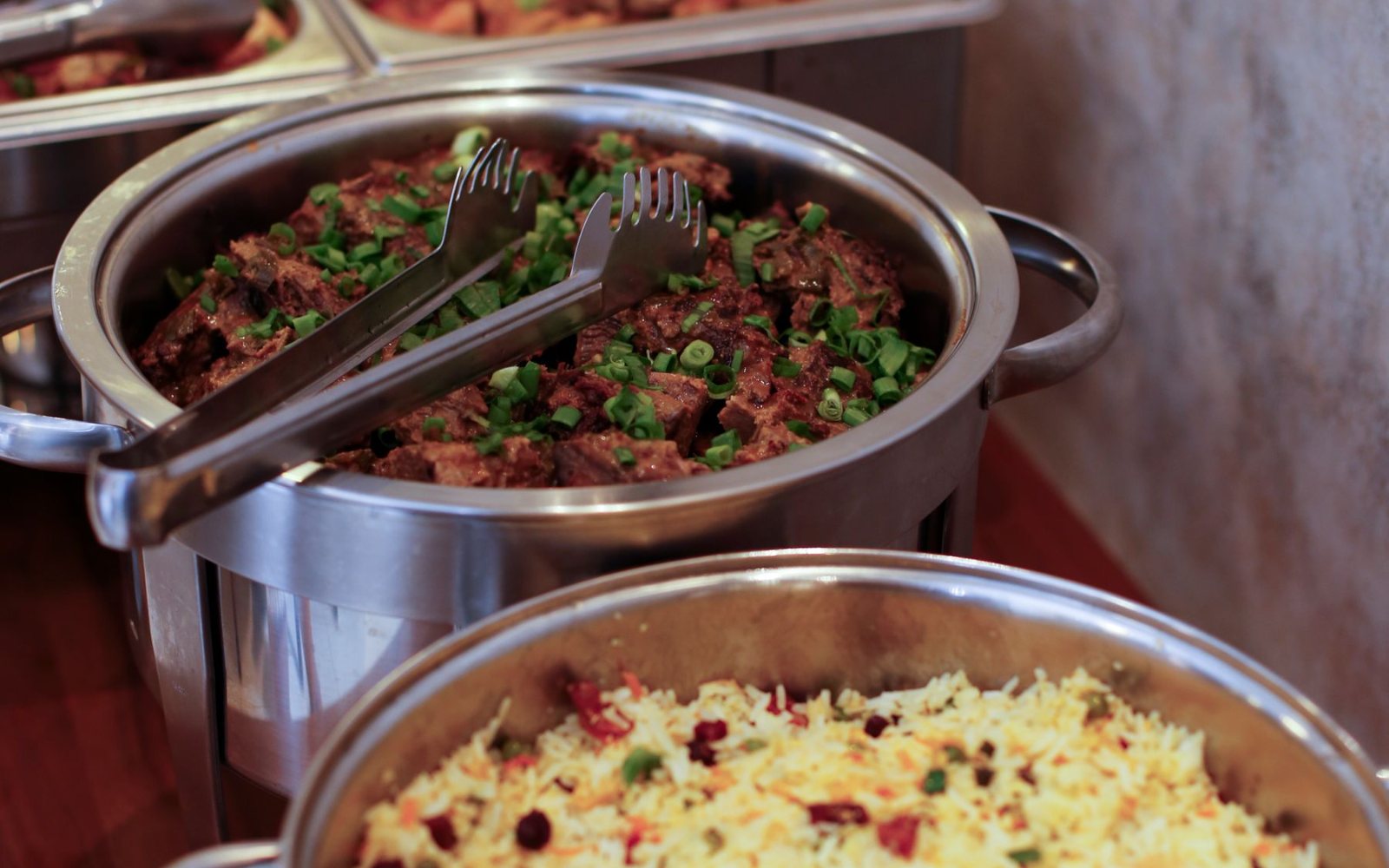
A buffet earns its keep on variety. One line can carry Vietnamese favourites, a Western corner, a noodle or pho station, a carving board and a run of desserts, so a mixed crowd all find something they want. That range matters when the guest list spans junior staff, senior partners, a few vegetarians and someone who will not touch seafood. Nobody is stuck with a plate they did not choose.
The bigger win is movement. People stand, queue a little, bump into a colleague from another floor, and end up in conversations a seating plan would never have made. For a company that wants its year-end night to feel warm and social rather than ceremonial, that easy mingling is the whole point. A buffet also forgives a soft headcount. If five extra guests turn up, the line absorbs them.
Where does it strain? Timing. A buffet is hard to run to a clock, and if you have speeches or an awards segment, herding a standing, grazing crowd back to attention takes effort. Queues form at peak, especially past a certain headcount, so popular stations need doubling up. And for all its warmth, a buffet reads as less formal, which is either exactly what you want or not quite the register for a milestone anniversary.
What a set menu does well, and where it strains
A set menu buys you control. Courses land on a schedule, so you can slot the year-in-review between the appetiser and the main, run the awards over dessert, and keep the evening moving without ever asking people to leave their seats. For any party built around a programme, that pacing is worth a great deal. The room stays seated, attention stays where the stage is, and the night has a clear arc from welcome to close.
It also reads as more polished. A plated dinner, brought to the table course by course, carries a formality that suits an awards night, a big anniversary or a party where clients and partners are in the room. Seated networking has its own value, people actually talk to the eight around their table rather than circulating for two minutes at a time. And a set menu is easier on the budget in one specific way: cost is fixed per head, so you know the catering total the moment the headcount is confirmed.
The trade-offs are real too. Choice narrows to what the set menu offers, so dietary needs must be flagged in advance and handled as alternates. A set menu also needs an accurate headcount, since every seat is a plated cover, and a wrong number costs either money or empty places. And the seated format, lovely as it is, keeps people in their chairs, which is less lively if your team really just wants to move around and let off steam after a long year.
Choose buffet if, choose set menu if
Here is the short version, sorted by the four things that actually decide it.
By headcount
Buffet tends to suit larger parties, and mixed groups where tastes vary widely, because the range keeps everyone fed and the format absorbs a loose final number. Set menu suits smaller to mid-sized groups where you have a firm headcount and want every guest seated and served.
By formality
Buffet for a relaxed, social, celebratory night where mingling matters more than ceremony. Set menu for a formal evening, an awards night, a milestone anniversary, or any party with clients and partners where a plated dinner sets the right tone.
By budget
Set menu gives the firmest control, since cost is fixed per head and the total is known once numbers are locked. Buffet can be very good value across a big crowd, though consumption is harder to predict, so it pays to agree the station plan clearly with the venue.
By programme
Set menu whenever there is a real programme to run, speeches, a year in review, awards, because the seated pacing carries it. Buffet when the evening is loose and the entertainment is a band, a DJ or simply the crowd itself.
The middle path: a set menu with buffet stations
Most year-end parties do not sit cleanly in one camp, and the format that suits them borrows from both. The common hybrid is a seated set menu for the core courses, so you keep the pacing for speeches and awards, paired with one or two live buffet stations off to the side, a carving board, a noodle counter, a dessert table, so guests still have a reason to get up and mingle between courses. You get the structure of a plated dinner and a little of the movement and variety of a buffet.
There are other blends worth knowing. A shared or family-style service, where dishes come to the centre of each table, sits between the two and feels generous while staying seated. A cocktail-style reception with roaming canapés before a shorter seated dinner works well when networking is the priority. The right mix depends on your room, your headcount and how much of the night is programme versus party, which is exactly the kind of thing an events team shapes with you rather than off a fixed template.
How The Myst handles it
At The Myst Dong Khoi, year-end parties run as buffet or set menu, tailored by the events team to the group and the evening rather than dropped from a standard package. The catering is built around your headcount, your programme and the tone you are after, whether that is a relaxed buffet night or a seated awards dinner, or the hybrid in between.
The format also follows the space. The hotel hosts year-end events across several settings in District 1, the ballroom for a larger seated or buffet party, Galaxy, ERY, The Nest on the twelfth floor, and the ROOTY space, each suiting a different headcount and mood. The simplest way to land on buffet, set menu or a mix is to talk the group through with the team, who will map the food format to the room and the run of the night.
For how to weigh the room itself, our guide to choosing a year-end party venue in Saigon is a good companion, and the full year-end party planning guide covers the rest of the evening.
Frequently asked questions
Is a buffet or set menu better for a year-end party?
Which is more cost-effective, buffet or set menu?
Can we combine a set menu with a buffet?
Does a set menu work better for a company party with awards?
How many guests before a buffet makes more sense?
Can dietary needs be handled with a set menu?
Plan your year-end party at The Myst
The Myst Đồng Khởi hosts year-end parties across the ballroom, Galaxy, ERY, The Nest and ROOTY spaces in the heart of District 1, buffet, set menu or a hybrid of the two, tailored by our events team to your group and your programme. Tell us your headcount and the shape of the evening, and we will map the right format to the right room.
→ Enquire about meetings & events at The Myst Dong Khoi
Events team: [email protected] · +84 28 3520 3040
→ Read the full year-end party planning guide
Crafted by Silverland Hotels.
Blog, Blog
The year end party is the one date the whole team actually looks forward to, and the venue decides most of how it feels. Get the room right and the evening runs itself: people arrive easily, the food keeps coming, the speeches are heard, the dance floor fills. Get it wrong and you spend the night apologising for the parking or shouting over the sound. This guide sets out five practical criteria for choosing a year end party venue in central Saigon, each with concrete things to check before you sign, plus a note on why December fills up faster than most planners expect.
At a glance. Choosing a year end party venue comes down to five things: capacity and layout for your headcount and format, location and access for staff, catering quality and flexibility, space and AV for your programme, and the balance of ambience, service and budget. Book early, since District 1 rooms go quickly through December. At The Myst Dong Khoi in central District 1, venues run from a soundproofed ballroom for around 100 down to smaller rooms and a rooftop, with buffet or set menus tailored to the group.
Before comparing rooms, pin down two numbers and one word: how many people, what date, and what kind of night you want. A stand up cocktail reception, a seated gala dinner and an awards ceremony with a full stage all want different rooms, even at the same headcount. Once those are clear, the five criteria below turn a long shortlist into a short one quickly. For the bigger picture of planning the whole event, our year end party planning guide walks through the full timeline.
Table of Contents
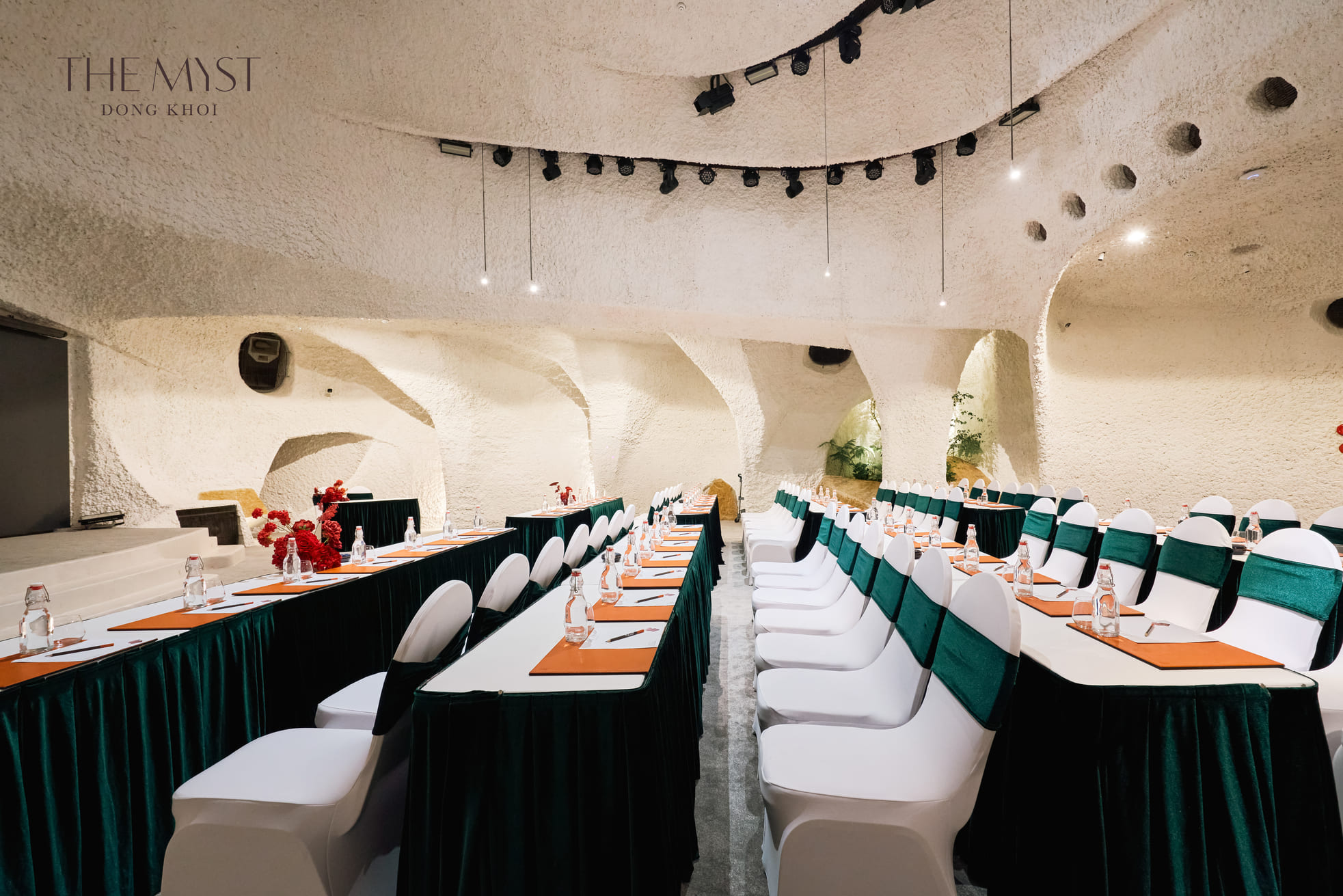
1. Capacity and layout that fit your headcount and format
Capacity is the first filter, but the printed number on a venue's fact sheet only tells half the story. A room rated for 100 theatre style seats will hold far fewer once you add round dinner tables, a buffet line, a stage and room to walk between them. Always ask for the capacity in the exact format you are running, whether that is banquet rounds, a standing cocktail, or theatre seating for a presentation. Ask to see it laid out, not just quoted.
Layout matters as much as the raw count. A single clear span with no pillars lets everyone see the stage; an L shaped room hides half the guests from the action. Think about flow too: where people queue for the buffet, where the bar sits, whether the entrance gives you space for a welcome drink and a photo wall before the doors open. A good rule is to book a room that seats your expected number comfortably with a little air around the edges, rather than one you fill to the last chair. Crowded looks busy in photos and feels tight all night.
2. Location, access and parking for your staff
Your team is coming from offices and homes all over the city, often straight from work, often at rush hour. A central venue that everyone can name and find takes a whole category of stress off the table. District 1 is the natural choice for a company party because it sits at the middle of the map, is easy to reach by taxi or ride hailing, and gives late leavers plenty of options to get home.
Walk through the practical access questions before you commit. Is there parking for those who drive, or a clear drop off point for cars and bikes? How close is the nearest main road, and can a taxi actually pull up at the door? For guests staying over or coming from out of town, a venue inside a hotel solves the journey home entirely. A central address also lets people carry on nearby afterwards, which matters more than planners admit. At The Myst Dong Khoi on Hồ Huấn Nghiệp, the location is walkable for anyone already in the centre and a short ride for everyone else.
3. Catering quality and flexibility
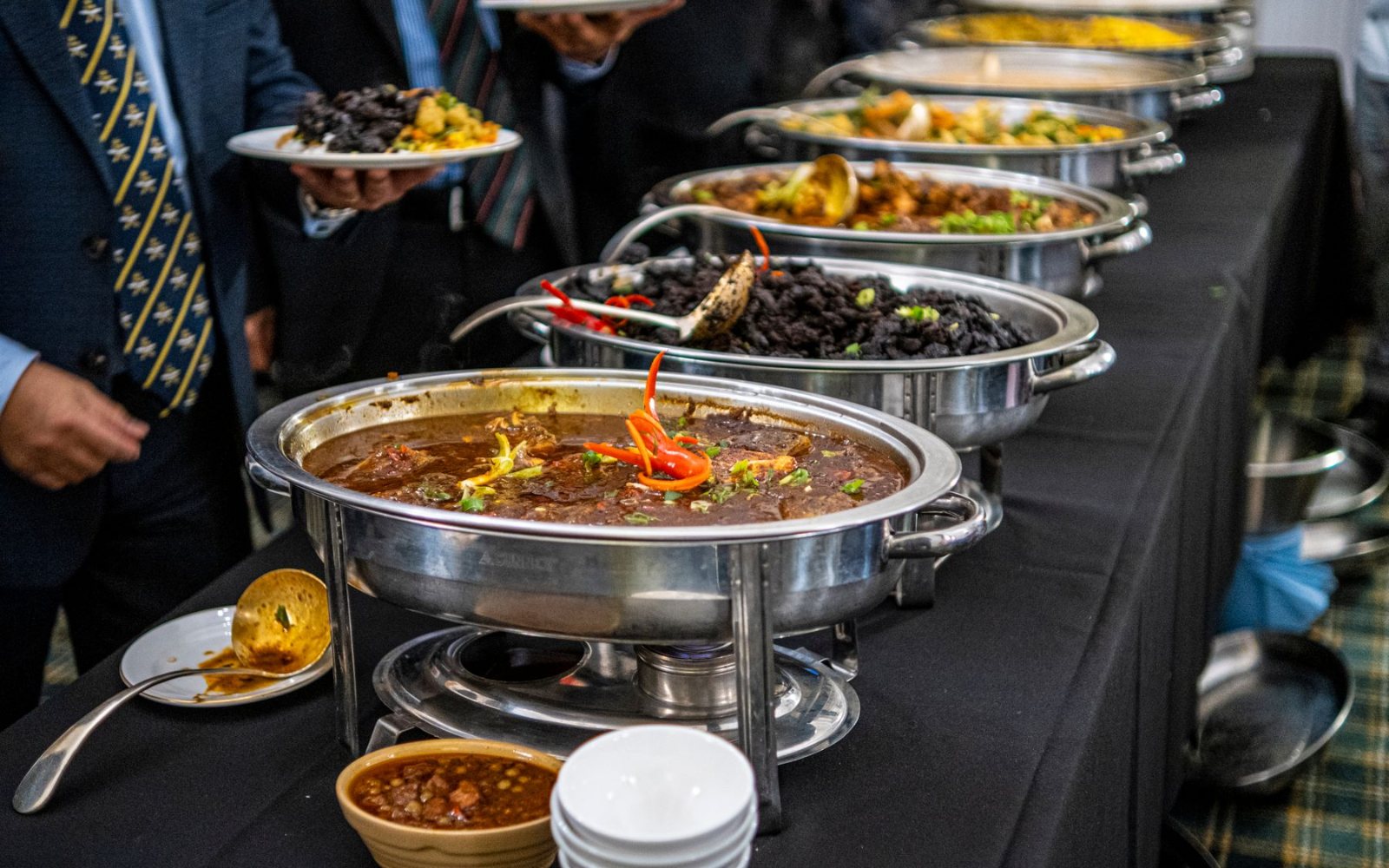
Food is what people remember and complain about, so treat catering as a make or break criterion rather than a detail to settle later. The first question is format: buffet or set menu. A buffet keeps the room social, moves people around and suits a mixed crowd with different appetites; a set menu feels more formal, paces the evening around the courses and works well when there is a programme to keep on schedule. Neither is better in the abstract, they simply fit different nights. We compare the two in depth in our note on buffet or set menu for a year end party.
Whichever you choose, press on flexibility. Can the kitchen handle vegetarian, halal or allergy needs without a fuss? Can you preview or taste the menu before the night? What does the drinks arrangement look like, and can it flex to your budget rather than a fixed package you cannot move? Ask how the food is served and kept hot, especially for a buffet, and how many staff will be on the floor for your headcount. A venue that answers these openly is one that has run plenty of parties before.
4. Space and AV for your programme
Most year end parties are not just dinners. There are speeches, an awards segment, a slideshow of the year, a lucky draw, maybe a live band or a team performance. Every one of those needs the room to support it, and this is where venues quietly differ. Ask what the space gives you before you build a run of show around it.
Run through the technical checklist. Is there a stage, or room to set one, with a sightline from every table? Is there a screen big enough to read from the back, or a projector and a clear wall? What sound system is included, how many microphones, and is the room soundproofed enough for music without a complaint from the floor above? Is there space for people to actually get up and move, or does the seating pin everyone in? A venue with a built in screen and a proper sound rig saves you hiring gear and cuts a whole layer of risk on the night.
When you map your programme against a room, our year end party checklist is a useful thing to run down.
5. Ambience, service and how it fits the budget
The last criterion is the one that turns a functional room into a night people talk about. Ambience is the feel of the place before you have added a single decoration: the ceiling height, the lighting, the finish of the space, the view from the windows. A venue with character does half your styling for you. A blank hall means you are paying to dress it up from scratch.
Service sits alongside it. The team behind the venue is who you actually deal with, from the first quote to the last guest leaving. Responsiveness while you are still planning tells you a lot about the night itself. And all of this has to land inside a budget, which is why a venue that offers tailored packages rather than one fixed price is worth seeking out: it lets you spend where it counts for your group and trim where it does not. Weigh the whole picture together, since the cheapest room that needs a truckload of hired extras is rarely the best value once everything is added up.
Book early, because December fills up
One practical warning sits above all five criteria: timing. The last few weeks of the year are peak season for every good venue in the city, and the best rooms on the best dates go months ahead. Companies that leave it to November often find their first, second and third choices all taken, and end up compromising on the room, the date or both.
If you have a target week, start enquiring early, hold the date provisionally as soon as you can, and confirm the headcount range even before the final list is locked. Early booking also gives you room to taste the menu, walk the space and plan the programme without a rush.
How the venues at The Myst fit different sizes
To make the criteria concrete, here is how the spaces at The Myst Dong Khoi tend to suit different groups. Sizes are a guide, and the team will lay out the right room for your exact format and headcount.
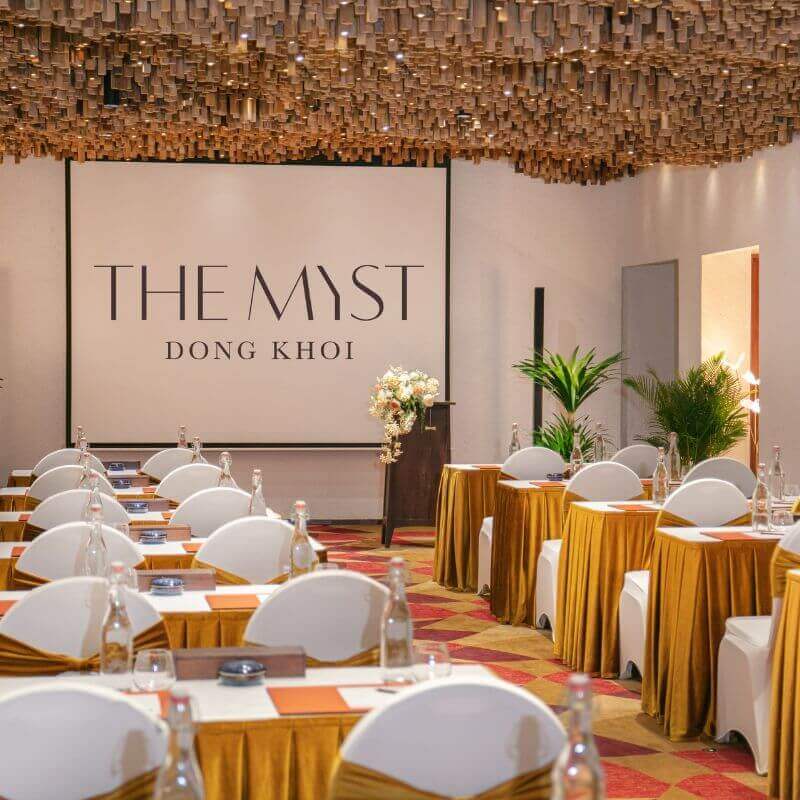
- Up to around 100, a full company party. The soundproofed ballroom runs to roughly 137 square metres and seats up to about 100 theatre style, which makes it the natural choice for a larger year end dinner or an awards night with a stage.
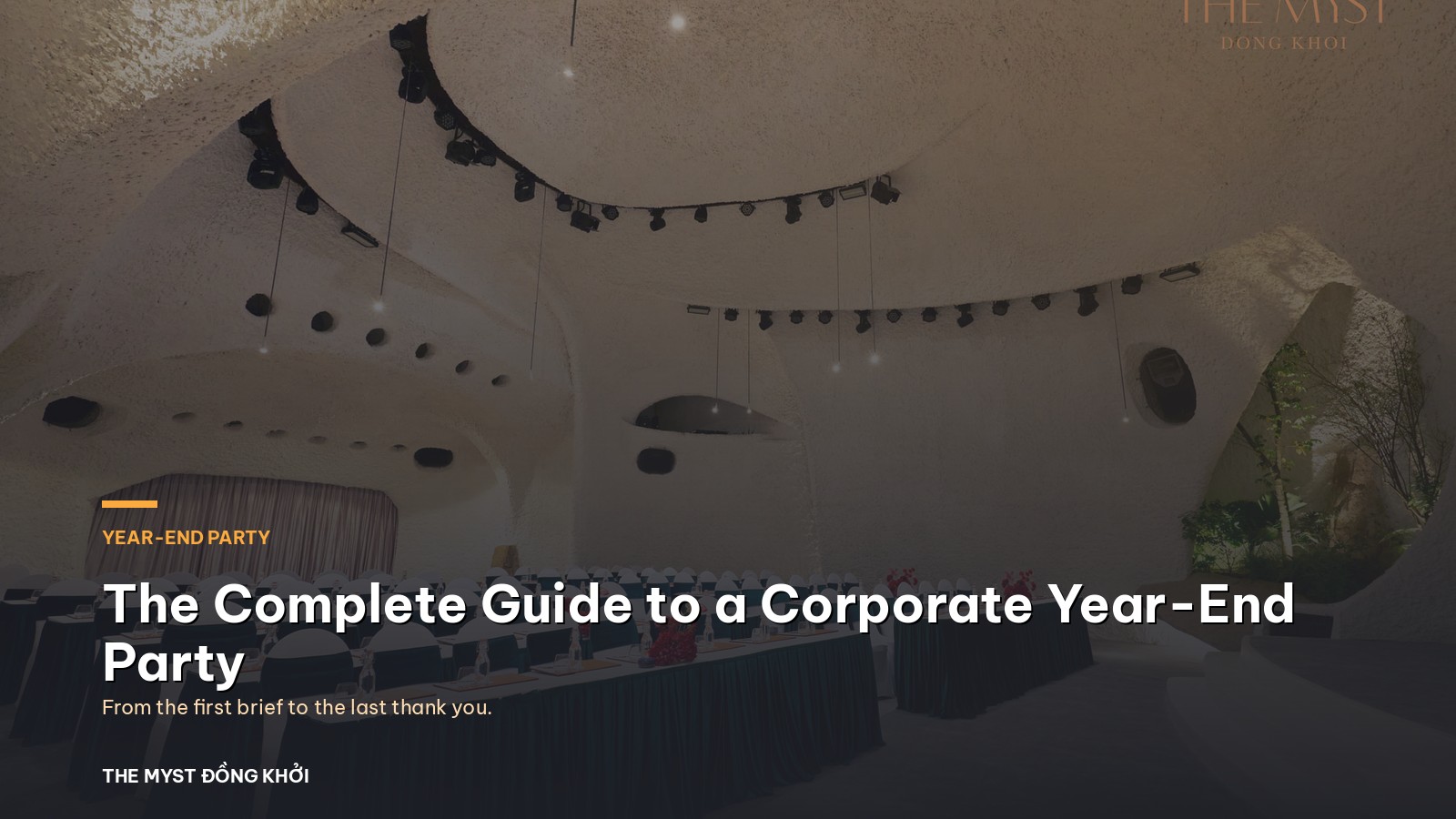
- Around 80, with a screen for the programme. The Galaxy mezzanine seats about 80 under a starry sky ceiling, with a 320 inch screen already built in, which suits a party built around a slideshow, a video or a presentation.
- Around 100 meeting or 70 dining, a ground floor option. ERY on the ground floor takes about 100 for a meeting or 70 for dining, an easy access space with no stairs to climb.
- Around 80 seated or 100 standing, up on floor 12. The Nest on the twelfth floor holds about 80 seated or 100 standing, with the city and river beyond the windows for a party that wants a view.
- A rooftop finish. ROOTY on the rooftop suits a cocktail reception or an after party under the open sky.
All of it comes with buffet or set menus and packages tailored to the group, in a central District 1 address that your team can find without a map. To talk through dates and numbers, write to [email protected] or call +84 28 3520 3040.
Frequently asked questions
What is the most important criterion for choosing a year end party venue?
How far in advance should I book a year end party venue in Saigon?
Is a buffet or a set menu better for a year end party?
What makes District 1 a good area for a corporate party?
What AV should a year end party venue provide?
Can a venue tailor the package to our budget?
Plan your year end party at The Myst
The Myst Dong Khoi is a boutique heritage hotel in the heart of District 1, with venues from a soundproofed ballroom to a rooftop, buffet or set menus, and packages tailored to your group. Tell us your date and headcount and our events team will suggest the right space and walk you through the options. Write to [email protected] or call +84 28 3520 3040.
→ Explore meetings and events at The Myst Dong Khoi
→ Read the full year end party planning guide
Crafted by Silverland Hotels.
Blog, Blog
A year-end party looks simple from the outside: a room, a meal, a few speeches. Behind it sit a hundred small decisions, and most of them depend on one another. Miss the venue deposit and the date slips. Forget the microphone count and the awards moment falls flat. This is a working checklist, grouped by the order you actually need to do things, so nothing important waits until the last week. Follow it phase by phase and the night runs itself while you enjoy it.
At a glance. A good year-end party plan moves through nine phases: fix your goals, budget and headcount first; then lock the date and venue; then catering, programme, invitations and AV; then build a run-of-show and a day-of plan; and close the loop afterwards. Start eight to twelve weeks out for a mid-sized company. Everything downstream gets easier once the first three phases are settled.
Table of Contents
Phase 1. Goals, budget and headcount
Before you look at a single venue, agree what the party is for. A reward for a hard year, a thank-you to clients, a team that has just doubled in size: each points to a different room, a different budget and a different tone. Settle this with whoever signs off, then the rest of the decisions have something to lean on.
- Purpose. One line everyone agrees on, for example "thank the team and hand out the annual awards".
- Headcount range. A working number with a margin, say 70 to 90, not a single guess. The venue and catering both hinge on it.
- Budget per head and total. Split it early into venue, food and drink, entertainment, printing and a ten percent buffer for the things you forget.
- Decision owners. Who approves spend, who signs the contract, who runs the night. Name them now.
- Must-haves versus nice-to-haves. A live band might be optional; a working microphone for the CEO is not.
Phase 2. Date and venue
December fills up fast in central Saigon, so this is the phase to move on quickly. Shortlist two or three dates, then hold the room before you announce anything. A venue that matches your headcount and format saves you fighting the space all night. For a fuller breakdown of what to look for, our guide on choosing a year-end party venue in Saigon walks through the criteria in detail.
- Two or three candidate dates, checked against payroll dates, public holidays and any big client deadlines.
- Room that fits the format. A seated dinner for 90 needs more floor than a standing reception for the same number.
- Capacity confirmed in writing, theatre style, banquet rounds or standing, whichever you are using.
- Location and access, easy for guests to reach and to leave late, with parking or a taxi rank nearby.
- Deposit, cancellation terms and what the room rate includes before you sign anything.
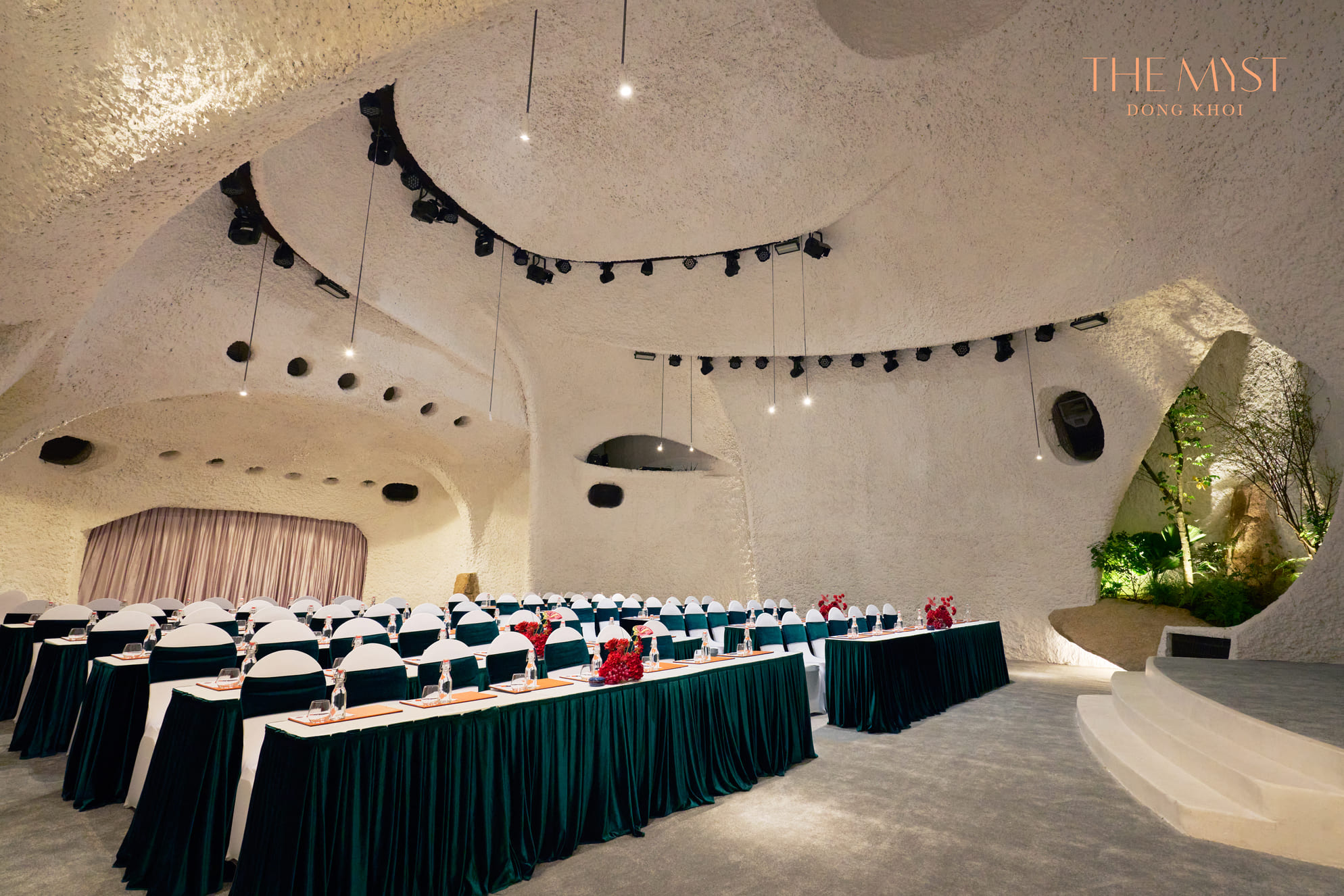
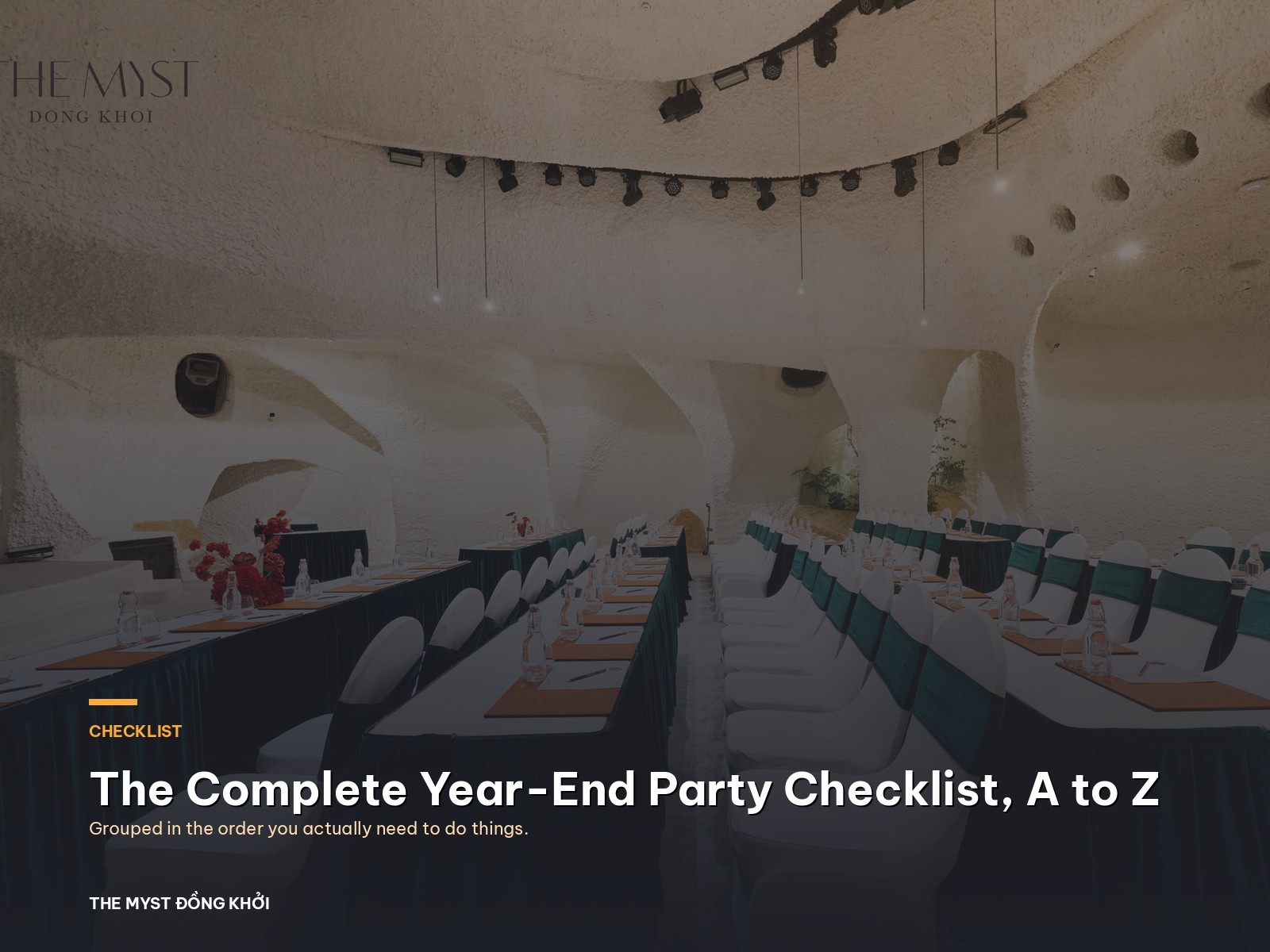
At The Myst Dong Khoi, on 6-8 Hồ Huấn Nghiệp in District 1, the choice runs from a roughly 137 square metre soundproofed ballroom that seats up to about 100 theatre style, to the Galaxy mezzanine room for around 80 under a starry-sky ceiling with a 320-inch screen, the ground-floor ERY room for roughly 100 in meeting layout or 70 for dining, The Nest on the twelfth floor for about 80 seated, and the ROOTY rooftop for a party that spills into the open air.
Phase 3. Catering and drinks
Food sets the mood more than most people expect. The first fork in the road is buffet or set menu, and it shapes both the flow of the evening and the room layout. Decide it here, then let the kitchen build around it.
- Buffet or set menu. A buffet keeps people moving and mingling; a set menu suits a seated programme with speeches between courses.
- Dietary needs collected in advance, vegetarian, allergies, anyone who does not drink.
- Drinks plan. Welcome drink, what is included, whether there is a bar tab or a cash bar, and a clear cut-off time.
- Timing of service mapped against the programme, so the awards do not clash with the main course.
- Final headcount deadline for the kitchen, usually a few days out, and who confirms it.
Phase 4. Programme, MC, awards and entertainment
This is the part guests remember. A loose plan here is where evenings drift, so give every segment a length and an owner. Keep speeches short and the energy moving.
- An MC briefed with names, titles and running order, and told how to pronounce anything tricky.
- Speeches capped, ideally one main address kept under ten minutes, plus any short thank-yous.
- Awards and recognition, with the list finalised, trophies or certificates on site, and a photographer ready for each handover.
- Entertainment, band, DJ or performers booked, with their own sound needs noted and a sound check time.
- Games or a lucky draw, prizes bought, rules written, and someone to run it so it does not stall.
Phase 5. Invitations and internal communications
People cannot come to a party they have not heard about clearly. Send the details early, then remind them, and make it easy to say yes.
- A save-the-date as soon as the date is locked, even before the full details are ready.
- The formal invitation with date, time, venue, dress code and an RSVP method that you can actually track.
- A dress code stated plainly, so nobody arrives over or underdressed.
- Reminders at one week and one day, with the address and start time repeated.
- Plus-ones and guests clarified up front, since they change the headcount and the catering.
Phase 6. Logistics and AV
The technical layer is invisible when it works and impossible to hide when it fails. Walk the room in advance and confirm every piece, especially anything the programme depends on. If your timeline is tight, our 90-day year-end party planning timeline shows when each of these should be locked.
- Stage and podium placed so the whole room has a sightline, with the screen visible from the back tables.
- Sound, enough microphones for the format, wireless handhelds for awards, and a tested feed for music.
- Screen and slides, the deck loaded and run through, with a backup copy on a second device.
- Seating plan, table numbers, a guest list at the door and reserved seats for leadership and special guests.
- Lighting, signage and a coat or bag area, plus power for the band and any photo booth.
Phase 7. The run-of-show for the night
A run-of-show is a single timed document that turns all the pieces above into a minute-by-minute plan. Everyone who has a job on the night should hold a copy.
- A timeline with clock times, from guest arrival and welcome drinks through to the last song and close.
- Each segment owned by name, so it is clear who cues the MC, who starts the music, who brings out the trophies.
- Cues written down, when the lights dim, when a video rolls, when dinner is served.
- Buffer time built in, because speeches always run long and guests always arrive late.
- A shared version with the venue, the MC and the AV team, so everyone is reading the same page.
Phase 8. Day-of coordination
The plan is done; now it just needs steady hands. Arrive early, check everything with your own eyes, and keep one person free to solve problems rather than run a segment.
- An on-site lead whose only job is to coordinate, phone charged, run-of-show in hand.
- A sound check and a slide run-through before the first guest walks in.
- The registration desk staffed, name list ready, any badges or gifts laid out.
- A short brief for the team, so waiters, MC and AV all know the running order.
- A quiet contingency, a spare microphone, a printed guest list and the venue contact on speed dial.
Phase 9. After the party
The night ends but the goodwill should not. Closing the loop well is what makes next year easier to plan and easier to get approved.
- Thank-yous to guests, to the team who ran it and to the venue, sent within a day or two.
- Photos and video gathered, a small selection shared internally while the mood is fresh.
- Feedback collected with a couple of quick questions, honestly and while people remember.
- Final costs reconciled against the budget, with notes for whoever plans the next one.
- A short debrief, what worked, what to change, saved somewhere you will find it next December.
Worked through in order, these nine phases turn a daunting brief into a series of small, doable steps. For the wider picture, from first idea to final thank-you, our complete guide to planning a year-end party ties every stage together.
Frequently asked questions
When should we start planning a year-end party?
How far in advance should we book the venue?
Buffet or set menu for a company party?
How do we set the headcount and budget?
What should a run-of-show include?
How do we book a year-end party at The Myst Dong Khoi?
Plan your year-end party with our events team
Tell us your date, your headcount and the kind of night you have in mind, and our team at The Myst Đồng Khởi in District 1 will match it to the right room, walk you through buffet or set menu, and help you build the run-of-show. Reach us at [email protected] or +84 28 3520 3040.
→ Talk to our meetings & events team
→ Read the complete year-end party guide
Crafted by Silverland Hotels.
Blog, Blog
A year-end party is the one night a company sets aside to stop, look back, and say thank you. It closes the working year, marks what the team pulled off, and gives everyone a shared memory to carry into the next twelve months. Get it right and people talk about it for weeks.
Get it wrong and it becomes the meeting nobody wanted to attend. This guide is the master map: what a year-end party is really for, the handful of decisions that shape the night, and where each one leads if you want the detail. Read it top to bottom, then follow the links to the parts that matter most to you.
At a glance. A corporate year-end party (also known in Vietnam as a tiệc tất niên) usually runs in December or January, before Tết. The core decisions are five: goals and budget, headcount and date, venue, catering format, and the programme for the evening. Plan the popular dates two to three months ahead, because December fills fast. At The Myst Dong Khoi in District 1, the events team hosts year-end parties across several spaces, from a soundproofed ballroom to a rooftop, with buffet or set menu catering tailored to the group.
Table of Contents
Why a year-end party is worth doing well
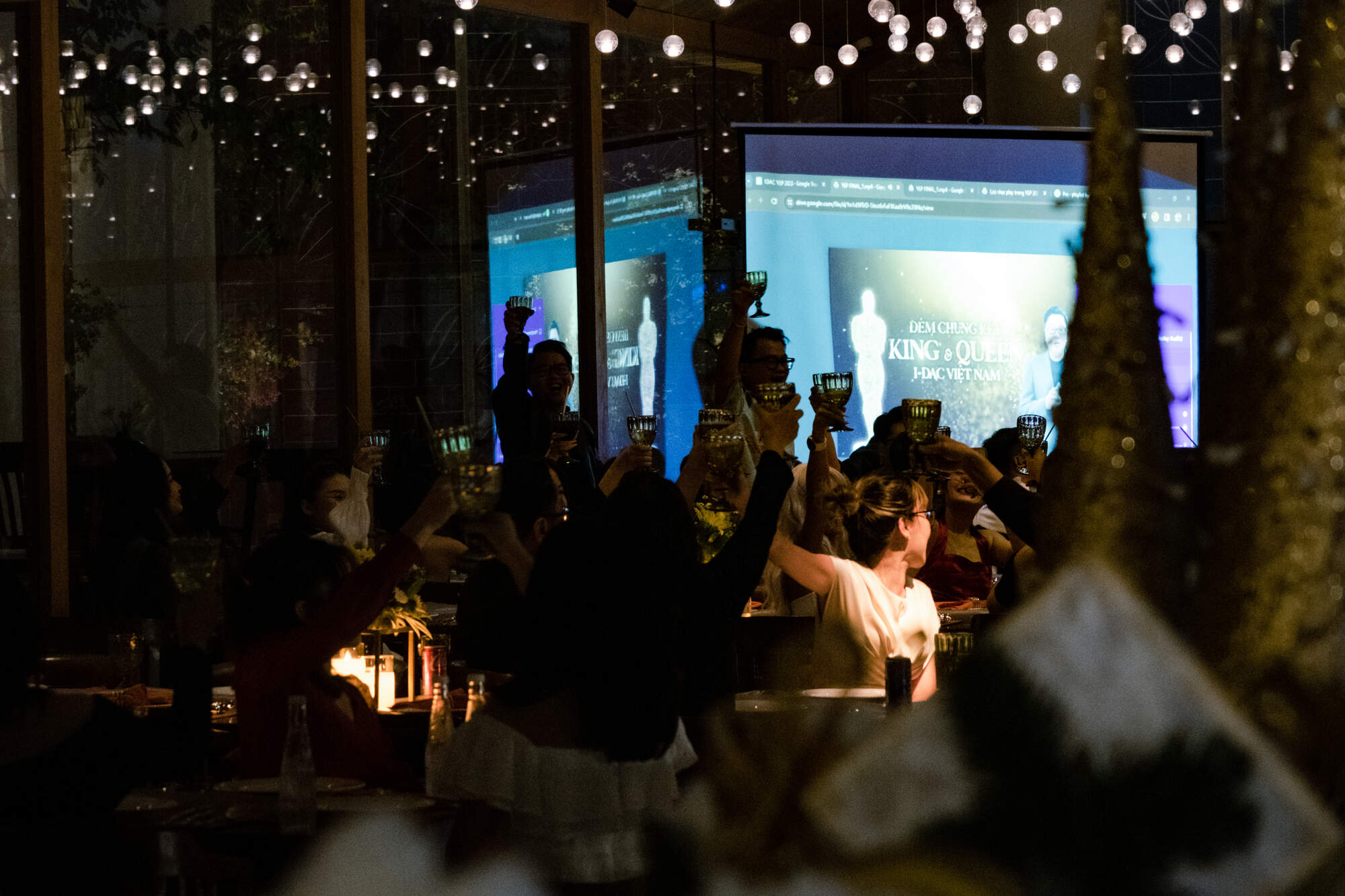
It is easy to treat the year-end party as a line item, a dinner to be booked and survived. That is a missed opportunity. For most teams it is the only evening all year when everyone is in one room with nothing on the agenda but each other. The people who rarely cross paths in daily work sit at the same table. The new joiner meets the founder. The quiet department gets its moment on stage.
Done well, the night does real work. It signals that the year mattered and that the effort was seen. It gives leadership a natural stage to thank people by name, to hand out an award, to tell the story of the year in a way a group email never can. And it builds the shared memory that carries a team through the harder months. None of that requires a big budget. It requires intent, a clear reason for gathering, and enough planning that the evening runs without anyone visibly holding it together.
The decisions that shape the night
Almost everything about a year-end party comes down to a few early decisions. Settle these first and the rest falls into place. Leave them vague and you will feel it on the night.
- Goals and tone. Is this a formal thank-you with awards and a sit-down dinner, or a loose, celebratory party where people mingle and dance? Decide the tone before anything else, because it drives venue, catering and programme.
- Budget and headcount. Fix a per-head figure and a firm guest count. Everything else, from the room to the menu, is chosen inside that frame. Plus-ones, partners and any clients also need deciding early.
- Date and venue. The two are locked together, because the best rooms on the best December dates go first. More on both below.
- Catering and programme. Buffet or set menu, and what actually happens across the evening, from the MC to the awards to the entertainment.
If you would rather work from a single, ordered list you can tick off, we have built one. Our year-end party planning checklist takes these decisions and turns them into concrete tasks with owners and deadlines. And if you are wondering when to start, our 90-day planning timeline works backwards from the party date so nothing gets left to the last week.
Choosing the date and the venue
Timing is the first real constraint. In Vietnam the year-end party season runs from early December through late January, tapering off as Tết approaches. Fridays and the two weekends before the holiday are the most contested, so if your team has a preferred date, treat it as the thing you book first, not last. Popular venues in central Saigon are often reserved two to three months out for those peak evenings.
The venue then has to fit the night you have described. A theatre-style awards ceremony needs a stage, a screen and a room that seats everyone facing forward. A mingling party wants standing room, a bar and space to move. A sit-down dinner needs round tables and service that keeps pace. Capacity, layout, sound, parking and how easy the place is to reach after work all matter more than the photos on a website. We set out what to look for, and the trade-offs between hotel ballrooms, restaurants and rooftops, in our guide to choosing a year-end party venue in Saigon.
One more timing note. Because the year-end party sits right before the lunar new year, some teams choose to combine the two moods, closing the working year while looking ahead to Tết. If that is you, our overview of Tết 2027 in Saigon is worth a look for the wider season.
Food, programme and the flow of the evening
Catering shapes both the budget and the feel of the room. A buffet keeps people moving, suits a mingling crowd, and handles mixed tastes and dietary needs with ease. A set menu is calmer and more formal, better for a seated evening built around speeches and awards, with courses that pace the night for you. Neither is simply better; it depends on the tone you chose at the start. We weigh the two in full, with the practical pros and cons, in buffet or set menu for a year-end party.
The programme is what turns a dinner into an event. A good MC holds the shape of the evening, moving it from welcome to speeches to awards to the lighter, freer part of the night. Awards and recognition are the heart of it for most companies, so build in time and thought there rather than rushing it between courses.
Entertainment, from a live band to a lucky draw to a simple photo corner, gives energy and pace. Keep the formal part tight, land the thank-yous clearly, and leave real time at the end for people to relax. A rough running order, even a loose one, is what keeps the night from drifting.
Plenty of good plans still come apart on the night, usually for the same reasons: a guest count that slipped, a programme that ran long, sound that failed, or a venue booked too late. We have gathered the ones we see most often, and how to head them off, in our note on the most common year-end party mistakes.
Hosting your year-end party at The Myst
The Myst Dong Khoi is a boutique heritage hotel in the heart of District 1, at 6-8 Hồ Huấn Nghiệp, a short and easy trip for city-based teams. It hosts year-end parties, weddings and corporate events across several spaces, so the room can be matched to the size and mood of your night rather than the other way around.
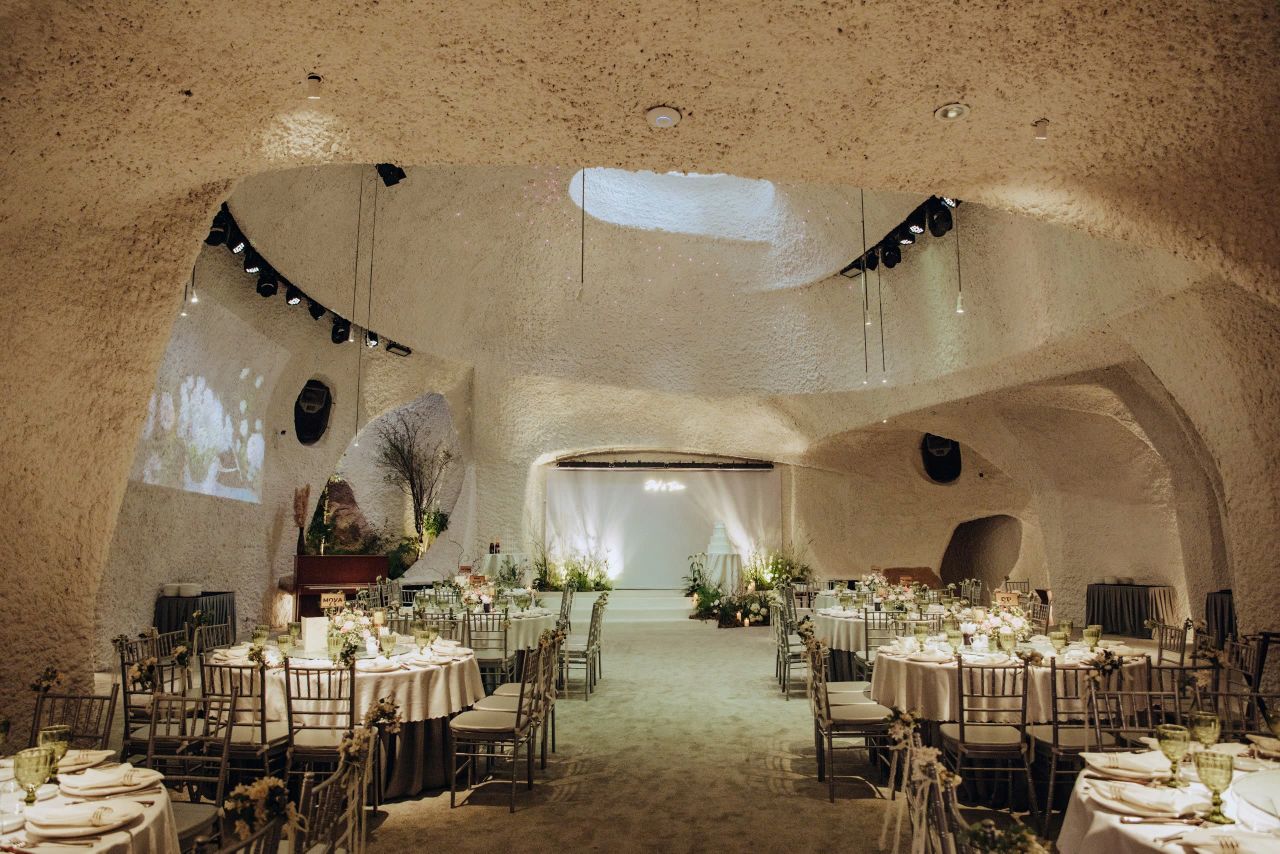
- Main ballroom. A soundproofed room of about 137 m², seating up to around 100 guests theatre-style, suited to awards ceremonies and larger sit-down evenings.
- Galaxy meeting room. On the mezzanine, around 80 seats, with a 320-inch screen and a ceiling scattered with tiny lights like a starry Saigon night sky, good for a programme built around presentations and video.
- ERY room. On the ground floor, about 100 for a meeting layout or 70 for dining, an easy-access space for mid-sized groups.
- The Nest. The restaurant on the twelfth floor, around 80 seated or 100 standing, with the city and river below for a party with a view.
- ROOTY rooftop. Around 30 indoors or 80 standing, an open-air option for a more relaxed, mingling evening.
Catering can be served as a buffet or a set menu, and the events team tailors each package to the group rather than working from a fixed sheet. The clearest next step is simply to tell them your headcount, your date and the kind of night you have in mind, and let them suggest the space and format that fit. You can reach the team on the details in the box below.
Frequently asked questions
What is a corporate year-end party?
When should we start planning a year-end party?
How do we choose the right venue?
Buffet or set menu for a year-end party?
What should the programme include?
Can The Myst Dong Khoi host our year-end party?
Talk to our events team
The Myst Dong Khoi hosts year-end parties, tất niên nights and corporate events across ballroom, restaurant and rooftop spaces in the heart of District 1. Tell us your date, your headcount and the kind of evening you have in mind, and we will suggest the space and catering that fit. Reach the events team at [email protected] or +84 28 3520 3040.
→ Talk to our events team about your year-end party
→ Start with our year-end party planning checklist
Crafted by Silverland Hotels.
Blog, Blog
You do not need a flight to feel a world away. A few streets in the centre of Ho Chi Minh City carry the mood of a Tokyo back lane, all lanterns and low signage and the smell of broth drifting out of an open door.
Locals call it Little Japan, or Little Tokyo, and it hides in plain sight around Le Thanh Ton and Thai Van Lung. This is a light guide to spending a day there, what the quarter is, how its streets feel, what to do when you want a change of scene, and where to pause when you need a quiet coffee in the middle of it all.
At a glance. Little Japan is the Japanese quarter of central Saigon, clustered around Le Thanh Ton and Thai Van Lung streets. Expect izakaya, ramen and sushi counters, small Japanese groceries and narrow lantern-lit lanes. It makes an easy half-day or full-day wander without leaving the city. The calm place to pause in the middle of it is Bason Cafe Sakyo, on the ground floor of Silverland Sakyo hotel, open 07:00 to 22:00.
Table of Contents
Where Little Japan hides in the centre
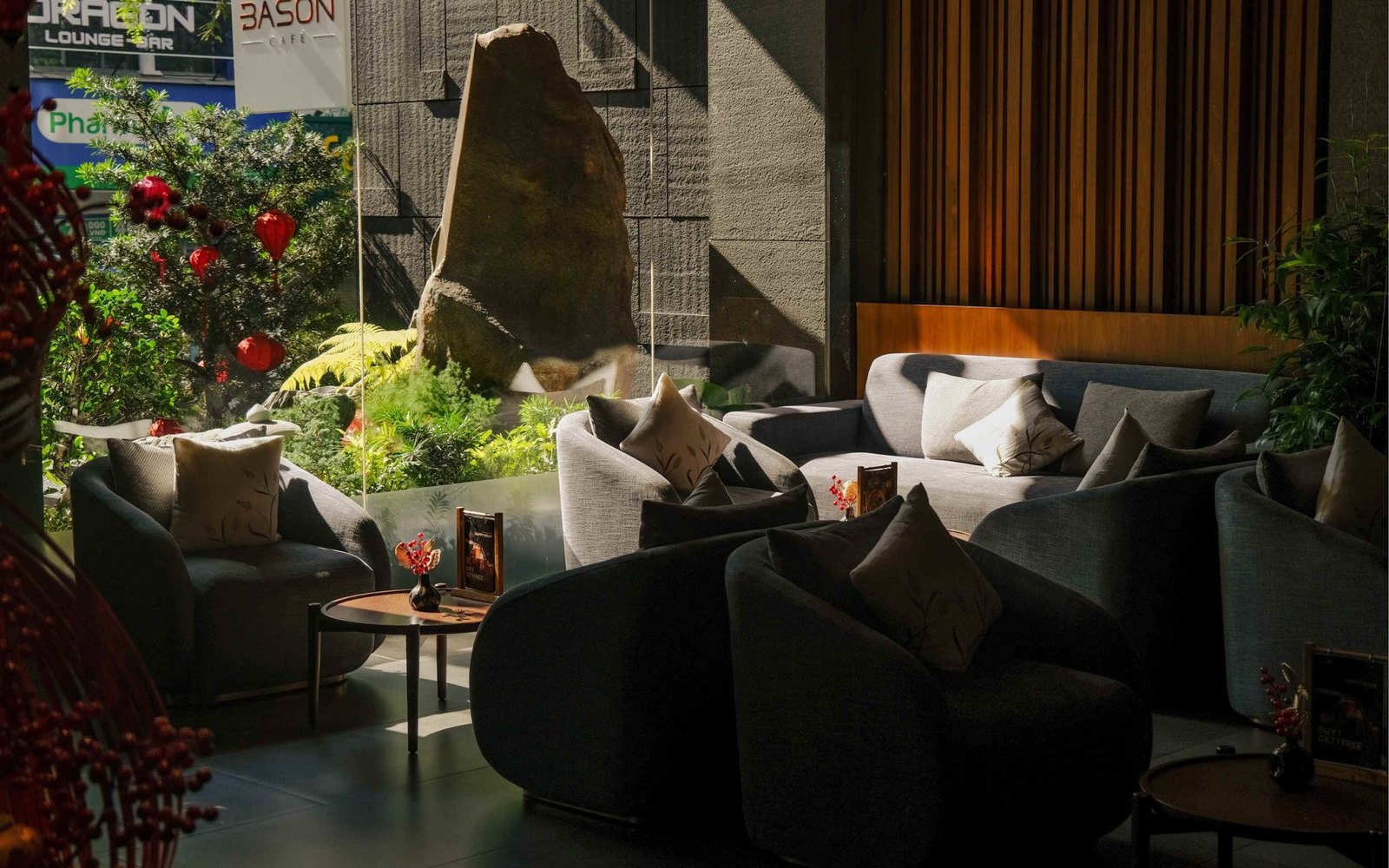
Most visitors walk right past it. The quarter sits a few minutes from the busiest stretch of the centre, yet it keeps a different pace entirely. Its heart is a short run of Le Thanh Ton street and the small alleys that branch off it, with Thai Van Lung running nearby. Step off the main road and the shopfronts change. Signs turn to Japanese script, doorways narrow, and paper lanterns appear where you would expect neon.
The area grew up around the Japanese community that settled here over the years, and it has stayed genuinely theirs. This is not a themed street built for photographs. It is a working pocket of the city where Japanese residents actually eat, shop and gather, which is exactly why it feels real. If you like the idea of finding a distinct district within the centre, it sits alongside the other pockets we cover in our guide to Saigon neighbourhoods beyond District 1.
The streets and the mood
The pleasure of Little Japan is in the details. Wander slowly and you notice the small things: a hand-written menu taped to a glass door, a curtain half-drawn across an izakaya entrance, the soft clatter of a kitchen behind it. In the daytime the lanes are quiet and shaded, and the groceries do their steady trade in miso, sauces, rice and snacks flown in or made to order. Come evening the mood lifts. Lanterns switch on, the counters fill, and the whole quarter takes on a warm, low-lit glow.
What makes it work is the contrast. Outside, Saigon is loud and bright and fast. Here, a few metres in, the volume drops. You could be in a side street in Shinjuku, right up until a motorbike slips past and reminds you where you are. That gentle collision of two cities is the reason people keep coming back, and it is why the quarter carries so many names, Little Japan, Little Tokyo, the Japanese quarter, the Le Thanh Ton Japanese street.
What to do for a change of scene day
You do not need a plan to enjoy the quarter, but a loose one helps. Here is the easy shape of a day.
- Wander first, without a map. Start on Le Thanh Ton, then let the alleys pull you off it. The best finds are the ones you were not looking for.
- Eat Japanese, properly. This is the reason many people come. Ramen at a tucked-away counter, sushi from a small specialist, or an izakaya spread in the evening. The choice is real and the standards are high.
- Browse the groceries. The little Japanese shops are half the fun. Snacks you cannot find elsewhere, sauces and pantry things, a slow browse with no pressure to buy.
- Pause for a coffee. A day of wandering needs a quiet middle. That is where a calm café earns its place, somewhere to sit, cool down and let the morning settle before the second half.
It is a flexible day rather than a fixed itinerary. If you prefer a slower start and a proper sit-down breakfast before you set out, our guide to a weekend morning café in District 1 is a gentle way to begin.
Bason Cafe Sakyo, the calm heart of the quarter
Every good wander needs a place to stop, and in Little Japan that place is Bason Cafe Sakyo. It sits on the ground floor of the Silverland Sakyo hotel at 10A-10B-10C Le Thanh Ton, right in the heart of the quarter, which means you are never more than a short stroll from its door. Step inside and the noise of the street falls away.
The concept fits the neighbourhood perfectly. The café blends the soul of Saigon with the tranquil spirit of Japan, and you feel it the moment you sit down. There is greenery throughout, sunlight filtering through leaves, and a calm Vietnamese-Japanese aesthetic that never tries too hard. It is the kind of room designed for lingering rather than rushing, a quiet counterpoint to the busy lanes just outside.
The menu keeps things all-day and unhurried: proper coffee alongside a food menu that runs from morning through to night, with head-chef signature dishes worth asking about when you sit down. Rather than list a fixed menu here, the honest advice is to see what the kitchen is doing on the day.
The café is open from 07:00 to 22:00, so it works whether you are starting early, breaking up the middle of the day, or winding down as the lanterns come on. It is also a naturally calm spot to sit with a laptop or meet someone, in the same spirit as the places in our guide to a café for work and meetings in Saigon.
Making a day of it
The quarter rewards a little rhythm. Arrive mid-morning while the lanes are quiet and the light is soft. Wander first, browse a grocery or two, then settle in at Bason Cafe Sakyo for a coffee before lunch. Eat Japanese somewhere nearby, take a slow afternoon, and if you can, stay on as the evening turns the lanterns on, because the quarter is at its best in that first hour of dusk.
A few small things make it easier. Wear comfortable shoes, since the joy is in walking. Do not over-plan; the point of a change of scene is to let the day wander with you. And keep the café in mind as your anchor, a fixed calm point you can return to whenever the streets get busy or the sun gets high. To reserve a table at Bason Cafe Sakyo, call (+84) 888 100 739 or book online. It is a small city, an easy day, and a genuine world away without ever leaving town.
Frequently asked questions
Where is Little Japan in Saigon?
Why is it called Little Japan or Little Tokyo?
What is there to do in the Japanese quarter?
Where can I get a quiet coffee in Little Japan?
Is Little Japan good in the evening?
How do I book a table at Bason Cafe Sakyo?
Pause at Bason Cafe Sakyo
Right in the heart of Little Japan, Bason Cafe Sakyo is the calm place to stop between the lanes, a Saigon-meets-Japan room full of greenery and soft light, with coffee and an all-day menu from morning to night. Our team is glad to hold a table for you.
Crafted by Silverland Hotels.
Blog, Blog
Some mornings are for the alarm and the commute. A weekend one does not have to be. There is a particular pleasure in waking late with nowhere to be, wandering out into the centre of Saigon while it is still half asleep, and settling in somewhere for good coffee and an easy plate of food. No rush, no clock. This guide is about that morning, what makes a cafe right for it, and where to find one in central Saigon, led by the terrace at Bason Cafe Dong Khoi.
At a glance. A slow weekend morning in the centre asks for a cafe with room to linger, an all-day menu so you can eat whenever you arrive, and unhurried service. Bason Cafe Dong Khoi, on the ground floor of The Myst Dong Khoi at 4-6-8 Hồ Huấn Nghiệp, has a vintage brick room and a street-view terrace, Vietnamese coffee and an all-day kitchen. It opens at 07:00. There is no fixed brunch menu; you simply order coffee and a plate whenever you roll in.
Table of Contents
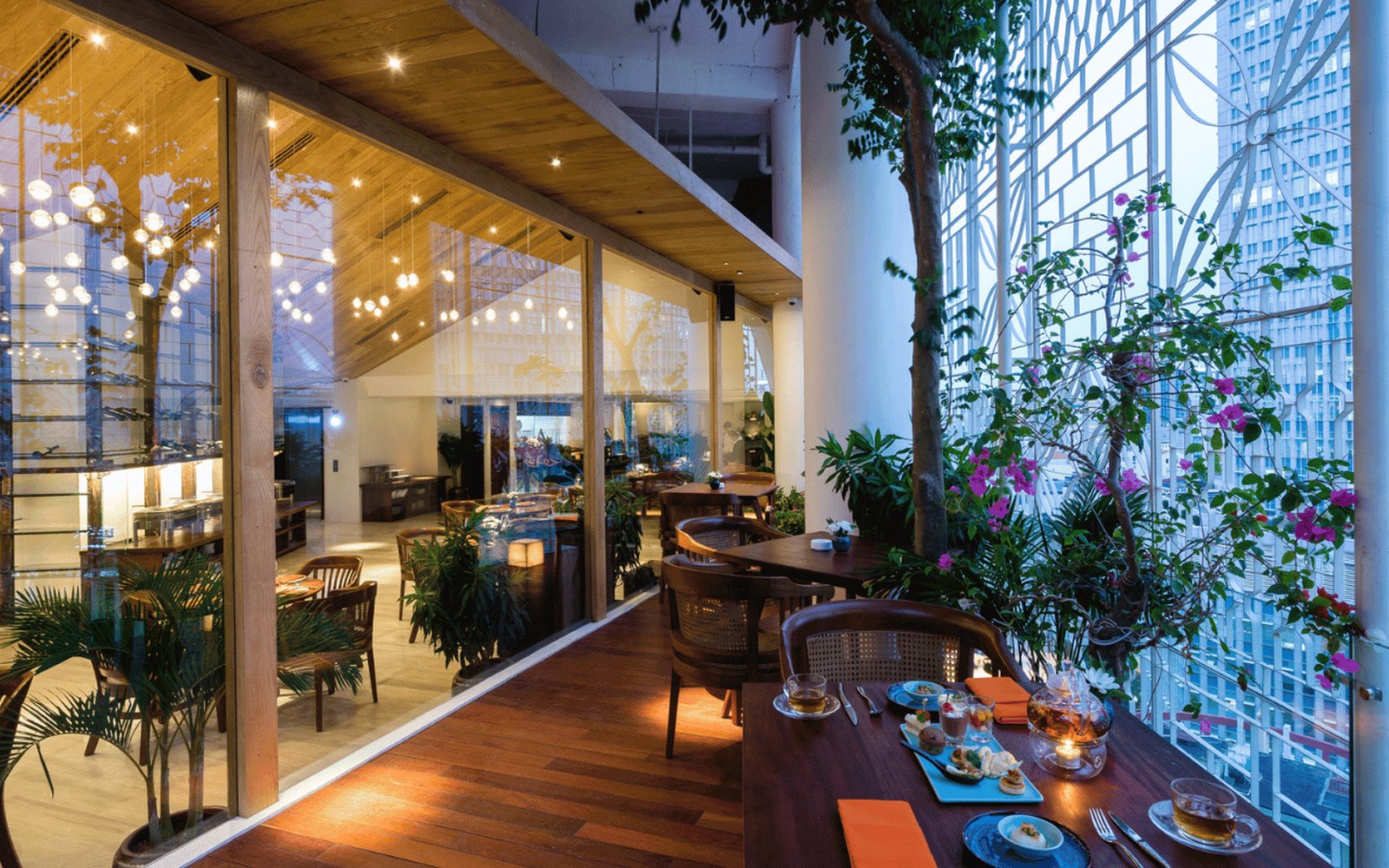
The case for a slow weekend morning
The working week runs on other people's timing. You get up because you have to, you eat on the move, you drink your coffee somewhere between the door and the desk. A weekend morning is the rare stretch that is genuinely yours, and the surest way to waste it is to fill it the moment you wake. Better to let it stay loose. Sleep in. Read something. Wander out with no plan sharper than coffee.
Central Saigon is at its gentlest early on a Saturday. The motorbikes have not built to their full roar, the shophouses are just lifting their shutters, and the light comes in low and soft across the streets around Đồng Khởi. Walk it before the heat arrives and the city feels almost unhurried, which is a rare thing to say about this part of town. The trick is to have somewhere to land, a table you can sink into for an hour or two while the morning warms up around you.
What makes a cafe right for it
Not every good cafe is a good slow-morning cafe. The ones that work share a few plain things, and once you notice them you start choosing by them.
- Somewhere to settle. A terrace to catch the morning air, or a bright room with a proper chair and a table you are not asked to give up. You want to arrive and stop moving.
- An all-day menu. The single most useful thing. If the kitchen serves food from open to close, it does not matter whether you turn up at nine or at half past eleven. You eat when you are hungry, not when a set brunch service decides.
- Unhurried service. Nobody hovering, nobody clearing the plate before you have finished the coffee. A second cup arrives when you ask, and the table stays yours.
- A central spot you can walk to. The whole mood breaks if getting there is a chore. Somewhere in the middle of things, easy to stroll to, so the morning starts the moment you leave your door.
Put those together and you have the setting. Coffee that is worth slowing down for, a plate you can order on your own schedule, a seat you can keep, and a short walk to reach it. That is really all a slow weekend morning needs.
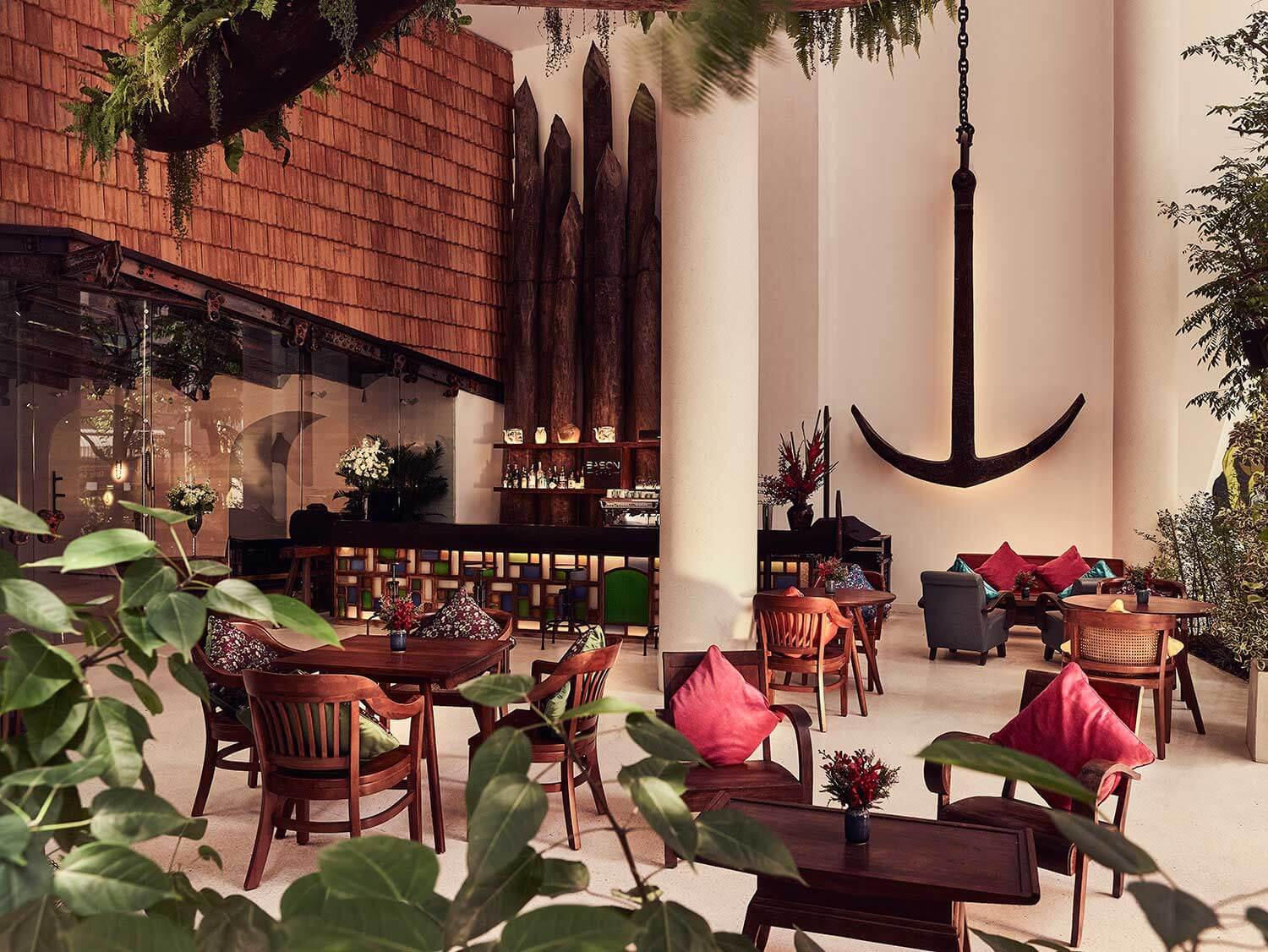
A morning on the Bason Đồng Khởi terrace
Bason Cafe Dong Khoi sits on the ground floor of The Myst Dong Khoi, at 4-6-8 Hồ Huấn Nghiệp in central Saigon, a couple of quiet streets back from the river. The name comes from the old Ba Son shipyard nearby, and the cafe wears that heritage openly. Reclaimed artifacts sit around the room, the walls are vintage exposed brick, and the whole place has the settled, worn-in feel of somewhere that was not built yesterday.
There are two ways to sit here, and on a slow morning both are good. Inside is the brick room, cool and a little dim, the kind of space that suits a late start and a strong coffee. Out front is the terrace, open to the street, which is where the morning really happens. Take a seat there with a Vietnamese coffee, watch the centre come slowly to life, and you understand what an unhurried Saigon morning is supposed to feel like. The doors open at 07:00, so you can be early if you want the quiet, or drift in later once the light has climbed.
One honest note, because it matters. There is no separate brunch menu and no set brunch here. What Bason keeps is an all-day food menu, served right through from morning to night. On a weekend that turns out to be exactly the point. You are not booking a brunch sitting or racing a service window. You arrive when you arrive, order a coffee, and pick something to eat whenever the hunger lands.
What to order from the all-day menu
Start with the coffee, because this is a Vietnamese cafe and it is what the kitchen does first. A Vietnamese coffee, slow-dripped and strong, is the natural opening to the morning. If that is not your mood, the matcha latte is the gentler, greener alternative, easy to sit with over a long conversation.
For food, the all-day menu means you can eat light or properly, early or late, without anyone minding. The pasta with cold cuts is the more substantial plate if you skipped anything resembling breakfast, savoury and filling. The vegetarian bún is the lighter, fresher choice, and a nice nod to home cooking on a slow day. And there is no rule that says a weekend morning cannot end on something sweet. A tiramisu or a panna cotta with the last of the coffee is a fine, unhurried way to let the morning run on into noon. Order it all at once or in waves; the kitchen is open either way.
Three Bason corners for a weekend morning
Bason is a small family of cafes across the centre, and while Đồng Khởi is the one to lead with, it is worth knowing the other two. All three open from 07:00 and all three keep the same all-day food menu, so the choice is really about which corner of the city you feel like waking up in.
- Bason Cafe Đồng Khởi. The anchor, on the ground floor of The Myst Dong Khoi at 4-6-8 Hồ Huấn Nghiệp. Ba Son shipyard heritage, a brick room and a street-view terrace. The pick for a slow central morning within walking distance of the river.
- Bason Bến Thành. At 15-17-19 Nguyễn An Ninh, in Phường Bến Thành, right by the market. This one leans art-forward, a livelier setting if you like a bit of morning bustle around your coffee.
- Bason Sakyo. At 10A-10B-10C Lê Thánh Tôn, in the Japanese quarter of central Saigon. Calm and green, the quietest of the three, and a good match for a morning when you want the city to stay soft. We say more about the neighbourhood in our guide to the Little Japan cafe corner of Saigon.
Bason Đồng Khởi also sits a short stroll from the grand old cafe corner near the Opera House, so a slow morning here folds easily into a wider wander through the centre. And if the mood turns from coffee to a proper afternoon treat, the ritual of afternoon tea at The Nest upstairs carries the same slow spirit into the later hours.
Frequently asked questions
Where is a good brunch cafe in District 1, Saigon?
Does Bason have a set brunch menu?
What should I order for a slow morning at Bason?
What time does Bason Cafe Dong Khoi open?
Are there other Bason cafes in central Saigon?
Do I need to book a table for a weekend morning?
Book a table at Bason Café Đồng Khởi
Bason Café Đồng Khởi sits on the ground floor of The Myst Đồng Khởi at 4-6-8 Hồ Huấn Nghiệp, in the heart of central Saigon. Come for a slow weekend morning on the terrace, with Vietnamese coffee and an all-day kitchen, and stay as long as the morning lets you.
→ Reserve a table at Bason Café Đồng Khởi, (+84) 28 3824 8066
→ Prefer somewhere calm and green? Meet Bason Sakyo in Little Japan
Crafted by Silverland Hotels.