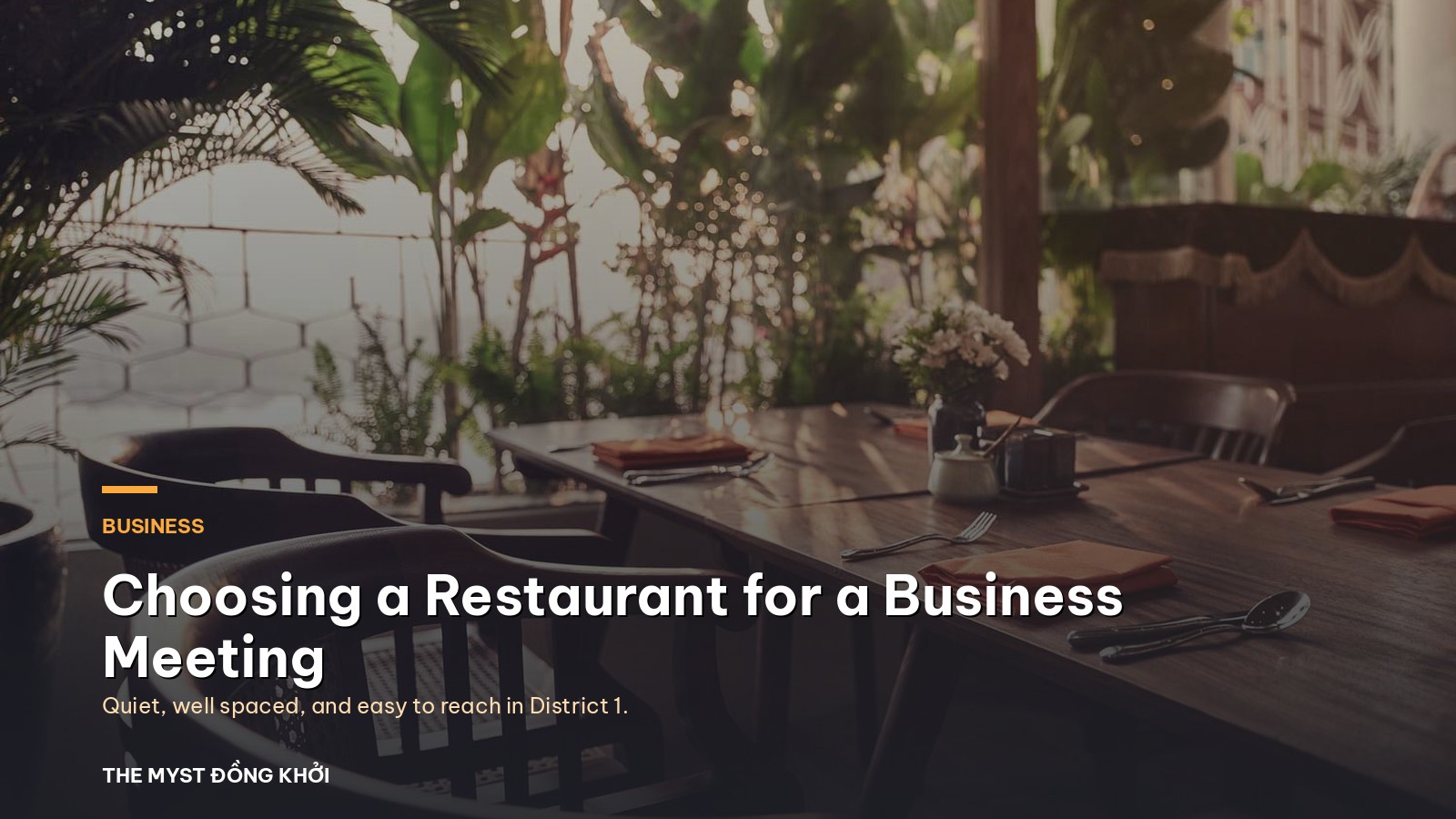
Blog
Once the venue and date are settled, one question tends to stall the whole plan: buffet or set menu? It sounds like a catering detail, but it quietly shapes everything else, how the room is laid out, how much the awards run overtime, whether people mingle or stay put, and how tightly you can hold the budget per head. This guide walks through what each format does well, where each one strains, and how to choose between them by headcount, formality, budget and the shape of your programme.
At a glance. A buffet suits larger, mixed groups who value variety and mingling and can flow around a relaxed evening. A set menu suits a seated, paced programme with speeches or awards, an accurate headcount and firmer cost control per head. Many year-end parties land in between, a set menu with a few live buffet stations. At The Myst Dong Khoi, the events team tailors either format across the ballroom, Galaxy, ERY, The Nest and ROOTY spaces in District 1.
Table of Contents
The real question behind buffet or set menu
People often argue about the food first. The food matters less than you think. What you are really choosing is how the evening moves. A buffet lets guests get up, wander, refill and drift between tables, so the room stays loose and social. A set menu keeps everyone seated while courses arrive in sequence, so the room has a rhythm you can steer from the stage. One format spreads people out. The other holds them together. Nearly every trade-off below flows from that single difference.
So before comparing dishes, pin down four things about your party: how many people are coming, how formal it needs to feel, how firm the budget is per head, and whether there is a programme to run, a year in review, a few awards, a speech from the director. Once those four are clear, the answer usually picks itself. If you are still settling the venue too, our guide to choosing a year-end party venue in Saigon covers the room side of the decision, and the broader year-end party planning guide ties the whole evening together.
What a buffet does well, and where it strains
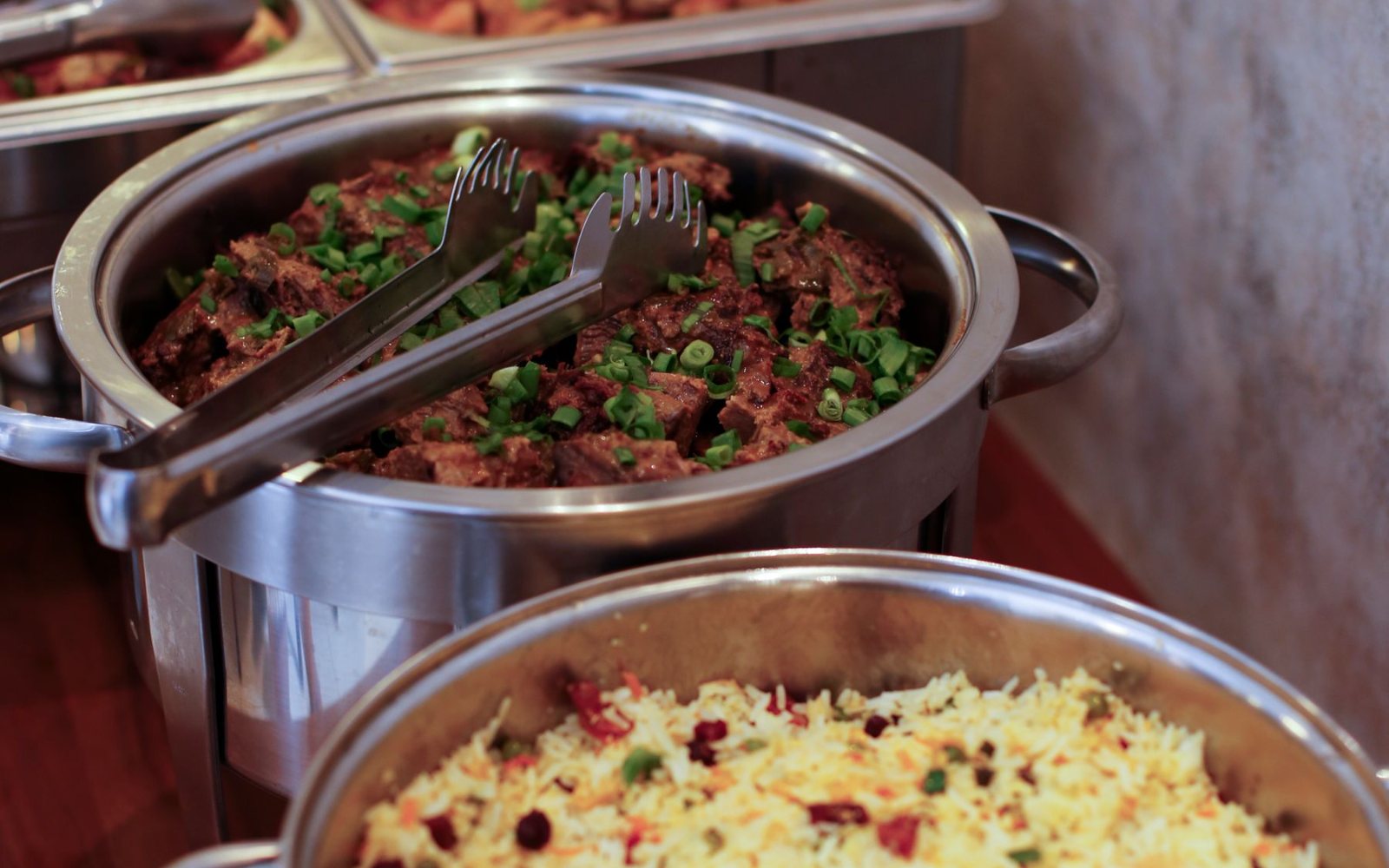
A buffet earns its keep on variety. One line can carry Vietnamese favourites, a Western corner, a noodle or pho station, a carving board and a run of desserts, so a mixed crowd all find something they want. That range matters when the guest list spans junior staff, senior partners, a few vegetarians and someone who will not touch seafood. Nobody is stuck with a plate they did not choose.
The bigger win is movement. People stand, queue a little, bump into a colleague from another floor, and end up in conversations a seating plan would never have made. For a company that wants its year-end night to feel warm and social rather than ceremonial, that easy mingling is the whole point. A buffet also forgives a soft headcount. If five extra guests turn up, the line absorbs them.
Where does it strain? Timing. A buffet is hard to run to a clock, and if you have speeches or an awards segment, herding a standing, grazing crowd back to attention takes effort. Queues form at peak, especially past a certain headcount, so popular stations need doubling up. And for all its warmth, a buffet reads as less formal, which is either exactly what you want or not quite the register for a milestone anniversary.
What a set menu does well, and where it strains
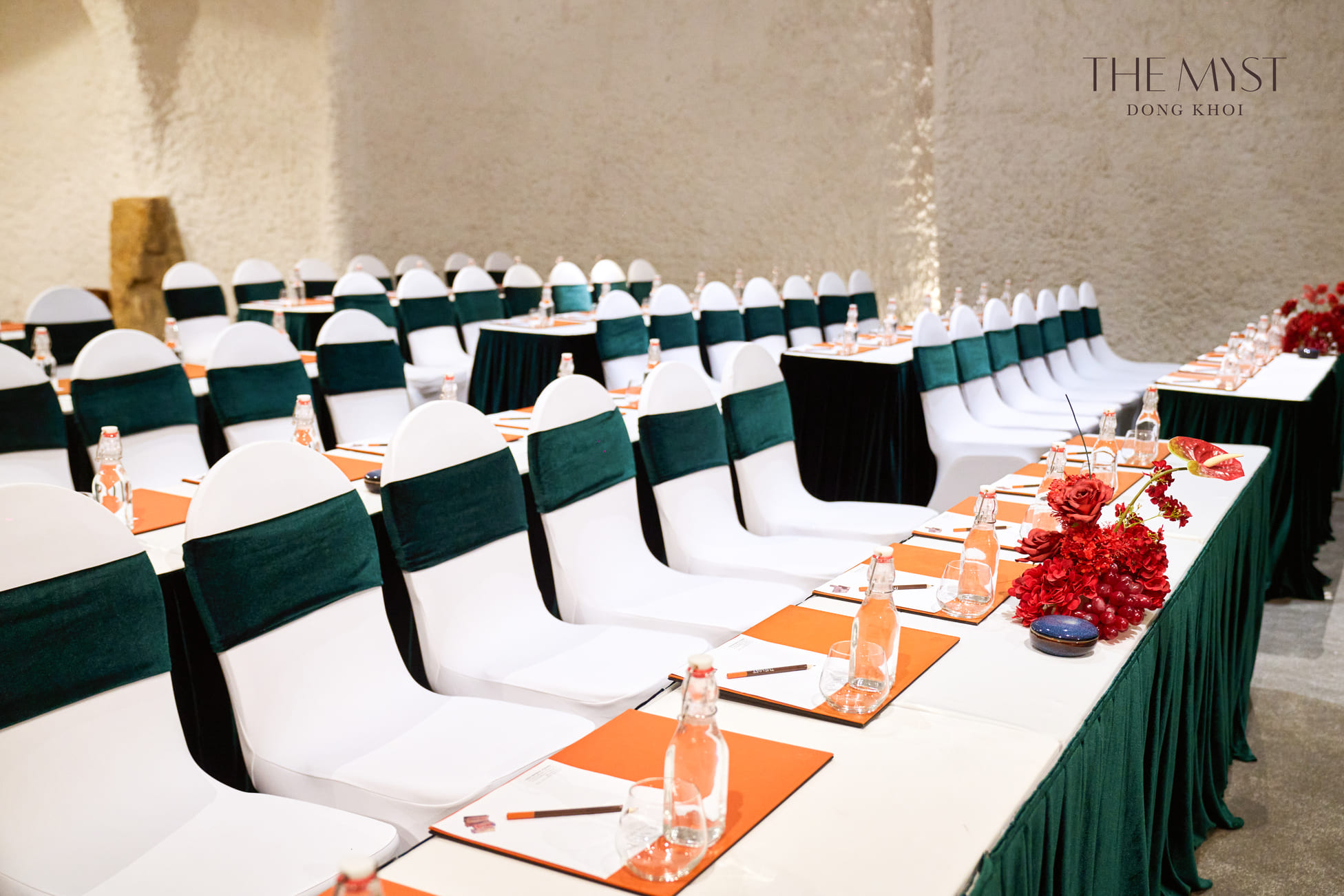
A set menu buys you control. Courses land on a schedule, so you can slot the year-in-review between the appetiser and the main, run the awards over dessert, and keep the evening moving without ever asking people to leave their seats. For any party built around a programme, that pacing is worth a great deal. The room stays seated, attention stays where the stage is, and the night has a clear arc from welcome to close.
It also reads as more polished. A plated dinner, brought to the table course by course, carries a formality that suits an awards night, a big anniversary or a party where clients and partners are in the room. Seated networking has its own value, people actually talk to the eight around their table rather than circulating for two minutes at a time. And a set menu is easier on the budget in one specific way: cost is fixed per head, so you know the catering total the moment the headcount is confirmed.
The trade-offs are real too. Choice narrows to what the set menu offers, so dietary needs must be flagged in advance and handled as alternates. A set menu also needs an accurate headcount, since every seat is a plated cover, and a wrong number costs either money or empty places. And the seated format, lovely as it is, keeps people in their chairs, which is less lively if your team really just wants to move around and let off steam after a long year.
Choose buffet if, choose set menu if
Here is the short version, sorted by the four things that actually decide it.
By headcount
Buffet tends to suit larger parties, and mixed groups where tastes vary widely, because the range keeps everyone fed and the format absorbs a loose final number. Set menu suits smaller to mid-sized groups where you have a firm headcount and want every guest seated and served.
By formality
Buffet for a relaxed, social, celebratory night where mingling matters more than ceremony. Set menu for a formal evening, an awards night, a milestone anniversary, or any party with clients and partners where a plated dinner sets the right tone.
By budget
Set menu gives the firmest control, since cost is fixed per head and the total is known once numbers are locked. Buffet can be very good value across a big crowd, though consumption is harder to predict, so it pays to agree the station plan clearly with the venue.
By programme
Set menu whenever there is a real programme to run, speeches, a year in review, awards, because the seated pacing carries it. Buffet when the evening is loose and the entertainment is a band, a DJ or simply the crowd itself.
The middle path: a set menu with buffet stations
Most year-end parties do not sit cleanly in one camp, and the format that suits them borrows from both. The common hybrid is a seated set menu for the core courses, so you keep the pacing for speeches and awards, paired with one or two live buffet stations off to the side, a carving board, a noodle counter, a dessert table, so guests still have a reason to get up and mingle between courses. You get the structure of a plated dinner and a little of the movement and variety of a buffet.
There are other blends worth knowing. A shared or family-style service, where dishes come to the centre of each table, sits between the two and feels generous while staying seated. A cocktail-style reception with roaming canapés before a shorter seated dinner works well when networking is the priority. The right mix depends on your room, your headcount and how much of the night is programme versus party, which is exactly the kind of thing an events team shapes with you rather than off a fixed template.
How The Myst handles it
At The Myst Dong Khoi, year-end parties run as buffet or set menu, tailored by the events team to the group and the evening rather than dropped from a standard package. The catering is built around your headcount, your programme and the tone you are after, whether that is a relaxed buffet night or a seated awards dinner, or the hybrid in between.
The format also follows the space. The hotel hosts year-end events across several settings in District 1, the ballroom for a larger seated or buffet party, Galaxy, ERY, The Nest on the twelfth floor, and the ROOTY space, each suiting a different headcount and mood. The simplest way to land on buffet, set menu or a mix is to talk the group through with the team, who will map the food format to the room and the run of the night.
For how to weigh the room itself, our guide to choosing a year-end party venue in Saigon is a good companion, and the full year-end party planning guide covers the rest of the evening.
Frequently asked questions
Is a buffet or set menu better for a year-end party?
Which is more cost-effective, buffet or set menu?
Can we combine a set menu with a buffet?
Does a set menu work better for a company party with awards?
How many guests before a buffet makes more sense?
Can dietary needs be handled with a set menu?
Plan your year-end party at The Myst
The Myst Đồng Khởi hosts year-end parties across the ballroom, Galaxy, ERY, The Nest and ROOTY spaces in the heart of District 1, buffet, set menu or a hybrid of the two, tailored by our events team to your group and your programme. Tell us your headcount and the shape of the evening, and we will map the right format to the right room.
→ Enquire about meetings & events at The Myst Dong Khoi
Events team: [email protected] · +84 28 3520 3040
→ Read the full year-end party planning guide
Crafted by Silverland Hotels.
Blog
The year end party is the one date the whole team actually looks forward to, and the venue decides most of how it feels. Get the room right and the evening runs itself: people arrive easily, the food keeps coming, the speeches are heard, the dance floor fills. Get it wrong and you spend the night apologising for the parking or shouting over the sound. This guide sets out five practical criteria for choosing a year end party venue in central Saigon, each with concrete things to check before you sign, plus a note on why December fills up faster than most planners expect.
At a glance. Choosing a year end party venue comes down to five things: capacity and layout for your headcount and format, location and access for staff, catering quality and flexibility, space and AV for your programme, and the balance of ambience, service and budget. Book early, since District 1 rooms go quickly through December. At The Myst Dong Khoi in central District 1, venues run from a soundproofed ballroom for around 100 down to smaller rooms and a rooftop, with buffet or set menus tailored to the group.
Before comparing rooms, pin down two numbers and one word: how many people, what date, and what kind of night you want. A stand up cocktail reception, a seated gala dinner and an awards ceremony with a full stage all want different rooms, even at the same headcount. Once those are clear, the five criteria below turn a long shortlist into a short one quickly. For the bigger picture of planning the whole event, our year end party planning guide walks through the full timeline.
Table of Contents
1. Capacity and layout that fit your headcount and format
Capacity is the first filter, but the printed number on a venue's fact sheet only tells half the story. A room rated for 100 theatre style seats will hold far fewer once you add round dinner tables, a buffet line, a stage and room to walk between them. Always ask for the capacity in the exact format you are running, whether that is banquet rounds, a standing cocktail, or theatre seating for a presentation. Ask to see it laid out, not just quoted.
Layout matters as much as the raw count. A single clear span with no pillars lets everyone see the stage; an L shaped room hides half the guests from the action. Think about flow too: where people queue for the buffet, where the bar sits, whether the entrance gives you space for a welcome drink and a photo wall before the doors open. A good rule is to book a room that seats your expected number comfortably with a little air around the edges, rather than one you fill to the last chair. Crowded looks busy in photos and feels tight all night.
2. Location, access and parking for your staff
Your team is coming from offices and homes all over the city, often straight from work, often at rush hour. A central venue that everyone can name and find takes a whole category of stress off the table. District 1 is the natural choice for a company party because it sits at the middle of the map, is easy to reach by taxi or ride hailing, and gives late leavers plenty of options to get home.
Walk through the practical access questions before you commit. Is there parking for those who drive, or a clear drop off point for cars and bikes? How close is the nearest main road, and can a taxi actually pull up at the door? For guests staying over or coming from out of town, a venue inside a hotel solves the journey home entirely. A central address also lets people carry on nearby afterwards, which matters more than planners admit. At The Myst Dong Khoi on Hồ Huấn Nghiệp, the location is walkable for anyone already in the centre and a short ride for everyone else.
3. Catering quality and flexibility
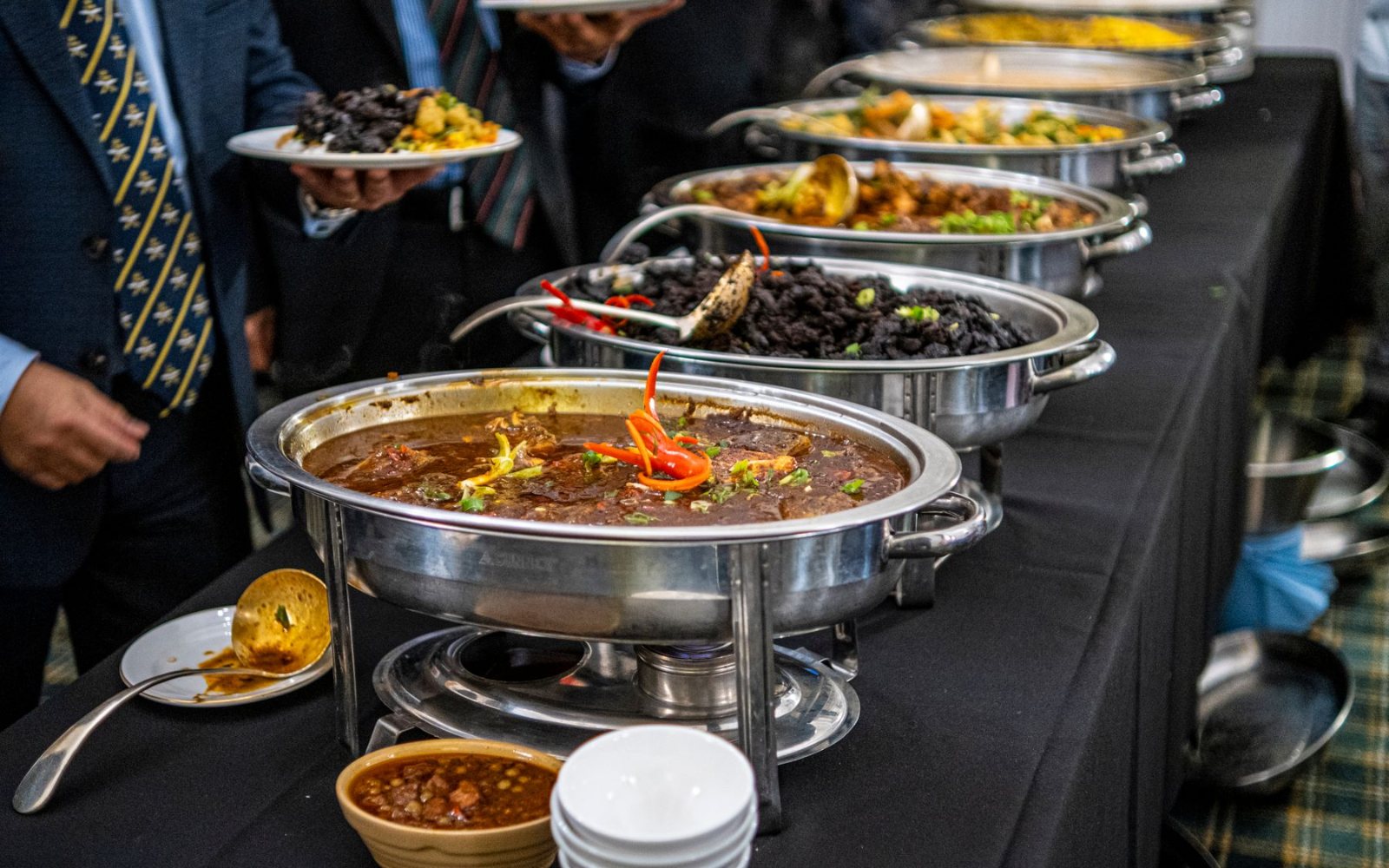
Food is what people remember and complain about, so treat catering as a make or break criterion rather than a detail to settle later. The first question is format: buffet or set menu. A buffet keeps the room social, moves people around and suits a mixed crowd with different appetites; a set menu feels more formal, paces the evening around the courses and works well when there is a programme to keep on schedule. Neither is better in the abstract, they simply fit different nights. We compare the two in depth in our note on buffet or set menu for a year end party.
Whichever you choose, press on flexibility. Can the kitchen handle vegetarian, halal or allergy needs without a fuss? Can you preview or taste the menu before the night? What does the drinks arrangement look like, and can it flex to your budget rather than a fixed package you cannot move? Ask how the food is served and kept hot, especially for a buffet, and how many staff will be on the floor for your headcount. A venue that answers these openly is one that has run plenty of parties before.
4. Space and AV for your programme
Most year end parties are not just dinners. There are speeches, an awards segment, a slideshow of the year, a lucky draw, maybe a live band or a team performance. Every one of those needs the room to support it, and this is where venues quietly differ. Ask what the space gives you before you build a run of show around it.
Run through the technical checklist. Is there a stage, or room to set one, with a sightline from every table? Is there a screen big enough to read from the back, or a projector and a clear wall? What sound system is included, how many microphones, and is the room soundproofed enough for music without a complaint from the floor above? Is there space for people to actually get up and move, or does the seating pin everyone in? A venue with a built in screen and a proper sound rig saves you hiring gear and cuts a whole layer of risk on the night.
When you map your programme against a room, our year end party checklist is a useful thing to run down.
5. Ambience, service and how it fits the budget
The last criterion is the one that turns a functional room into a night people talk about. Ambience is the feel of the place before you have added a single decoration: the ceiling height, the lighting, the finish of the space, the view from the windows. A venue with character does half your styling for you. A blank hall means you are paying to dress it up from scratch.
Service sits alongside it. The team behind the venue is who you actually deal with, from the first quote to the last guest leaving. Responsiveness while you are still planning tells you a lot about the night itself. And all of this has to land inside a budget, which is why a venue that offers tailored packages rather than one fixed price is worth seeking out: it lets you spend where it counts for your group and trim where it does not. Weigh the whole picture together, since the cheapest room that needs a truckload of hired extras is rarely the best value once everything is added up.
Book early, because December fills up
One practical warning sits above all five criteria: timing. The last few weeks of the year are peak season for every good venue in the city, and the best rooms on the best dates go months ahead. Companies that leave it to November often find their first, second and third choices all taken, and end up compromising on the room, the date or both.
If you have a target week, start enquiring early, hold the date provisionally as soon as you can, and confirm the headcount range even before the final list is locked. Early booking also gives you room to taste the menu, walk the space and plan the programme without a rush.
How the venues at The Myst fit different sizes
To make the criteria concrete, here is how the spaces at The Myst Dong Khoi tend to suit different groups. Sizes are a guide, and the team will lay out the right room for your exact format and headcount.
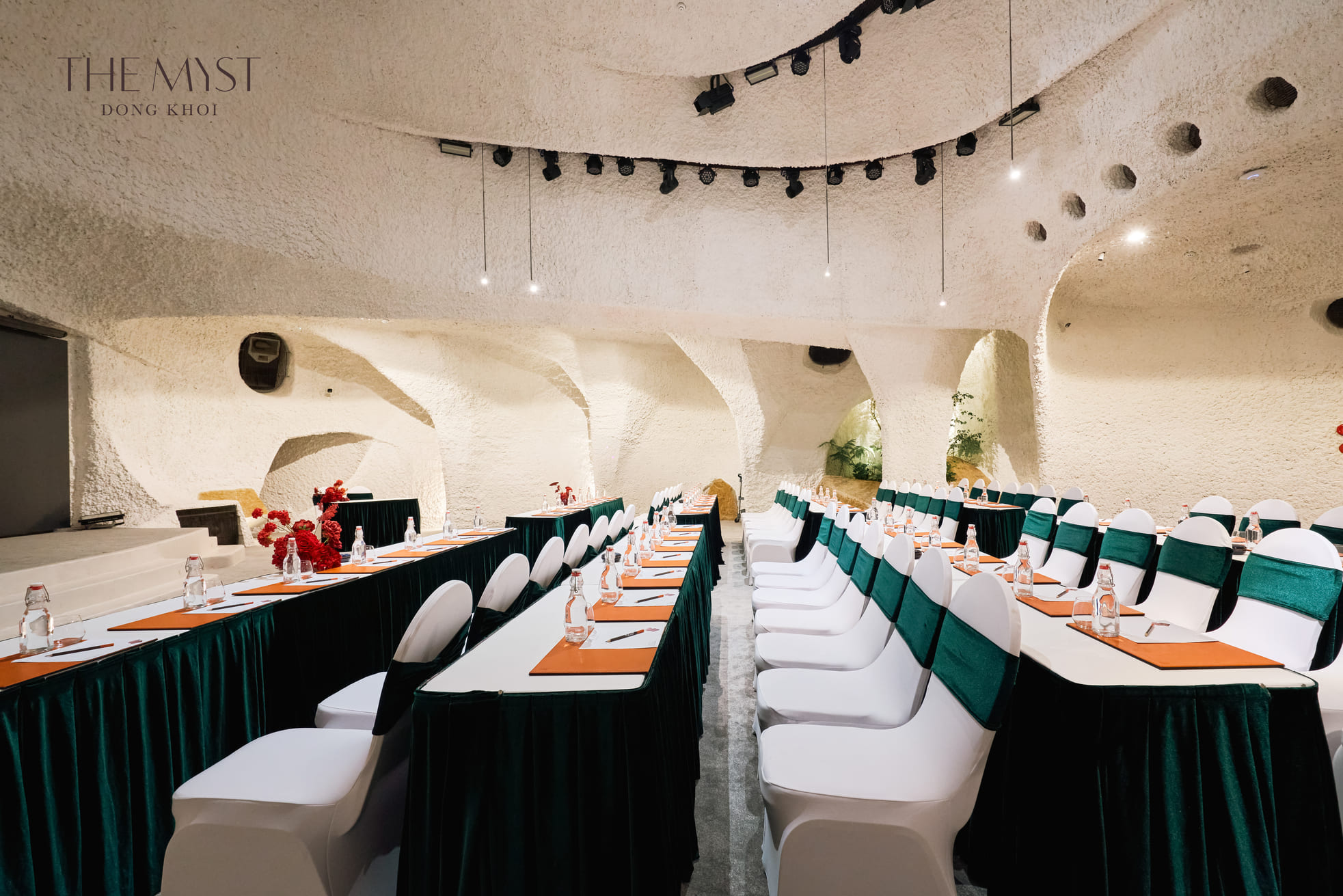
- Up to around 100, a full company party. The soundproofed ballroom runs to roughly 137 square metres and seats up to about 100 theatre style, which makes it the natural choice for a larger year end dinner or an awards night with a stage.
- Around 80, with a screen for the programme. The Galaxy mezzanine seats about 80 under a starry sky ceiling, with a 320 inch screen already built in, which suits a party built around a slideshow, a video or a presentation.
- Around 100 meeting or 70 dining, a ground floor option. ERY on the ground floor takes about 100 for a meeting or 70 for dining, an easy access space with no stairs to climb.
- Around 80 seated or 100 standing, up on floor 12. The Nest on the twelfth floor holds about 80 seated or 100 standing, with the city and river beyond the windows for a party that wants a view.
- A rooftop finish. ROOTY on the rooftop suits a cocktail reception or an after party under the open sky.
All of it comes with buffet or set menus and packages tailored to the group, in a central District 1 address that your team can find without a map. To talk through dates and numbers, write to [email protected] or call +84 28 3520 3040.
Frequently asked questions
What is the most important criterion for choosing a year end party venue?
How far in advance should I book a year end party venue in Saigon?
Is a buffet or a set menu better for a year end party?
What makes District 1 a good area for a corporate party?
What AV should a year end party venue provide?
Can a venue tailor the package to our budget?
Plan your year end party at The Myst
The Myst Dong Khoi is a boutique heritage hotel in the heart of District 1, with venues from a soundproofed ballroom to a rooftop, buffet or set menus, and packages tailored to your group. Tell us your date and headcount and our events team will suggest the right space and walk you through the options. Write to [email protected] or call +84 28 3520 3040.
→ Explore meetings and events at The Myst Dong Khoi
→ Read the full year end party planning guide
Crafted by Silverland Hotels.
Blog
A year-end party looks simple from the outside: a room, a meal, a few speeches. Behind it sit a hundred small decisions, and most of them depend on one another. Miss the venue deposit and the date slips. Forget the microphone count and the awards moment falls flat. This is a working checklist, grouped by the order you actually need to do things, so nothing important waits until the last week. Follow it phase by phase and the night runs itself while you enjoy it.
At a glance. A good year-end party plan moves through nine phases: fix your goals, budget and headcount first; then lock the date and venue; then catering, programme, invitations and AV; then build a run-of-show and a day-of plan; and close the loop afterwards. Start eight to twelve weeks out for a mid-sized company. Everything downstream gets easier once the first three phases are settled.
Table of Contents
Phase 1. Goals, budget and headcount
Before you look at a single venue, agree what the party is for. A reward for a hard year, a thank-you to clients, a team that has just doubled in size: each points to a different room, a different budget and a different tone. Settle this with whoever signs off, then the rest of the decisions have something to lean on.
- Purpose. One line everyone agrees on, for example "thank the team and hand out the annual awards".
- Headcount range. A working number with a margin, say 70 to 90, not a single guess. The venue and catering both hinge on it.
- Budget per head and total. Split it early into venue, food and drink, entertainment, printing and a ten percent buffer for the things you forget.
- Decision owners. Who approves spend, who signs the contract, who runs the night. Name them now.
- Must-haves versus nice-to-haves. A live band might be optional; a working microphone for the CEO is not.
Phase 2. Date and venue
December fills up fast in central Saigon, so this is the phase to move on quickly. Shortlist two or three dates, then hold the room before you announce anything. A venue that matches your headcount and format saves you fighting the space all night. For a fuller breakdown of what to look for, our guide on choosing a year-end party venue in Saigon walks through the criteria in detail.
- Two or three candidate dates, checked against payroll dates, public holidays and any big client deadlines.
- Room that fits the format. A seated dinner for 90 needs more floor than a standing reception for the same number.
- Capacity confirmed in writing, theatre style, banquet rounds or standing, whichever you are using.
- Location and access, easy for guests to reach and to leave late, with parking or a taxi rank nearby.
- Deposit, cancellation terms and what the room rate includes before you sign anything.
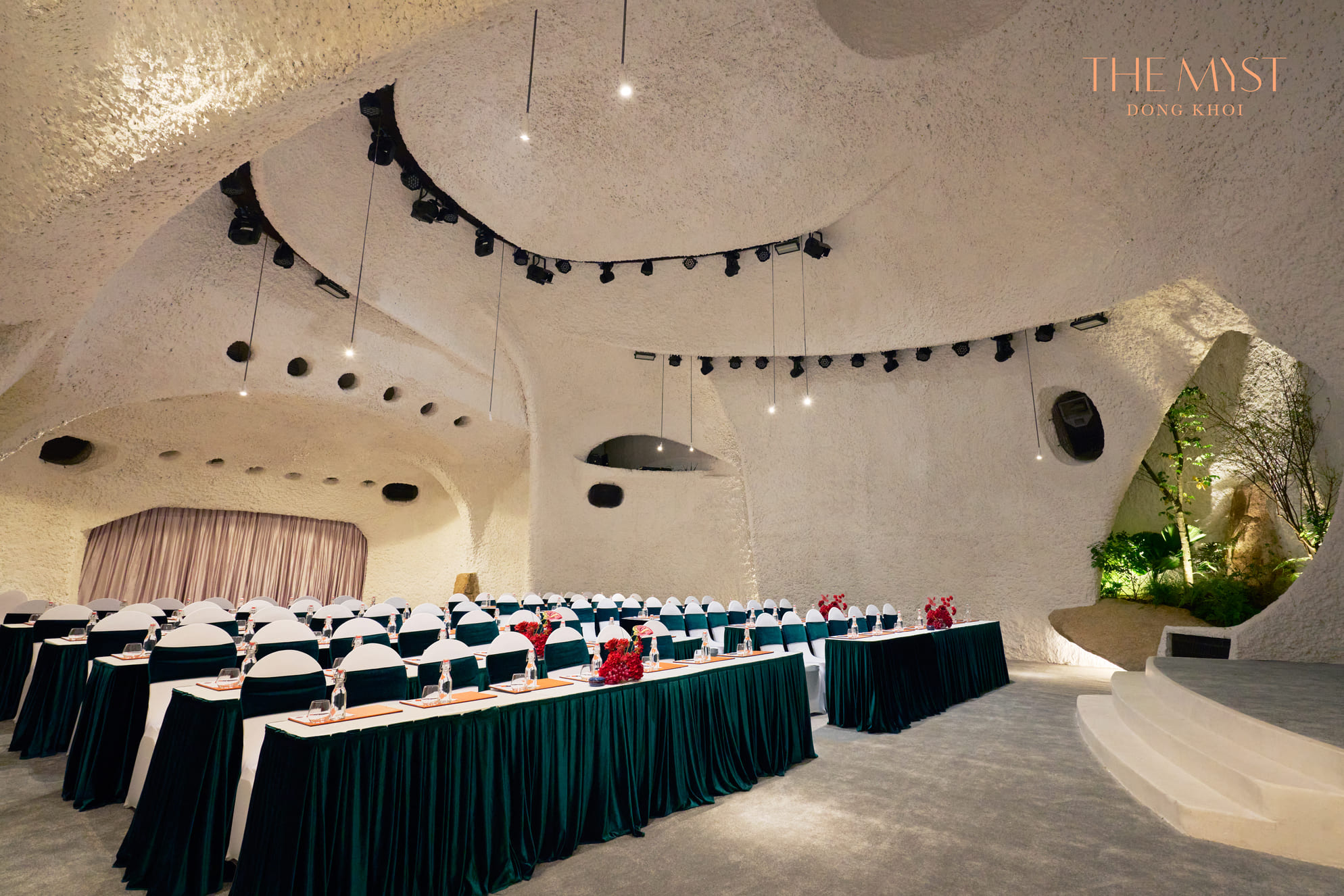
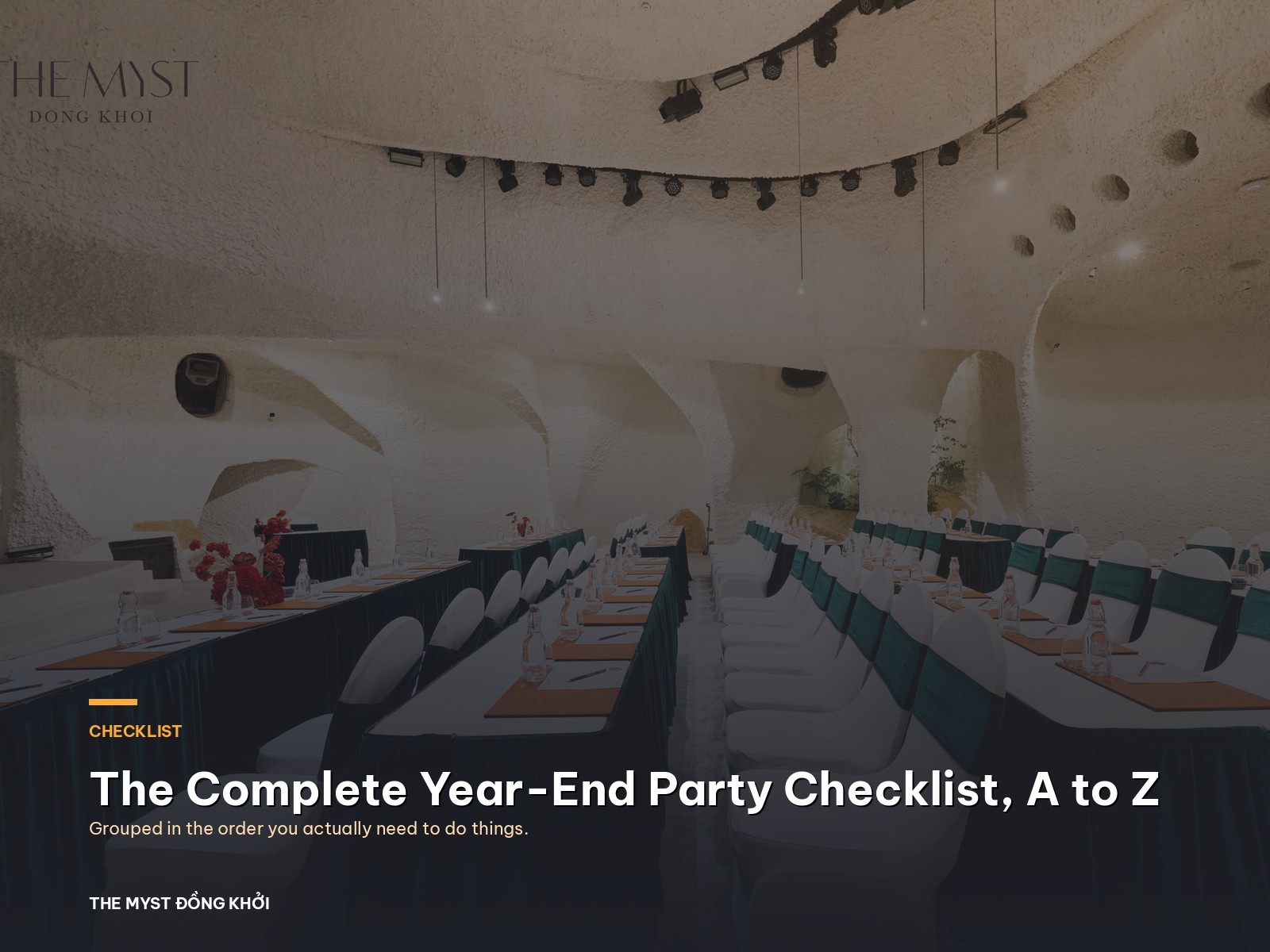
At The Myst Dong Khoi, on 6-8 Hồ Huấn Nghiệp in District 1, the choice runs from a roughly 137 square metre soundproofed ballroom that seats up to about 100 theatre style, to the Galaxy mezzanine room for around 80 under a starry-sky ceiling with a 320-inch screen, the ground-floor ERY room for roughly 100 in meeting layout or 70 for dining, The Nest on the twelfth floor for about 80 seated, and the ROOTY rooftop for a party that spills into the open air.
Phase 3. Catering and drinks
Food sets the mood more than most people expect. The first fork in the road is buffet or set menu, and it shapes both the flow of the evening and the room layout. Decide it here, then let the kitchen build around it.
- Buffet or set menu. A buffet keeps people moving and mingling; a set menu suits a seated programme with speeches between courses.
- Dietary needs collected in advance, vegetarian, allergies, anyone who does not drink.
- Drinks plan. Welcome drink, what is included, whether there is a bar tab or a cash bar, and a clear cut-off time.
- Timing of service mapped against the programme, so the awards do not clash with the main course.
- Final headcount deadline for the kitchen, usually a few days out, and who confirms it.
Phase 4. Programme, MC, awards and entertainment
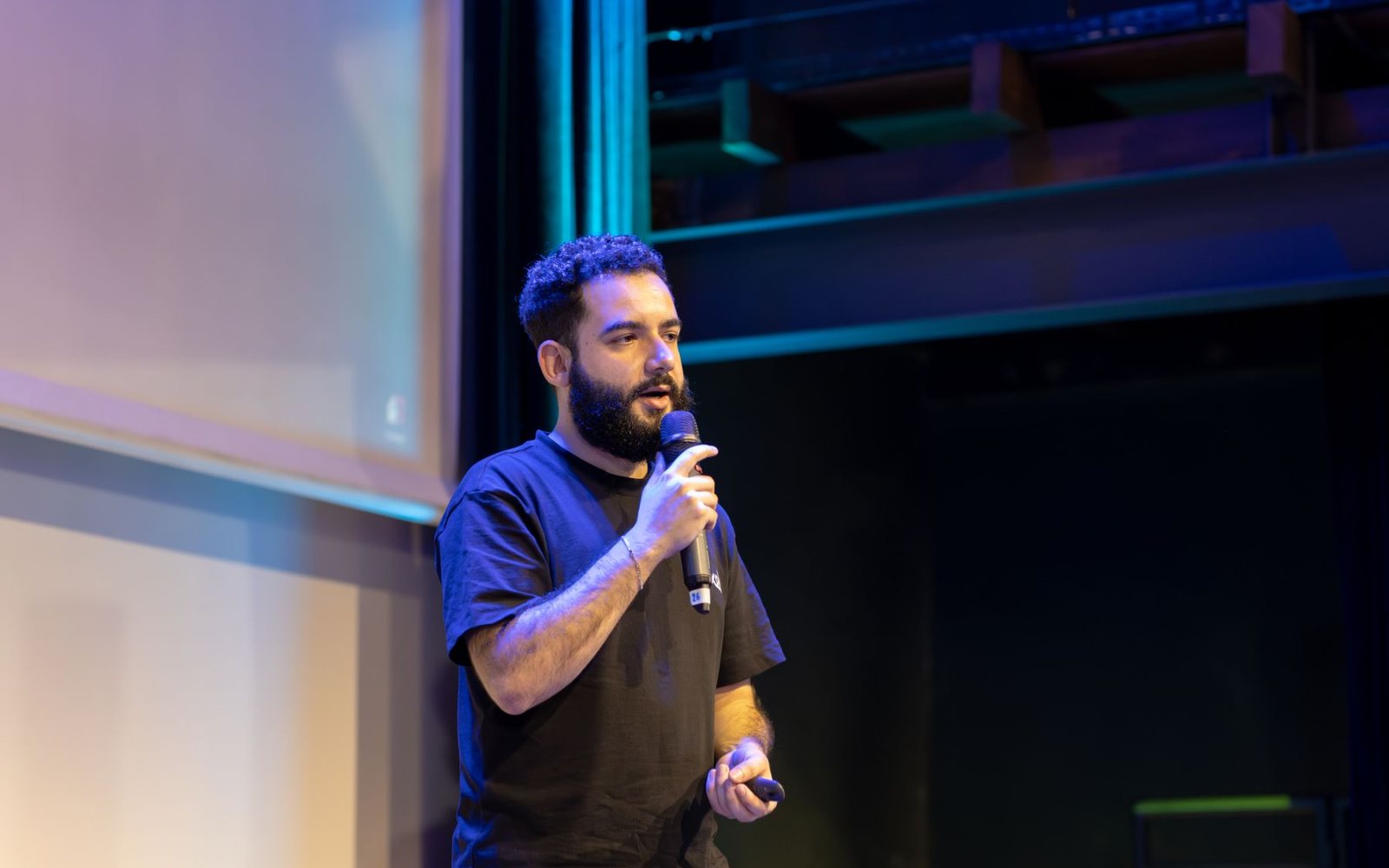
This is the part guests remember. A loose plan here is where evenings drift, so give every segment a length and an owner. Keep speeches short and the energy moving.
- An MC briefed with names, titles and running order, and told how to pronounce anything tricky.
- Speeches capped, ideally one main address kept under ten minutes, plus any short thank-yous.
- Awards and recognition, with the list finalised, trophies or certificates on site, and a photographer ready for each handover.
- Entertainment, band, DJ or performers booked, with their own sound needs noted and a sound check time.
- Games or a lucky draw, prizes bought, rules written, and someone to run it so it does not stall.
Phase 5. Invitations and internal communications
People cannot come to a party they have not heard about clearly. Send the details early, then remind them, and make it easy to say yes.
- A save-the-date as soon as the date is locked, even before the full details are ready.
- The formal invitation with date, time, venue, dress code and an RSVP method that you can actually track.
- A dress code stated plainly, so nobody arrives over or underdressed.
- Reminders at one week and one day, with the address and start time repeated.
- Plus-ones and guests clarified up front, since they change the headcount and the catering.
Phase 6. Logistics and AV
The technical layer is invisible when it works and impossible to hide when it fails. Walk the room in advance and confirm every piece, especially anything the programme depends on. If your timeline is tight, our 90-day year-end party planning timeline shows when each of these should be locked.
- Stage and podium placed so the whole room has a sightline, with the screen visible from the back tables.
- Sound, enough microphones for the format, wireless handhelds for awards, and a tested feed for music.
- Screen and slides, the deck loaded and run through, with a backup copy on a second device.
- Seating plan, table numbers, a guest list at the door and reserved seats for leadership and special guests.
- Lighting, signage and a coat or bag area, plus power for the band and any photo booth.
Phase 7. The run-of-show for the night
A run-of-show is a single timed document that turns all the pieces above into a minute-by-minute plan. Everyone who has a job on the night should hold a copy.
- A timeline with clock times, from guest arrival and welcome drinks through to the last song and close.
- Each segment owned by name, so it is clear who cues the MC, who starts the music, who brings out the trophies.
- Cues written down, when the lights dim, when a video rolls, when dinner is served.
- Buffer time built in, because speeches always run long and guests always arrive late.
- A shared version with the venue, the MC and the AV team, so everyone is reading the same page.
Phase 8. Day-of coordination
The plan is done; now it just needs steady hands. Arrive early, check everything with your own eyes, and keep one person free to solve problems rather than run a segment.
- An on-site lead whose only job is to coordinate, phone charged, run-of-show in hand.
- A sound check and a slide run-through before the first guest walks in.
- The registration desk staffed, name list ready, any badges or gifts laid out.
- A short brief for the team, so waiters, MC and AV all know the running order.
- A quiet contingency, a spare microphone, a printed guest list and the venue contact on speed dial.
Phase 9. After the party
The night ends but the goodwill should not. Closing the loop well is what makes next year easier to plan and easier to get approved.
- Thank-yous to guests, to the team who ran it and to the venue, sent within a day or two.
- Photos and video gathered, a small selection shared internally while the mood is fresh.
- Feedback collected with a couple of quick questions, honestly and while people remember.
- Final costs reconciled against the budget, with notes for whoever plans the next one.
- A short debrief, what worked, what to change, saved somewhere you will find it next December.
Worked through in order, these nine phases turn a daunting brief into a series of small, doable steps. For the wider picture, from first idea to final thank-you, our complete guide to planning a year-end party ties every stage together.
Frequently asked questions
When should we start planning a year-end party?
How far in advance should we book the venue?
Buffet or set menu for a company party?
How do we set the headcount and budget?
What should a run-of-show include?
How do we book a year-end party at The Myst Dong Khoi?
Plan your year-end party with our events team
Tell us your date, your headcount and the kind of night you have in mind, and our team at The Myst Đồng Khởi in District 1 will match it to the right room, walk you through buffet or set menu, and help you build the run-of-show. Reach us at [email protected] or +84 28 3520 3040.
→ Talk to our meetings & events team
→ Read the complete year-end party guide
Crafted by Silverland Hotels.
Blog
A year-end party is the one night a company sets aside to stop, look back, and say thank you. It closes the working year, marks what the team pulled off, and gives everyone a shared memory to carry into the next twelve months. Get it right and people talk about it for weeks.
Get it wrong and it becomes the meeting nobody wanted to attend. This guide is the master map: what a year-end party is really for, the handful of decisions that shape the night, and where each one leads if you want the detail. Read it top to bottom, then follow the links to the parts that matter most to you.
At a glance. A corporate year-end party (also known in Vietnam as a tiệc tất niên) usually runs in December or January, before Tết. The core decisions are five: goals and budget, headcount and date, venue, catering format, and the programme for the evening. Plan the popular dates two to three months ahead, because December fills fast. At The Myst Dong Khoi in District 1, the events team hosts year-end parties across several spaces, from a soundproofed ballroom to a rooftop, with buffet or set menu catering tailored to the group.
Table of Contents
Why a year-end party is worth doing well
It is easy to treat the year-end party as a line item, a dinner to be booked and survived. That is a missed opportunity. For most teams it is the only evening all year when everyone is in one room with nothing on the agenda but each other. The people who rarely cross paths in daily work sit at the same table. The new joiner meets the founder. The quiet department gets its moment on stage.
Done well, the night does real work. It signals that the year mattered and that the effort was seen. It gives leadership a natural stage to thank people by name, to hand out an award, to tell the story of the year in a way a group email never can. And it builds the shared memory that carries a team through the harder months. None of that requires a big budget. It requires intent, a clear reason for gathering, and enough planning that the evening runs without anyone visibly holding it together.
The decisions that shape the night
Almost everything about a year-end party comes down to a few early decisions. Settle these first and the rest falls into place. Leave them vague and you will feel it on the night.
- Goals and tone. Is this a formal thank-you with awards and a sit-down dinner, or a loose, celebratory party where people mingle and dance? Decide the tone before anything else, because it drives venue, catering and programme.
- Budget and headcount. Fix a per-head figure and a firm guest count. Everything else, from the room to the menu, is chosen inside that frame. Plus-ones, partners and any clients also need deciding early.
- Date and venue. The two are locked together, because the best rooms on the best December dates go first. More on both below.
- Catering and programme. Buffet or set menu, and what actually happens across the evening, from the MC to the awards to the entertainment.
If you would rather work from a single, ordered list you can tick off, we have built one. Our year-end party planning checklist takes these decisions and turns them into concrete tasks with owners and deadlines. And if you are wondering when to start, our 90-day planning timeline works backwards from the party date so nothing gets left to the last week.
Choosing the date and the venue
Timing is the first real constraint. In Vietnam the year-end party season runs from early December through late January, tapering off as Tết approaches. Fridays and the two weekends before the holiday are the most contested, so if your team has a preferred date, treat it as the thing you book first, not last. Popular venues in central Saigon are often reserved two to three months out for those peak evenings.
The venue then has to fit the night you have described. A theatre-style awards ceremony needs a stage, a screen and a room that seats everyone facing forward. A mingling party wants standing room, a bar and space to move. A sit-down dinner needs round tables and service that keeps pace. Capacity, layout, sound, parking and how easy the place is to reach after work all matter more than the photos on a website. We set out what to look for, and the trade-offs between hotel ballrooms, restaurants and rooftops, in our guide to choosing a year-end party venue in Saigon.
One more timing note. Because the year-end party sits right before the lunar new year, some teams choose to combine the two moods, closing the working year while looking ahead to Tết. If that is you, our overview of Tết 2027 in Saigon is worth a look for the wider season.
Food, programme and the flow of the evening
Catering shapes both the budget and the feel of the room. A buffet keeps people moving, suits a mingling crowd, and handles mixed tastes and dietary needs with ease. A set menu is calmer and more formal, better for a seated evening built around speeches and awards, with courses that pace the night for you. Neither is simply better; it depends on the tone you chose at the start. We weigh the two in full, with the practical pros and cons, in buffet or set menu for a year-end party.
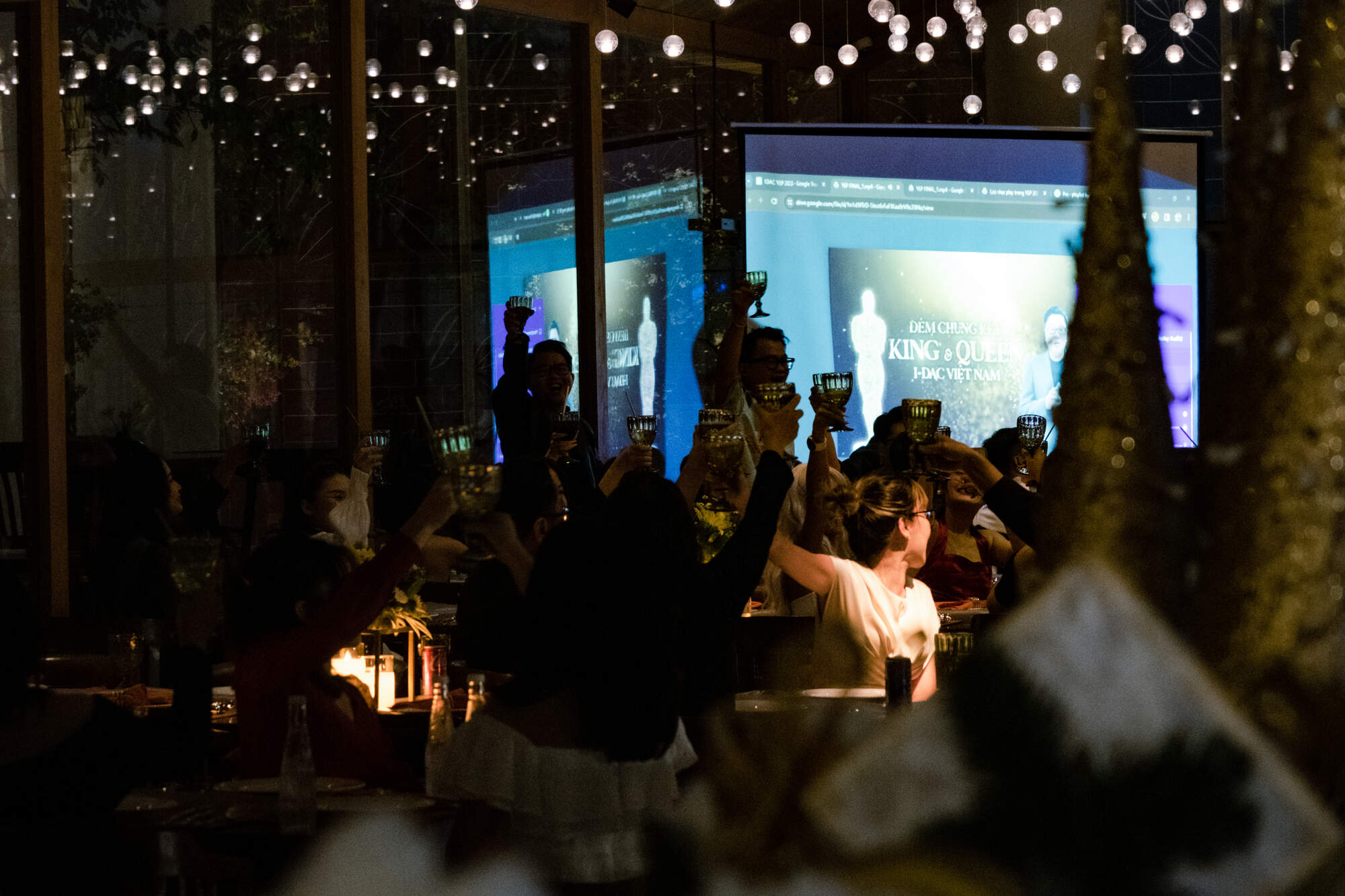
The programme is what turns a dinner into an event. A good MC holds the shape of the evening, moving it from welcome to speeches to awards to the lighter, freer part of the night. Awards and recognition are the heart of it for most companies, so build in time and thought there rather than rushing it between courses.
Entertainment, from a live band to a lucky draw to a simple photo corner, gives energy and pace. Keep the formal part tight, land the thank-yous clearly, and leave real time at the end for people to relax. A rough running order, even a loose one, is what keeps the night from drifting.
Plenty of good plans still come apart on the night, usually for the same reasons: a guest count that slipped, a programme that ran long, sound that failed, or a venue booked too late. We have gathered the ones we see most often, and how to head them off, in our note on the most common year-end party mistakes.
Hosting your year-end party at The Myst
The Myst Dong Khoi is a boutique heritage hotel in the heart of District 1, at 6-8 Hồ Huấn Nghiệp, a short and easy trip for city-based teams. It hosts year-end parties, weddings and corporate events across several spaces, so the room can be matched to the size and mood of your night rather than the other way around.
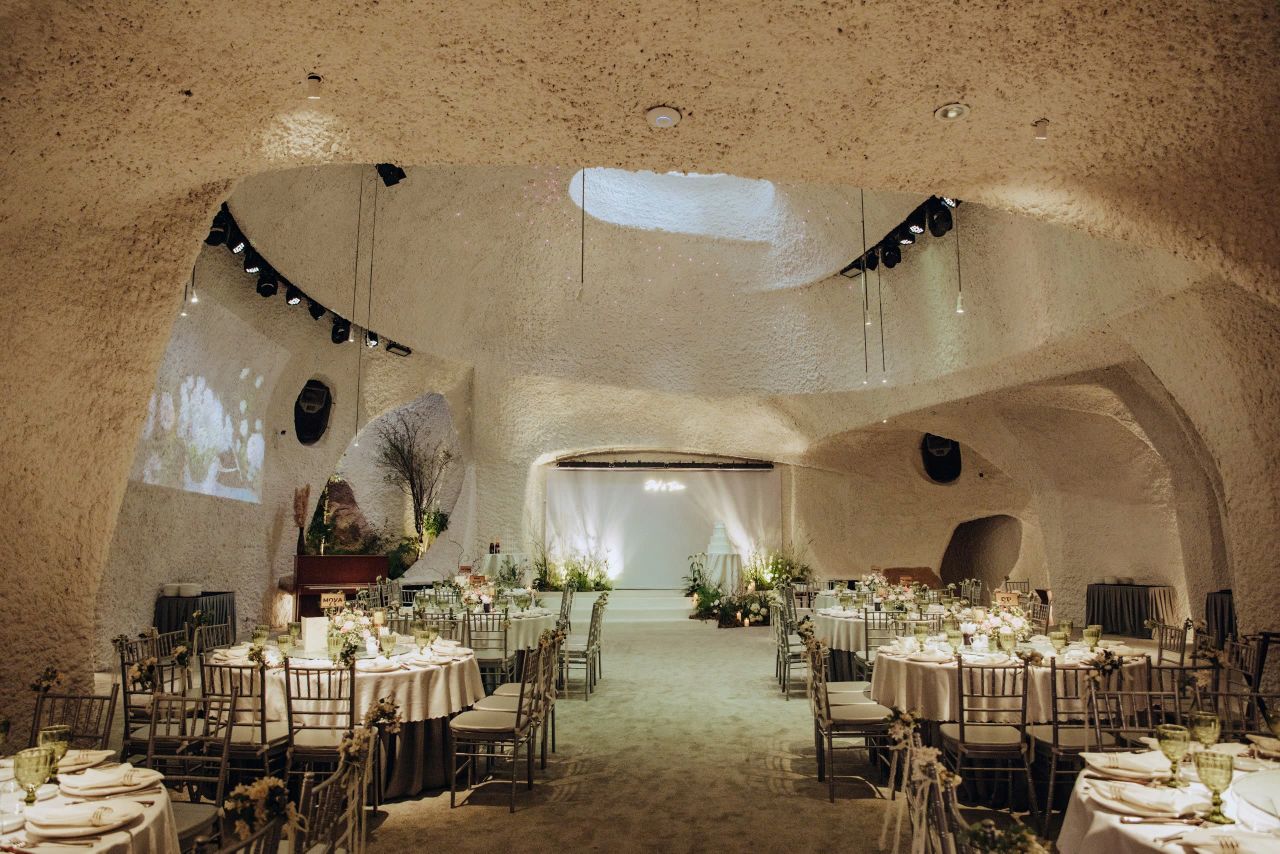
- Main ballroom. A soundproofed room of about 137 m², seating up to around 100 guests theatre-style, suited to awards ceremonies and larger sit-down evenings.
- Galaxy meeting room. On the mezzanine, around 80 seats, with a 320-inch screen and a ceiling scattered with tiny lights like a starry Saigon night sky, good for a programme built around presentations and video.
- ERY room. On the ground floor, about 100 for a meeting layout or 70 for dining, an easy-access space for mid-sized groups.
- The Nest. The restaurant on the twelfth floor, around 80 seated or 100 standing, with the city and river below for a party with a view.
- ROOTY rooftop. Around 30 indoors or 80 standing, an open-air option for a more relaxed, mingling evening.
Catering can be served as a buffet or a set menu, and the events team tailors each package to the group rather than working from a fixed sheet. The clearest next step is simply to tell them your headcount, your date and the kind of night you have in mind, and let them suggest the space and format that fit. You can reach the team on the details in the box below.
Frequently asked questions
What is a corporate year-end party?
When should we start planning a year-end party?
How do we choose the right venue?
Buffet or set menu for a year-end party?
What should the programme include?
Can The Myst Dong Khoi host our year-end party?
Talk to our events team
The Myst Dong Khoi hosts year-end parties, tất niên nights and corporate events across ballroom, restaurant and rooftop spaces in the heart of District 1. Tell us your date, your headcount and the kind of evening you have in mind, and we will suggest the space and catering that fit. Reach the events team at [email protected] or +84 28 3520 3040.
→ Talk to our events team about your year-end party
→ Start with our year-end party planning checklist
Crafted by Silverland Hotels.
Blog
You do not need a flight to feel a world away. A few streets in the centre of Ho Chi Minh City carry the mood of a Tokyo back lane, all lanterns and low signage and the smell of broth drifting out of an open door.
Locals call it Little Japan, or Little Tokyo, and it hides in plain sight around Le Thanh Ton and Thai Van Lung. This is a light guide to spending a day there, what the quarter is, how its streets feel, what to do when you want a change of scene, and where to pause when you need a quiet coffee in the middle of it all.
At a glance. Little Japan is the Japanese quarter of central Saigon, clustered around Le Thanh Ton and Thai Van Lung streets. Expect izakaya, ramen and sushi counters, small Japanese groceries and narrow lantern-lit lanes. It makes an easy half-day or full-day wander without leaving the city. The calm place to pause in the middle of it is Bason Cafe Sakyo, on the ground floor of Silverland Sakyo hotel, open 07:00 to 22:00.
Table of Contents
Where Little Japan hides in the centre
Most visitors walk right past it. The quarter sits a few minutes from the busiest stretch of the centre, yet it keeps a different pace entirely. Its heart is a short run of Le Thanh Ton street and the small alleys that branch off it, with Thai Van Lung running nearby. Step off the main road and the shopfronts change. Signs turn to Japanese script, doorways narrow, and paper lanterns appear where you would expect neon.
The area grew up around the Japanese community that settled here over the years, and it has stayed genuinely theirs. This is not a themed street built for photographs. It is a working pocket of the city where Japanese residents actually eat, shop and gather, which is exactly why it feels real. If you like the idea of finding a distinct district within the centre, it sits alongside the other pockets we cover in our guide to Saigon neighbourhoods beyond District 1.
The streets and the mood
The pleasure of Little Japan is in the details. Wander slowly and you notice the small things: a hand-written menu taped to a glass door, a curtain half-drawn across an izakaya entrance, the soft clatter of a kitchen behind it. In the daytime the lanes are quiet and shaded, and the groceries do their steady trade in miso, sauces, rice and snacks flown in or made to order. Come evening the mood lifts. Lanterns switch on, the counters fill, and the whole quarter takes on a warm, low-lit glow.
What makes it work is the contrast. Outside, Saigon is loud and bright and fast. Here, a few metres in, the volume drops. You could be in a side street in Shinjuku, right up until a motorbike slips past and reminds you where you are. That gentle collision of two cities is the reason people keep coming back, and it is why the quarter carries so many names, Little Japan, Little Tokyo, the Japanese quarter, the Le Thanh Ton Japanese street.
What to do for a change of scene day
You do not need a plan to enjoy the quarter, but a loose one helps. Here is the easy shape of a day.
- Wander first, without a map. Start on Le Thanh Ton, then let the alleys pull you off it. The best finds are the ones you were not looking for.
- Eat Japanese, properly. This is the reason many people come. Ramen at a tucked-away counter, sushi from a small specialist, or an izakaya spread in the evening. The choice is real and the standards are high.
- Browse the groceries. The little Japanese shops are half the fun. Snacks you cannot find elsewhere, sauces and pantry things, a slow browse with no pressure to buy.
- Pause for a coffee. A day of wandering needs a quiet middle. That is where a calm café earns its place, somewhere to sit, cool down and let the morning settle before the second half.
It is a flexible day rather than a fixed itinerary. If you prefer a slower start and a proper sit-down breakfast before you set out, our guide to a weekend morning café in District 1 is a gentle way to begin.
Bason Cafe Sakyo, the calm heart of the quarter
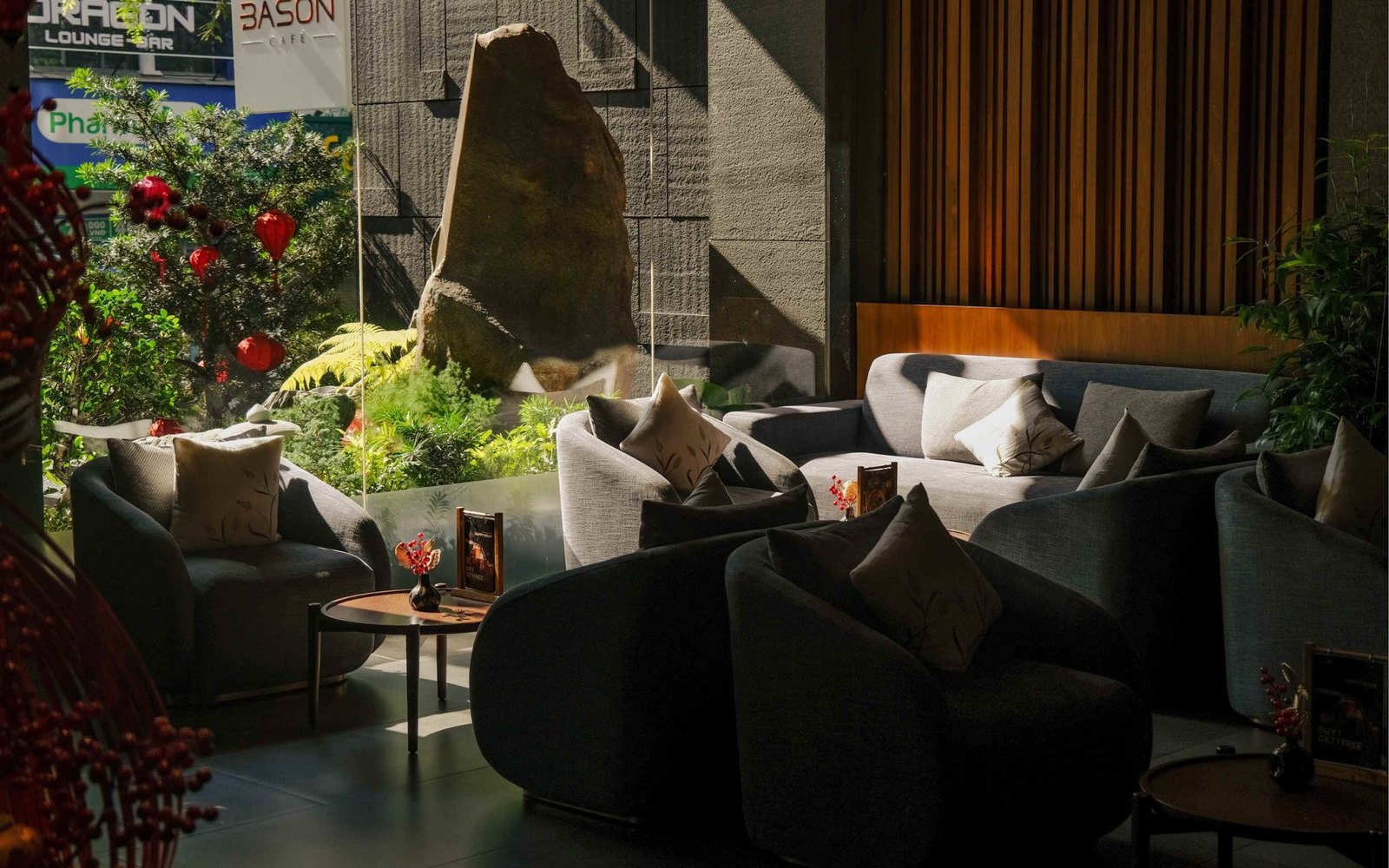
Every good wander needs a place to stop, and in Little Japan that place is Bason Cafe Sakyo. It sits on the ground floor of the Silverland Sakyo hotel at 10A-10B-10C Le Thanh Ton, right in the heart of the quarter, which means you are never more than a short stroll from its door. Step inside and the noise of the street falls away.
The concept fits the neighbourhood perfectly. The café blends the soul of Saigon with the tranquil spirit of Japan, and you feel it the moment you sit down. There is greenery throughout, sunlight filtering through leaves, and a calm Vietnamese-Japanese aesthetic that never tries too hard. It is the kind of room designed for lingering rather than rushing, a quiet counterpoint to the busy lanes just outside.
The menu keeps things all-day and unhurried: proper coffee alongside a food menu that runs from morning through to night, with head-chef signature dishes worth asking about when you sit down. Rather than list a fixed menu here, the honest advice is to see what the kitchen is doing on the day.
The café is open from 07:00 to 22:00, so it works whether you are starting early, breaking up the middle of the day, or winding down as the lanterns come on. It is also a naturally calm spot to sit with a laptop or meet someone, in the same spirit as the places in our guide to a café for work and meetings in Saigon.
Making a day of it
The quarter rewards a little rhythm. Arrive mid-morning while the lanes are quiet and the light is soft. Wander first, browse a grocery or two, then settle in at Bason Cafe Sakyo for a coffee before lunch. Eat Japanese somewhere nearby, take a slow afternoon, and if you can, stay on as the evening turns the lanterns on, because the quarter is at its best in that first hour of dusk.
A few small things make it easier. Wear comfortable shoes, since the joy is in walking. Do not over-plan; the point of a change of scene is to let the day wander with you. And keep the café in mind as your anchor, a fixed calm point you can return to whenever the streets get busy or the sun gets high. To reserve a table at Bason Cafe Sakyo, call (+84) 888 100 739 or book online. It is a small city, an easy day, and a genuine world away without ever leaving town.
Frequently asked questions
Where is Little Japan in Saigon?
Why is it called Little Japan or Little Tokyo?
What is there to do in the Japanese quarter?
Where can I get a quiet coffee in Little Japan?
Is Little Japan good in the evening?
How do I book a table at Bason Cafe Sakyo?
Pause at Bason Cafe Sakyo
Right in the heart of Little Japan, Bason Cafe Sakyo is the calm place to stop between the lanes, a Saigon-meets-Japan room full of greenery and soft light, with coffee and an all-day menu from morning to night. Our team is glad to hold a table for you.
Crafted by Silverland Hotels.
Blog
Some mornings are for the alarm and the commute. A weekend one does not have to be. There is a particular pleasure in waking late with nowhere to be, wandering out into the centre of Saigon while it is still half asleep, and settling in somewhere for good coffee and an easy plate of food. No rush, no clock. This guide is about that morning, what makes a cafe right for it, and where to find one in central Saigon, led by the terrace at Bason Cafe Dong Khoi.
At a glance. A slow weekend morning in the centre asks for a cafe with room to linger, an all-day menu so you can eat whenever you arrive, and unhurried service. Bason Cafe Dong Khoi, on the ground floor of The Myst Dong Khoi at 4-6-8 Hồ Huấn Nghiệp, has a vintage brick room and a street-view terrace, Vietnamese coffee and an all-day kitchen. It opens at 07:00. There is no fixed brunch menu; you simply order coffee and a plate whenever you roll in.
Table of Contents
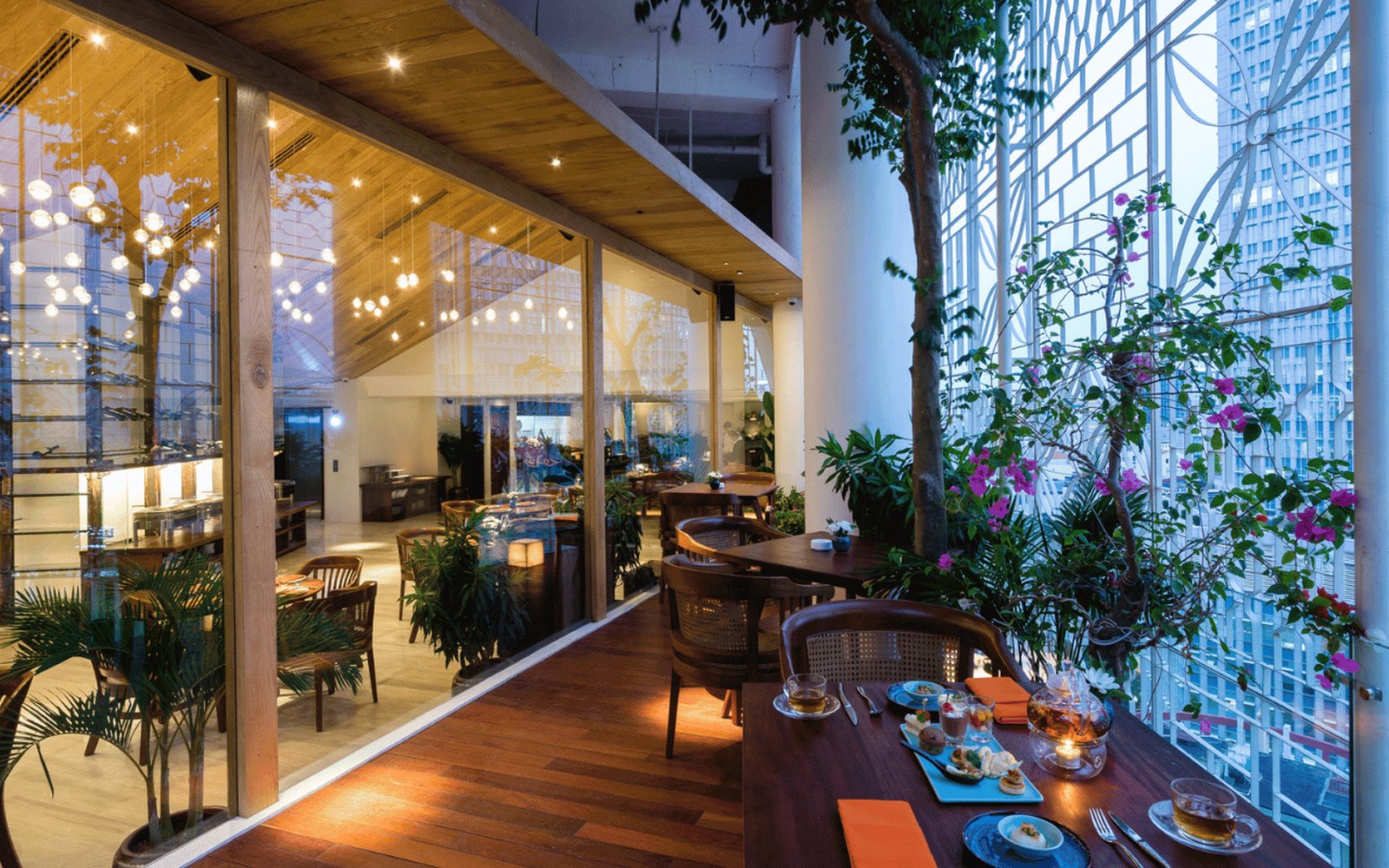
The case for a slow weekend morning
The working week runs on other people's timing. You get up because you have to, you eat on the move, you drink your coffee somewhere between the door and the desk. A weekend morning is the rare stretch that is genuinely yours, and the surest way to waste it is to fill it the moment you wake. Better to let it stay loose. Sleep in. Read something. Wander out with no plan sharper than coffee.
Central Saigon is at its gentlest early on a Saturday. The motorbikes have not built to their full roar, the shophouses are just lifting their shutters, and the light comes in low and soft across the streets around Đồng Khởi. Walk it before the heat arrives and the city feels almost unhurried, which is a rare thing to say about this part of town. The trick is to have somewhere to land, a table you can sink into for an hour or two while the morning warms up around you.
What makes a cafe right for it
Not every good cafe is a good slow-morning cafe. The ones that work share a few plain things, and once you notice them you start choosing by them.
- Somewhere to settle. A terrace to catch the morning air, or a bright room with a proper chair and a table you are not asked to give up. You want to arrive and stop moving.
- An all-day menu. The single most useful thing. If the kitchen serves food from open to close, it does not matter whether you turn up at nine or at half past eleven. You eat when you are hungry, not when a set brunch service decides.
- Unhurried service. Nobody hovering, nobody clearing the plate before you have finished the coffee. A second cup arrives when you ask, and the table stays yours.
- A central spot you can walk to. The whole mood breaks if getting there is a chore. Somewhere in the middle of things, easy to stroll to, so the morning starts the moment you leave your door.
Put those together and you have the setting. Coffee that is worth slowing down for, a plate you can order on your own schedule, a seat you can keep, and a short walk to reach it. That is really all a slow weekend morning needs.
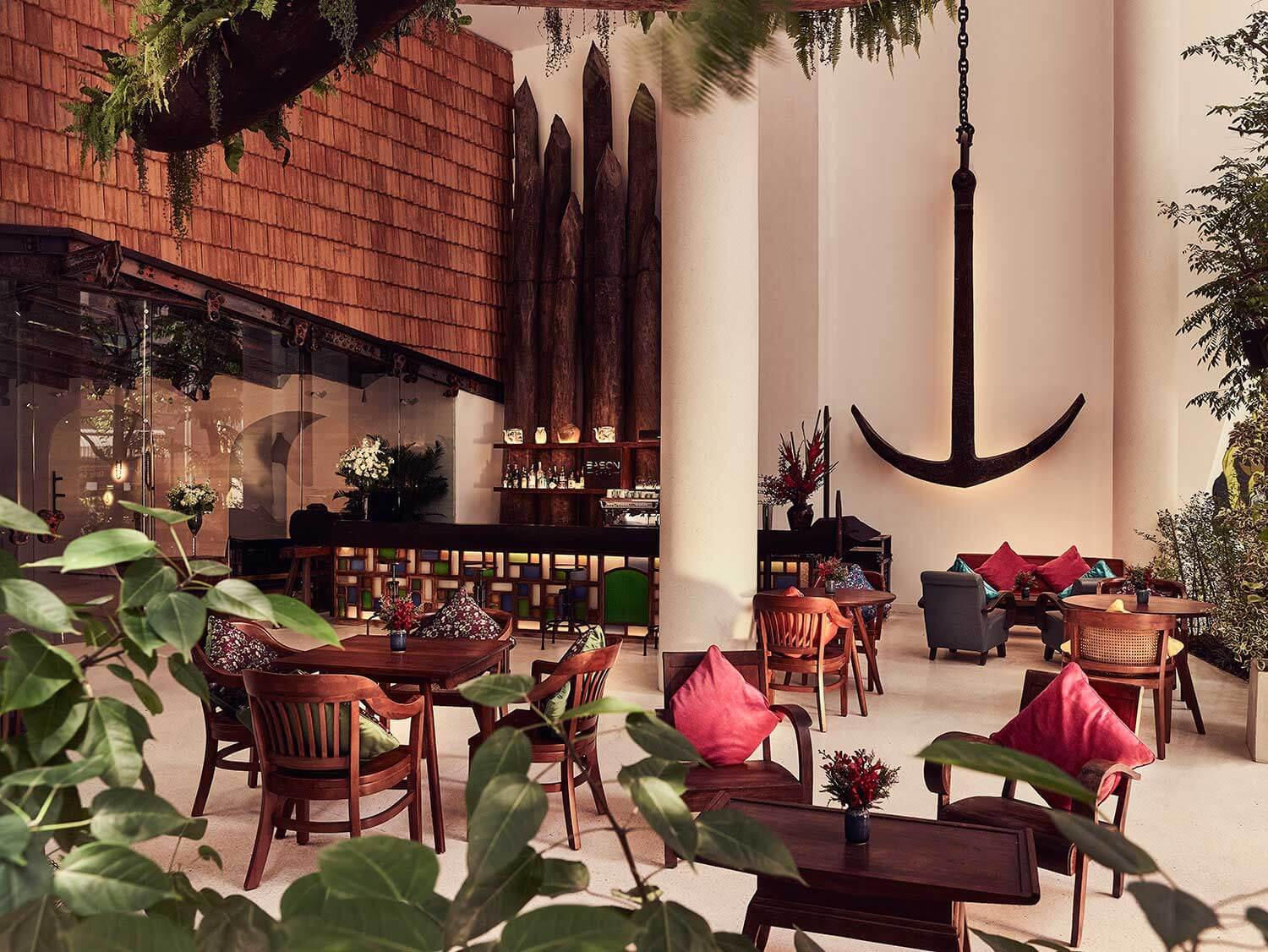
A morning on the Bason Đồng Khởi terrace
Bason Cafe Dong Khoi sits on the ground floor of The Myst Dong Khoi, at 4-6-8 Hồ Huấn Nghiệp in central Saigon, a couple of quiet streets back from the river. The name comes from the old Ba Son shipyard nearby, and the cafe wears that heritage openly. Reclaimed artifacts sit around the room, the walls are vintage exposed brick, and the whole place has the settled, worn-in feel of somewhere that was not built yesterday.
There are two ways to sit here, and on a slow morning both are good. Inside is the brick room, cool and a little dim, the kind of space that suits a late start and a strong coffee. Out front is the terrace, open to the street, which is where the morning really happens. Take a seat there with a Vietnamese coffee, watch the centre come slowly to life, and you understand what an unhurried Saigon morning is supposed to feel like. The doors open at 07:00, so you can be early if you want the quiet, or drift in later once the light has climbed.
One honest note, because it matters. There is no separate brunch menu and no set brunch here. What Bason keeps is an all-day food menu, served right through from morning to night. On a weekend that turns out to be exactly the point. You are not booking a brunch sitting or racing a service window. You arrive when you arrive, order a coffee, and pick something to eat whenever the hunger lands.
What to order from the all-day menu
Start with the coffee, because this is a Vietnamese cafe and it is what the kitchen does first. A Vietnamese coffee, slow-dripped and strong, is the natural opening to the morning. If that is not your mood, the matcha latte is the gentler, greener alternative, easy to sit with over a long conversation.
For food, the all-day menu means you can eat light or properly, early or late, without anyone minding. The pasta with cold cuts is the more substantial plate if you skipped anything resembling breakfast, savoury and filling. The vegetarian bún is the lighter, fresher choice, and a nice nod to home cooking on a slow day. And there is no rule that says a weekend morning cannot end on something sweet. A tiramisu or a panna cotta with the last of the coffee is a fine, unhurried way to let the morning run on into noon. Order it all at once or in waves; the kitchen is open either way.
Three Bason corners for a weekend morning
Bason is a small family of cafes across the centre, and while Đồng Khởi is the one to lead with, it is worth knowing the other two. All three open from 07:00 and all three keep the same all-day food menu, so the choice is really about which corner of the city you feel like waking up in.
- Bason Cafe Đồng Khởi. The anchor, on the ground floor of The Myst Dong Khoi at 4-6-8 Hồ Huấn Nghiệp. Ba Son shipyard heritage, a brick room and a street-view terrace. The pick for a slow central morning within walking distance of the river.
- Bason Bến Thành. At 15-17-19 Nguyễn An Ninh, in Phường Bến Thành, right by the market. This one leans art-forward, a livelier setting if you like a bit of morning bustle around your coffee.
- Bason Sakyo. At 10A-10B-10C Lê Thánh Tôn, in the Japanese quarter of central Saigon. Calm and green, the quietest of the three, and a good match for a morning when you want the city to stay soft. We say more about the neighbourhood in our guide to the Little Japan cafe corner of Saigon.
Bason Đồng Khởi also sits a short stroll from the grand old cafe corner near the Opera House, so a slow morning here folds easily into a wider wander through the centre. And if the mood turns from coffee to a proper afternoon treat, the ritual of afternoon tea at The Nest upstairs carries the same slow spirit into the later hours.
Frequently asked questions
Where is a good brunch cafe in District 1, Saigon?
Does Bason have a set brunch menu?
What should I order for a slow morning at Bason?
What time does Bason Cafe Dong Khoi open?
Are there other Bason cafes in central Saigon?
Do I need to book a table for a weekend morning?
Book a table at Bason Café Đồng Khởi
Bason Café Đồng Khởi sits on the ground floor of The Myst Đồng Khởi at 4-6-8 Hồ Huấn Nghiệp, in the heart of central Saigon. Come for a slow weekend morning on the terrace, with Vietnamese coffee and an all-day kitchen, and stay as long as the morning lets you.
→ Reserve a table at Bason Café Đồng Khởi, (+84) 28 3824 8066
→ Prefer somewhere calm and green? Meet Bason Sakyo in Little Japan
Crafted by Silverland Hotels.
Blog
An evening at the Saigon Opera House is one of the loveliest ways to spend a night in the centre, and the À Ố Show is the reason most people come. The show itself is well handled. What often is not is everything around it, the hour before when you are hungry and the venue is not open yet, and the hour after when the doors close and the street is quiet.
A little planning fixes both. This guide sets out a simple before-and-after plan around a cafe near the Opera House in Saigon that serves food all day and stays open late, so you can eat, watch, and unwind without once looking at the clock.
At a glance. The À Ố Show plays at the Saigon Opera House (Nhà hát Thành phố) in central Saigon. Bason Café Đồng Khởi sits on the ground floor of The Myst Đồng Khởi at 4-6-8 Hồ Huấn Nghiệp, a few minutes' walk away, and serves an all-day food menu from 07:00 to 23:00 (last order 22:45). That makes it easy to have a light bite before the show and coffee or dessert after. Book a table on (+84) 28 3824 8066. Coming from the market side instead, Bason Café Bến Thành is the alternative.
Table of Contents
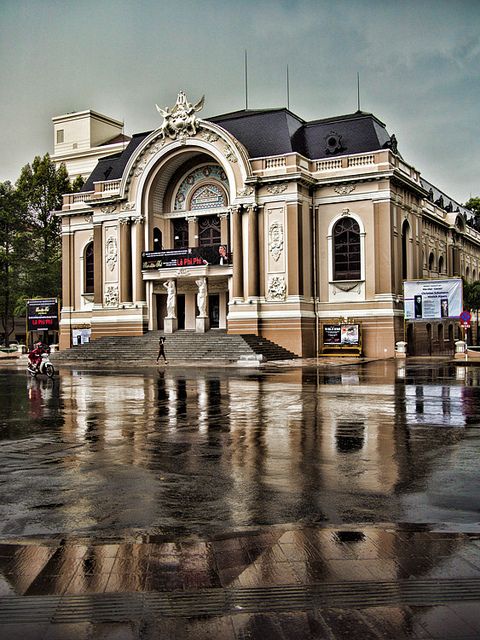
A night at the Opera House and the À Ố Show
The Saigon Opera House stands where Đồng Khởi meets Lam Sơn square, a French-era building that has watched the centre change around it for more than a century. Most evenings these days it hosts the À Ố Show, the bamboo-and-cirque piece that has become one of the city's signature cultural nights. Acrobats, woven baskets, live music, the whole thing built from the textures of village and city life in Vietnam. It runs a little over an hour, no interval, and it is the kind of show you want to arrive at settled rather than flustered.
That is the part people underestimate. A ticket gets you a seat for the performance, but the evening is longer than the performance. You will likely reach the area with time to spare, and you will certainly walk out afterwards with the night still young and nowhere obvious to go. The Opera House is beautiful and central, yet it is not a place you can linger inside once the lights come up. Which is exactly why the question of where to be before and after matters as much as the ticket itself.
Why plan the before and after
Think about the shape of the evening. The À Ố Show typically starts in the early evening, which lands awkwardly against dinner. Eat a full meal too early and you are heavy in your seat. Wait until after and you are ravenous through the whole show, then hunting for a table at ten at night when a good part of the centre is winding down. Neither is much fun.
A better plan is to split it. A light bite and a drink beforehand, close enough that you can stroll to the venue in a few minutes rather than fighting traffic. Then, once it is over, somewhere still open for a proper coffee or a dessert to talk the show over. The trick is that both halves work best at the same place, a spot a short walk from the Opera House that serves food across the whole day and does not shut early. Get that right and the evening flows. You are never rushing, never hungry at the wrong moment, never stranded at the end.
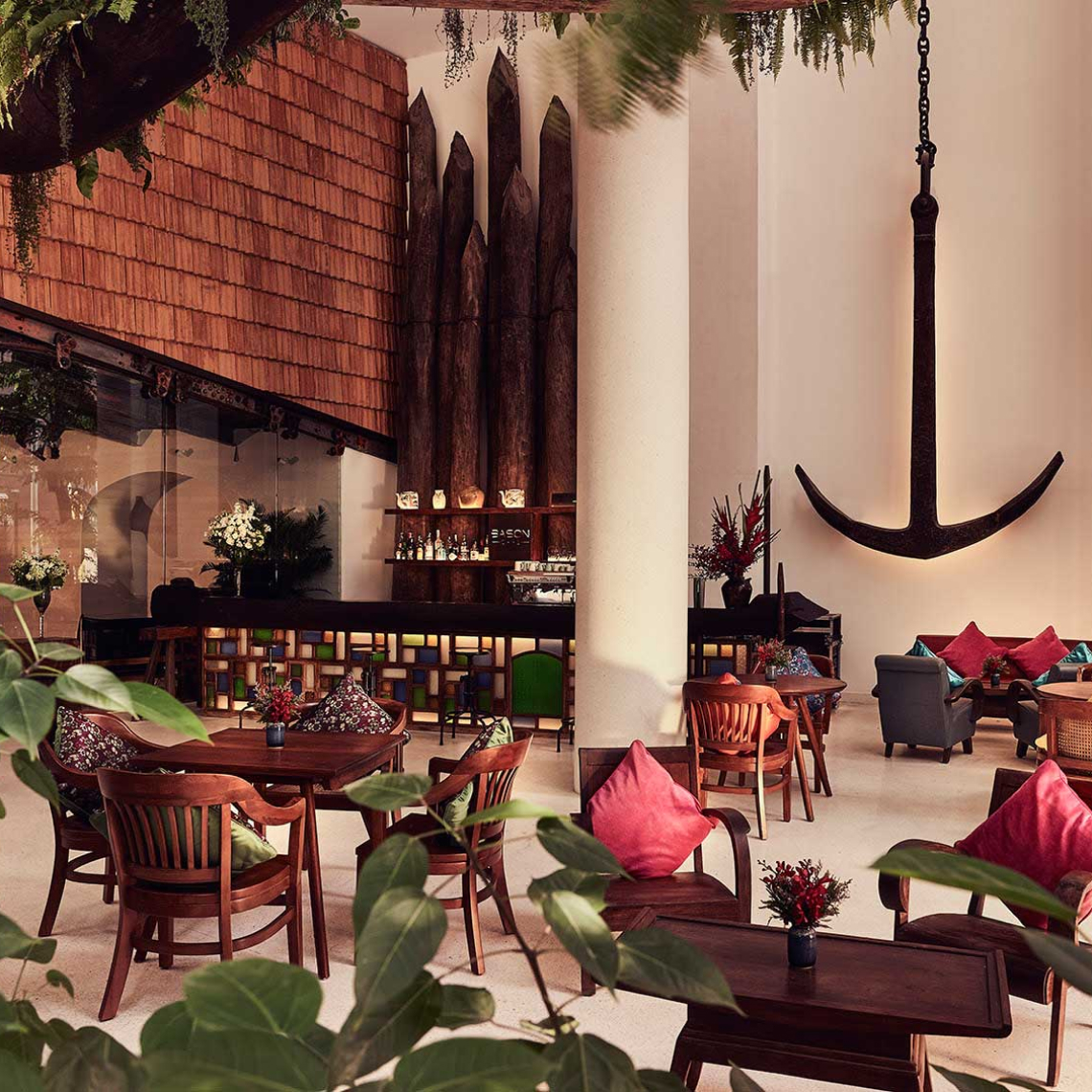
Bason Đồng Khởi, minutes from the Opera House
Bason Café Đồng Khởi is the closest of the two Bason cafés to the Opera House, and it is built for exactly this kind of evening. It occupies the ground floor of The Myst Đồng Khởi at 4-6-8 Hồ Huấn Nghiệp, in central Saigon, a few minutes on foot from the venue. The name nods to the old Ba Son shipyard, one of the city's oldest industrial sites, and the café carries that heritage in its bones. Reclaimed artifacts sit around the room, iron and timber with a working past, and the mood is unhurried and a touch nostalgic rather than polished for its own sake.
There are two ways to sit. Inside is a vintage room, cool and quiet, good for the stretch before the show when you want to settle. Out front is a street-view terrace, which comes into its own afterwards, when the evening air has softened and you can watch the centre go by over a coffee.
The kitchen runs an all-day food menu, so it does not matter whether you arrive at seven for something light or roll back at half past ten for dessert. Hours are 07:00 to 23:00, with last orders at 22:45, which comfortably covers both ends of an À Ố Show evening. To be sure of a table on a show night, it is worth booking ahead on (+84) 28 3824 8066.
What to have before the show
Before the show you want something that satisfies without weighing you down, since you will be sitting still for the next hour. Bason keeps a proper all-day menu, so a light plate is easy. The pasta with cold cuts is a sensible pre-theatre choice, enough to see you through without a heavy stomach, and there is a vegetarian bún for anyone who would rather keep it fresh and Vietnamese.
Pair it with a Vietnamese coffee if you want to stay sharp for the performance, or a matcha latte if you would rather ease down. There is no fixed pre-theatre set here, so if you are on a tight schedule, the simplest move is to tell the team when your show starts and ask them to bring things at a pace that gets you out the door in good time.
Give yourself enough of a margin. Order, eat without rushing, and still leave a clear ten or fifteen minutes to walk over and find your seat. That cushion is the whole point of choosing somewhere this close. If you are visiting the centre in the daytime and want a calmer working session rather than a pre-show bite, our guide to a café for work and meetings in Saigon covers the same room in a different mood.
What to have after the show
Afterwards is the better half, honestly. The show is fresh in your mind, the pressure of the clock is gone, and you have somewhere to land. This is when the terrace earns its keep. Walk back over, take a seat outside, and order something sweet. The tiramisu and the panna cotta are the natural picks for a dessert-and-coffee wind-down, and a late Vietnamese coffee or a matcha latte rounds it off. Because the kitchen stays open until close, you are not limited to drinks either, so if the show left you hungrier than expected, the full food menu is still there.
This is the part of the evening that a good plan protects. Most people file out of the Opera House and scatter, because there is nowhere obvious to go and half the centre is closing. Having booked a table a few minutes away turns that flat moment into the best part of the night, the unhurried hour where you actually talk about what you just watched. If tea rather than coffee is more your speed on another afternoon, The Nest upstairs runs a different ritual entirely, which we cover in our note on afternoon tea at The Nest.
An alternative by Bến Thành
If you are coming from the market side of the centre rather than the riverfront, the sibling café is worth knowing. Bason Café Bến Thành sits at 15-17-19 Nguyễn An Ninh, right by Bến Thành Market and the metro, a little further from the Opera House but easy to fold into a plan that starts around the market. It leans more art-forward in its design, and it runs the same idea of coffee alongside an all-day food menu.
Hours are 07:00 to 22:00, so it closes a touch earlier than the Đồng Khởi branch, which is worth keeping in mind for a late finish. Book on (+84) 28 3827 2740. If you are arriving by metro, our guide to a café near the Bến Thành metro maps out that side of the walk.
Frequently asked questions
Where is the closest cafe to the Saigon Opera House for before or after a show?
What time does the À Ố Show start, and how should I plan around it?
Is there a cafe near the Opera House that opens late enough for after the show?
What can I eat before the À Ố Show without feeling too full?
Do I need to book a table for a show night?
Is there an option nearer Bến Thành Market?
Book a table before or after the show
Bason Café Đồng Khởi sits on the ground floor of The Myst Đồng Khởi at 4-6-8 Hồ Huấn Nghiệp, a few minutes' walk from the Saigon Opera House. Come early for a light bite before the À Ố Show, or drift back afterwards for coffee and dessert on the terrace. To reserve, call (+84) 28 3824 8066.
→ Book a table at Bason Café Đồng Khởi
→ Prefer the market side? See the café near the Bến Thành metro
Crafted by Silverland Hotels.
Blog
A work meeting over coffee lives or dies on the room. Too loud and you spend the hour asking people to repeat themselves. Too stiff and nobody relaxes enough to say what they mean.
What you want sits in between: a table you can spread a laptop and a notebook across, a chair you would not mind sitting in for ninety minutes, coffee worth ordering a second of, and a spot both sides can reach without a fuss. This guide walks through what actually makes a cafe right for a work meeting in central Saigon, then puts two Bason branches side by side so you can choose by location and mood.
At a glance. A good meeting cafe is calm enough to talk and think, has proper tables and comfortable seating, keeps the coffee reliable, and sits somewhere central that both people can reach easily. In central Saigon, Bason Cafe runs two branches that fit the brief: Bason Đồng Khởi on the ground floor of The Myst Đồng Khởi, steps from the Opera House, and Bason Bến Thành beside Bến Thành Market and the metro. Book a table ahead for anything that matters.
Table of Contents

What a good meeting cafe needs
Start with sound. A meeting is a conversation, and a conversation needs a room where the noise sits under your voice rather than over it. That does not mean silence. A little hum is fine, even useful, since it covers the pauses. What you are listening for is a place where you can talk in a normal tone across a table and be heard, and where the music never becomes the third person at the meeting. If you have to lean in and shout, the room has already lost you.
Then the furniture, which people underrate. A café built for couples with tiny round tables will fail the moment two laptops and a coffee each need to share the surface. Look for real tables, ones with room for a device, a notepad and the cups, at a height that lets you type without hunching. The chair matters just as much. You will be in it far longer than a quick espresso, so a seat that stays comfortable through a long chat is doing quiet work the whole time.
Coffee is the easy part, and it is still worth getting right. Good coffee gives the meeting a reason to keep going and a natural rhythm, the first round to break the ice, a second when the real talk starts. A café that takes its Vietnamese coffee seriously, and offers a few softer options for people who do not want caffeine, covers the whole table without anyone feeling stuck.
Wifi and a power outlet belong on the list too, quietly. You do not want to build a meeting around them, but you do want them there when a deck needs opening or a laptop is running low. Ask when you arrive rather than assume. And last, location. The best meeting café is the one both sides can reach without crossing the city, which in practice means somewhere central, easy to describe, and easy to park or step off the metro near. If your gathering is larger or runs into a meal, our restaurant guide for a bigger meeting covers that ground.
Bason Đồng Khởi: heritage calm off Đồng Khởi
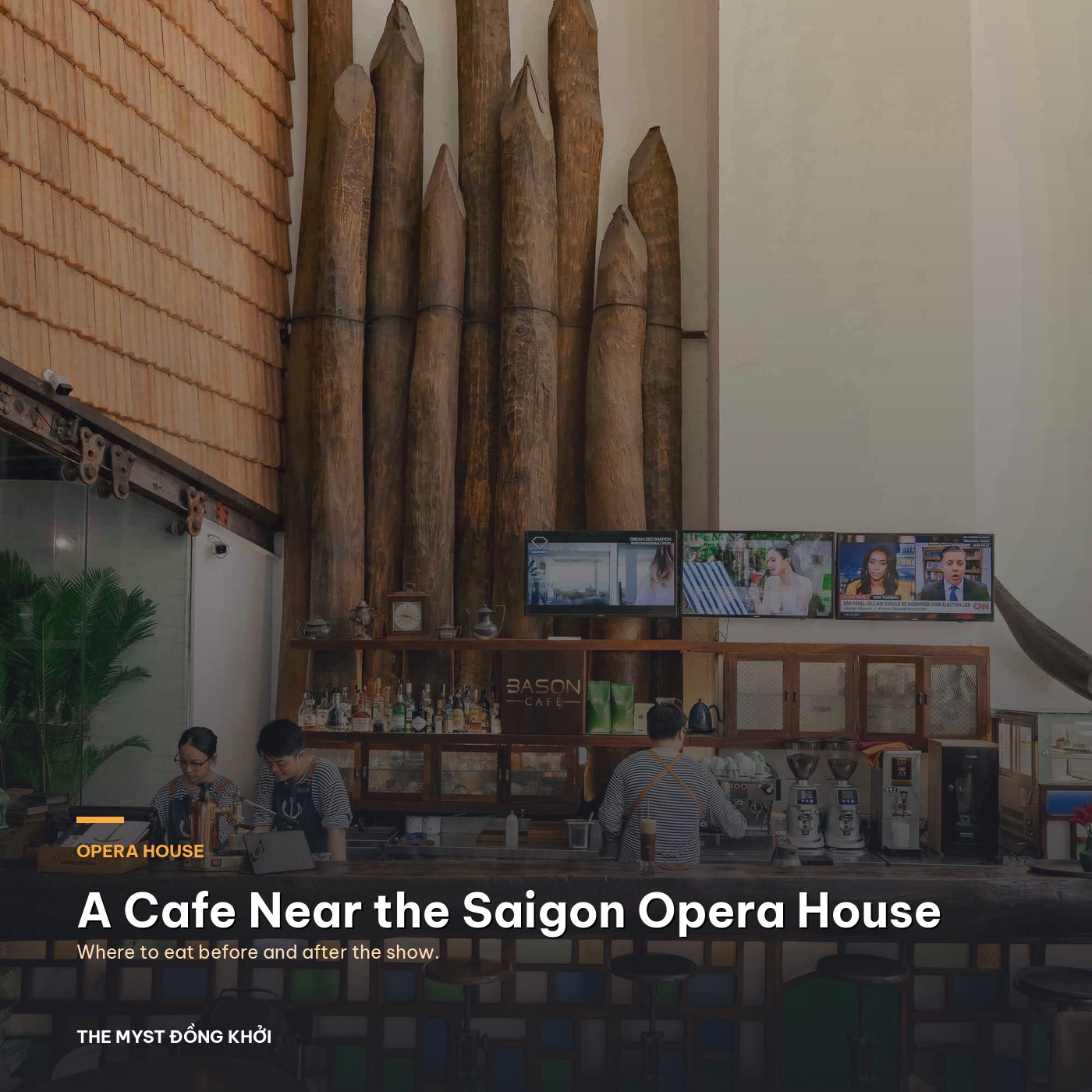
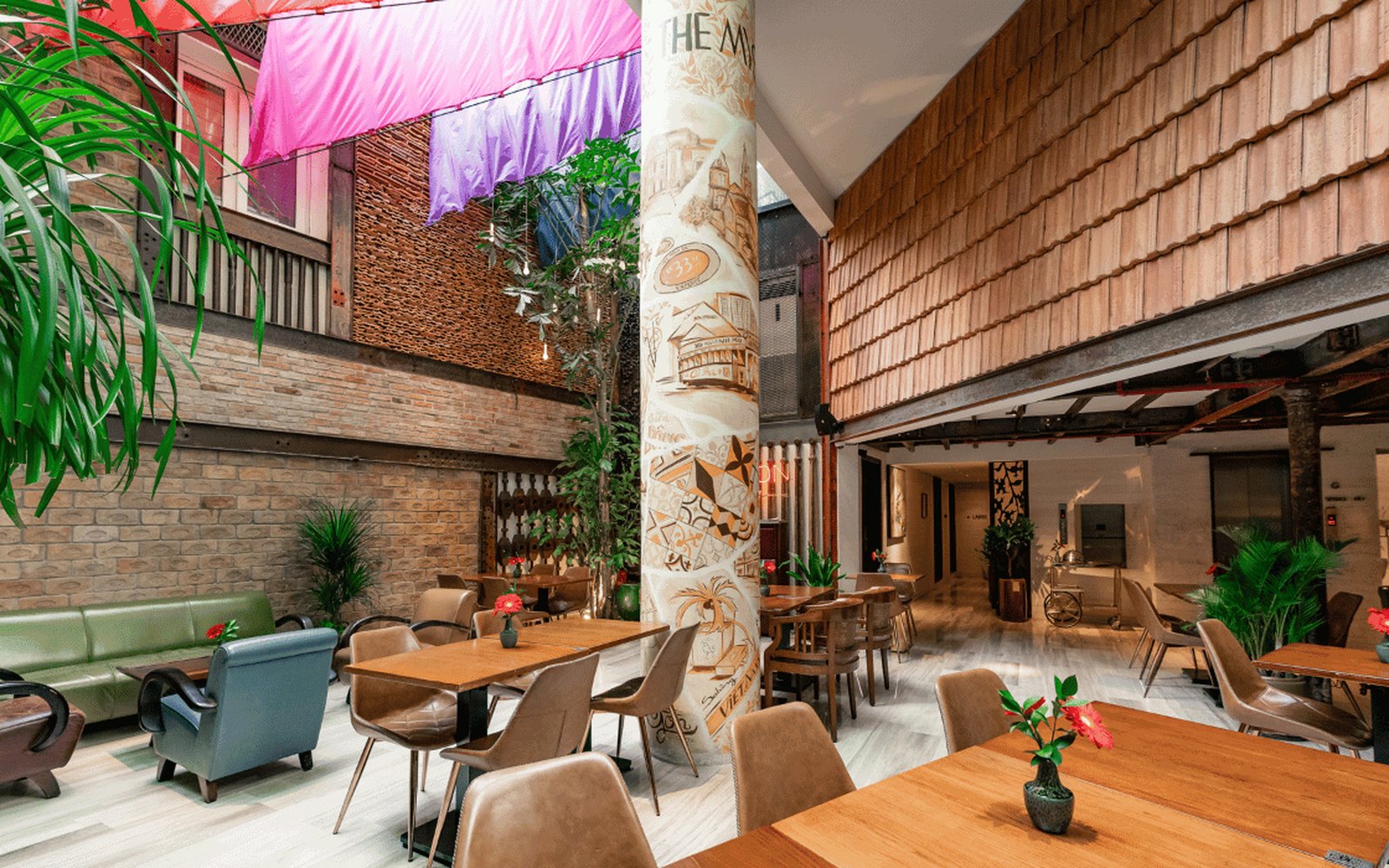
Bason Cafe Đồng Khởi sits on the ground floor of The Myst Đồng Khởi, at 4-6-8 Hồ Huấn Nghiệp in central Saigon, a short walk from the Opera House and the Đồng Khởi shopping street. The café is a tribute to the Ba Son shipyard, a working yard on the river for some 160 years, and it wears that history openly: reclaimed maritime artifacts set through the room, meant as a bridge between the city's past and its present. The feel is composed without being stiff, which is exactly the register a work meeting wants.
There are two moods to choose from under one roof. Inside sits a vintage room with exposed brick, cooler and quieter, the natural pick when you want to talk without the street in the background. Out front is a terrace that looks onto the street, better for a lighter catch-up or a first hello where a bit of open air keeps things easy. Either way you are grounded in a heritage building rather than a passing chain, which tends to set a calmer tone from the moment you sit down.
On the table, the coffee is Vietnamese and taken seriously, and there is a matcha latte for anyone off caffeine. If the meeting drifts toward lunch there is proper food to hold it, from pasta with cold cuts to a vegetarian bún, and a tiramisu or panna cotta if the conversation earns dessert. The kitchen changes with the season, so treat that as a taste of the range rather than a fixed list, and ask on the day.
Hours run 07:00 to 23:00, with last order at 22:45, which leaves room for an early breakfast meeting or a late one after work. Because it sits by the Opera House, it doubles as a handy café near the Opera House when you are meeting someone around the square.
Bason Bến Thành: art and easy access by the market
Bason Cafe Bến Thành sits on the ground floor of Silverland Bến Thành, at 15-17-19 Nguyễn An Ninh in central Saigon, right beside Bến Thành Market and the metro station. If your meeting hinges on being easy to find, this is the one to name: you can tell someone to meet you by Bến Thành and they will know exactly where to go, whether they come by taxi, on foot or off the train. That reach alone makes it a strong default when the two of you are coming from different directions.
The design here is more art-forward than its sister branch. Look up and you will see a ceiling built from old air-conditioner parts and a skylight made from the bottoms of bottles, and around the room sit antique sewing machines against warm, earthy-pink tones. It is a room with plenty to look at, which can be a gift when a meeting hits a quiet stretch and you need something to nod at.
The all-day food and the same care with coffee mean you can settle in from a morning start through the afternoon. Hours run 07:00 to 22:00. For anyone arriving by train, it also works as a reliable café by the Bến Thành metro.
Which one to pick
The honest answer is location first, mood second. If you are meeting around the Opera House, Đồng Khởi or the riverfront end of the centre, take Bason Đồng Khởi, and lean on its indoor brick room when the talk is serious or its terrace when it is light.
If either of you is coming by metro, from farther out, or simply wants the easiest possible landmark, take Bason Bến Thành by the market. Both are central, both keep the coffee reliable, and both give you a room that looks composed without feeling like an office. Choose the one that saves your guest the longer trip, then pick your seat once you are inside.
Tips for a productive coffee meeting
- Book the table. A short call ahead means a table held and, at Bason Đồng Khởi, a choice between the quiet brick room and the terrace. It is a small step that saves an awkward wait.
- Pick your time. Mid morning and mid afternoon are the calmest stretches. The lunch rush is livelier, so if you need quiet, meet either side of it.
- Say what you need on arrival. Ask about a wifi and a power point when you sit rather than mid-meeting, and ask for a corner table if you want a little more privacy.
- Order in rounds. A first coffee to settle in, a second when the real work starts. It gives the meeting a natural shape and keeps the table welcome.
- Match the branch to your guest. Send the branch link and the address ahead so nobody is circling the block. Both branches are easy to describe, which is half the battle.
Frequently asked questions
What makes a cafe good for a work meeting in Saigon?
Where can I find a quiet cafe for a meeting in District 1?
Which Bason branch is easier to reach?
Do the cafes have wifi and power for a laptop?
Can I hold a longer or larger meeting there?
Do I need to book a table?
Book a table at Bason
Both Bason branches sit in central Saigon and are glad to hold a table for a work meeting. Pick the one that is easiest for your guest, then choose your seat when you arrive.
→ Bason Đồng Khởi, 4-6-8 Hồ Huấn Nghiệp · (+84) 28 3824 8066
→ Bason Bến Thành, 15-17-19 Nguyễn An Ninh · (+84) 28 3827 2740
→ Planning a bigger meeting? See our restaurant guide
Crafted by Silverland Hotels.
Blog
There is a certain tiredness that only sightseeing brings. Not the tiredness of hard work, but the softer kind that comes from a whole morning of looking, at paintings, at market stalls, at the great arched hall of the new metro station. Your eyes have done the walking. What you want next is a chair, a cool room and a good cup of coffee, somewhere close enough that you do not have to cross the city to find it. This guide is about that pause, and about one café near Ben Thanh Market that turns the sitting down into part of the show.
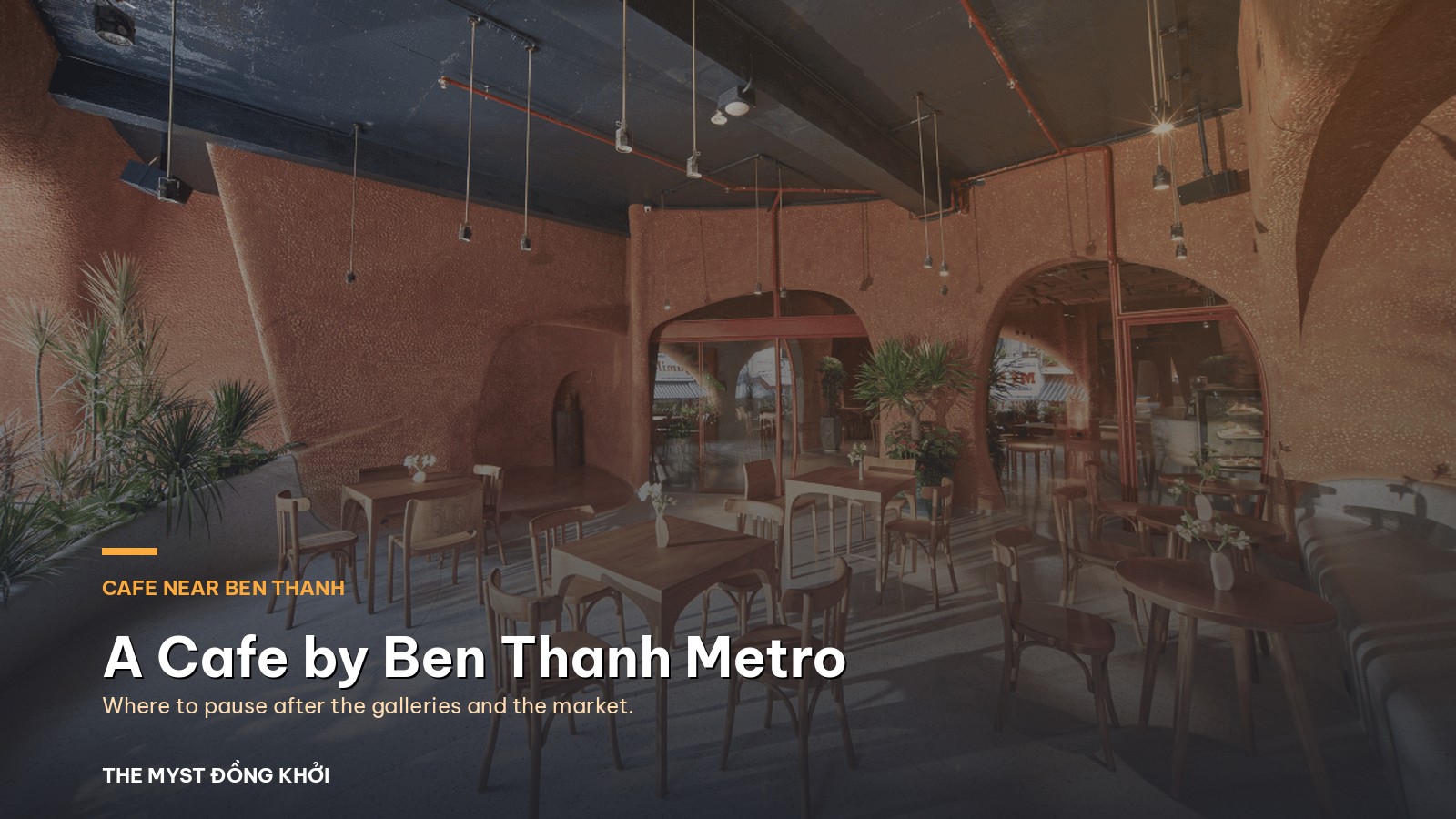
At a glance. Bason Café Ben Thanh sits on the ground floor of the Silverland Ben Thanh hotel at 15-17-19 Nguyễn An Ninh, Phường Bến Thành, right beside Ben Thanh Market and the Ben Thanh metro terminus on Metro Line 1. It is an art-forward space, with a ceiling built from vintage air-conditioner units, a skylight made from the bottoms of glass bottles, and a corner of antique sewing machines, all under an earthy-pink light. It serves coffee and an all-day food menu, open 07:00 to 22:00 daily. Book a table on (+84) 28 3827 2740.
Table of Contents
An afternoon of art around Ben Thanh
The Ben Thanh corner of central Ho Chi Minh City has quietly become a place you end a day rather than pass through it. The metro helped. Ben Thanh is the terminus of Metro Line 1, and the station itself is worth a look, a wide, light-filled hall beneath the roundabout that draws people up the escalators just to stand and take it in. Above ground, the old market keeps its own rhythm, the vendors calling, the cloth and lacquer and dried fruit stacked in bright walls of colour.
Then there is the art. The Fine Arts Museum is a short walk away, a butter-yellow colonial mansion whose tiled floors and stained glass are half the reason to go, quite apart from the lacquer paintings and sculpture inside. The streets around it hide small galleries and dealers, the sort you find by wandering rather than by map. You can spend a whole afternoon this way, from the museum to the market to the station hall, doing nothing but looking closely at things. And by the end of it, your feet make a very reasonable request. They ask you to sit.
That is where the day changes gear. The trick is not to break the mood by dropping into somewhere loud and ordinary. After an afternoon spent noticing colour, texture and craft, the natural next stop is a room that carries on the conversation, a café that has been made with the same eye you have been using all day.
A café that is itself a work of art
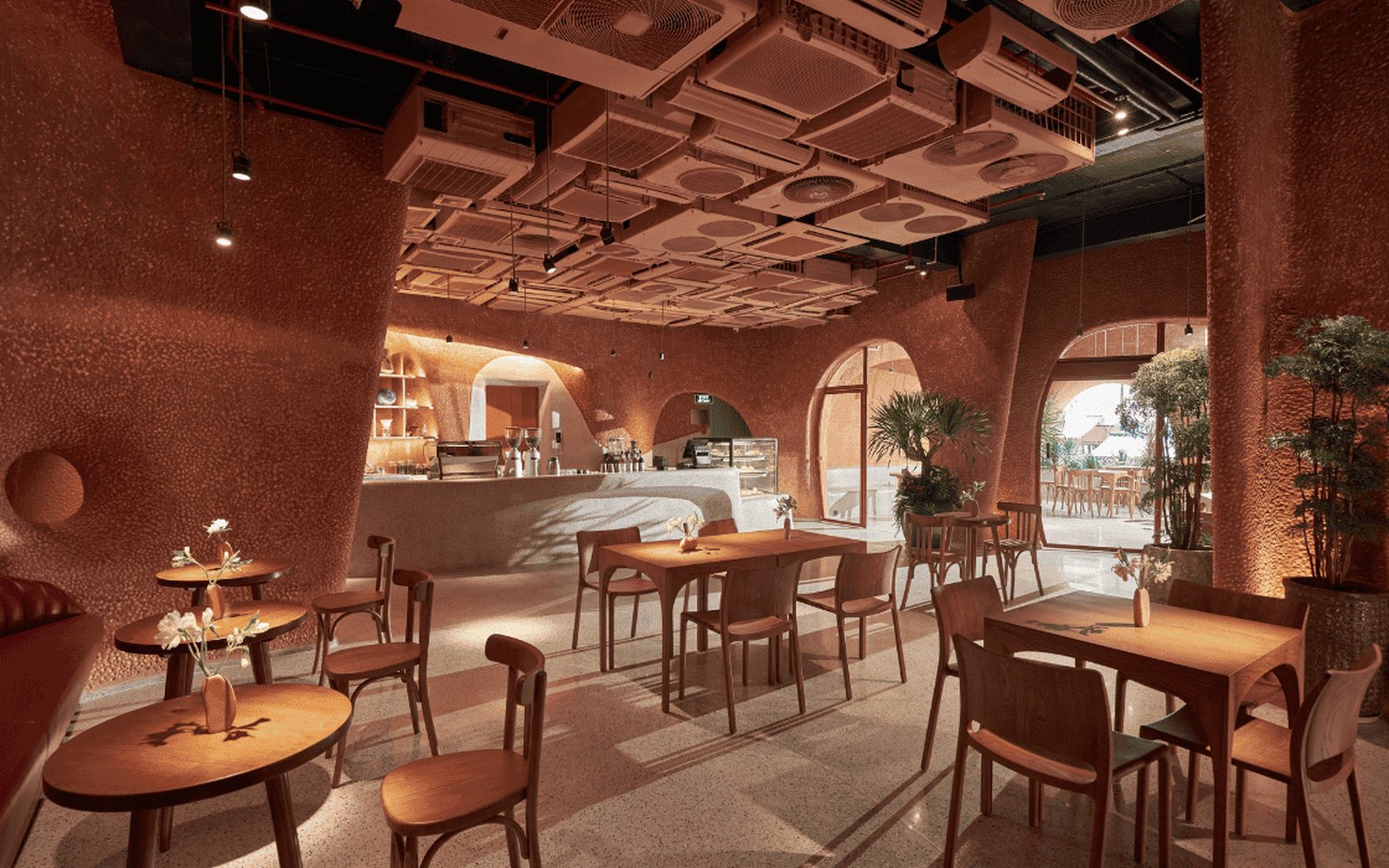
Bason Café Ben Thanh is that room. It sits on the ground floor of the Silverland Ben Thanh hotel, a few steps from the market and the metro exit, and it does not treat design as decoration. The design is the point. Walk in and the first thing you notice is the ceiling, which is not a ceiling in any usual sense but a dense array of vintage air-conditioner units, the boxy old wall machines you grew up with, lifted overhead and turned into something between a sculpture and a joke about the Saigon heat. It should not work. It does.
Look up again and light is coming down through a skylight built from the bottoms of glass bottles, so the sun arrives already broken into little green and amber discs scattered across the floor. In one corner sits a small congregation of antique sewing machines, the black cast-iron Singer kind with the gold lettering, a nod to the tailors and cloth stalls that have always worked this part of town. Over all of it lies an earthy-pink tone, a warm, dusty rose that softens the room and makes even a strong midday glare feel gentle.
The effect is that you are sitting inside a small gallery, except you are allowed to order a coffee and stay as long as you like. It speaks to coffee lovers and art lovers in the same breath, which is exactly the point after an afternoon of both. If your day has been more shopping than sculpture, the same instinct applies, and you can read how the neighbourhood carries it through in our guide to luxury shopping along Đồng Khởi, a short ride away.
What to order and the space
For all the visual drama, the reason to stay is simpler: it is a proper café. Coffee comes first, from the strong Vietnamese kind poured over ice to the milder international styles, so whether you want a sharp cà phê sữa đá to reset yourself or a long, quiet flat white, you are covered. Alongside the coffee there is an all-day food menu of light meals, the sort of thing that suits a mid-afternoon gap, when lunch is a memory and dinner is a way off.
Rather than list a fixed menu here, which changes and is best seen in person, the honest advice is to look at the board when you arrive or ask the staff what is good today. What matters is the shape of the visit. You come in warm and footsore, you find a table under the strange bright ceiling, the coffee arrives, and the room does the rest. There is no rush to leave. That unhurried quality also makes it an easy place to open a laptop or spread out a conversation, which we cover more fully in our note on finding a café for work or a meeting in Saigon.
A few practical notes make the visit smoother. The café opens at 07:00 and runs through to 22:00 every day, so it works for an early coffee before the market crowds arrive as well as for the after-sightseeing slump. Weekends and the middle of the afternoon are the busiest stretches, so if you have a group or you want a particular corner, a quick call ahead saves you standing in the doorway. And do give yourself a moment when you first walk in, before you sit, to actually look up. Most people miss the ceiling because they are looking for a seat.
Getting there from the metro and the market
Location is half of why this café works as a pause, and it could hardly be more central. Bason Café Ben Thanh is at 15-17-19 Nguyễn An Ninh, Phường Bến Thành, on the ground floor of the Silverland Ben Thanh hotel, in the heart of central Ho Chi Minh City. From the Ben Thanh metro terminus you come up at the station, and the café is a short, flat walk away, no long taxi ride, no crossing the river, just a few minutes on foot once you are back at street level.
From Ben Thanh Market it is closer still, essentially next door, which makes it the natural landing spot when the market noise starts to tire you and you want a chair and a cold drink. If you are working through the wider centre, it also strings together neatly with the other landmarks of the district. A slower loop might take you past the Opera House and the theatre quarter earlier in the day, and we map that stretch in our guide to a café near the Opera House, before the walking funnels you back down toward Ben Thanh to finish.
For anyone arriving by metro from further out, the terminus makes this an unusually easy meeting point. You tell friends to get off at the last stop on Line 1, walk up into the light, and look for the café by the market with the odd ceiling. It is hard to describe and harder to forget, which is precisely the kind of landmark that works.
Frequently asked questions
Where is the nearest café to Ben Thanh Market?
Is there a café near the Ben Thanh metro station?
What makes Bason Café Ben Thanh an art café?
What does Bason Café Ben Thanh serve?
What are the opening hours?
Do I need to book a table?
Book a table at Bason Café Ben Thanh
Sit inside the art rather than just look at it. Bason Café Ben Thanh, on the ground floor of Silverland Ben Thanh beside the market and the metro, is glad to hold a table for you, whether it is an early coffee or the pause at the end of an afternoon out. Call (+84) 28 3827 2740 to reserve.
→ Book a table at Bason Café Ben Thanh, (+84) 28 3827 2740
→ Looking for a café to work or meet in? Read our guide
Crafted by Silverland Hotels.
Blog
A meeting held over a good table has a way of going better than one held across a desk. The setting relaxes people, the pace slows a little, and the conversation finds room to breathe. But the wrong room can undo all of that: a table wedged beside a loud one, a kitchen that lands the main course mid sentence, a menu that leaves your guest with nothing to order. This is a practical guide to picking the right venue for a business meeting in Saigon, built around five criteria that matter more than the star rating, with a note on when a private room earns its keep.
At a glance. A good restaurant for a business meeting needs five things: a central, easy to reach location; a room quiet enough to actually talk in; service that is attentive but reads the timing; a menu flexible enough for any guest; and an impression that reflects well on you without shouting. In central District 1, The Nest on the twelfth floor of The Myst Dong Khoi fits the brief, with meeting rooms on hand when the group grows.
Table of Contents

What a good meeting venue really needs
Start by being honest about what the meal is for. You are not choosing a restaurant to eat at so much as choosing a room to hold a conversation in, one where money, trust or a decision might change hands. The food matters, but it is the supporting act. What you are really buying is an hour where your guest feels at ease, can hear every word, is not distracted, and comes away with a quiet sense that you chose well.
That reframes the whole shortlist. The flashiest place in town is often the worst choice for this: too loud, too crowded, too busy performing. The five criteria below are the ones that actually move the needle, roughly in the order they tend to matter.
1. Location and access
The venue should be easy for your guest to reach, not for you. If they are coming from an office in the Đồng Khởi business area or from a hotel nearby, a central address in District 1 saves everyone the awkward apology for arriving late and flustered. A place within a short walk or a five minute cab of the main business cluster is worth more than a celebrated spot half an hour out in traffic.
Think about the practical edges too. Is there somewhere to park, or a clear drop off point for a car? Is the entrance obvious, or will your guest be circling the block? For partners flying in, proximity to their hotel counts, and being able to point them toward comfortable accommodation nearby is a small courtesy that lands well. The easier the arrival, the better the mood when everyone sits down.
2. A room you can talk in
This is the criterion people underrate most, and regret most. A business conversation needs two things a busy restaurant rarely gives you: low enough noise that you can hear a soft voice across the table, and enough space between tables that the one beside you is not sharing your discussion. If you find yourself leaning in and repeating figures, the room has already failed you.
Listen for it when you scout. Hard floors, bare walls and a packed floorplan make an echo chamber. Carpet, drapes, upholstery and generous spacing soak sound up. A calm room also lets you keep things discreet, which matters when the numbers or the names on the table are not for the neighbours. If the meeting is lighter, a first introduction rather than a negotiation, a relaxed afternoon tea in a quiet room can carry the conversation just as well as a full lunch, at a gentler pace.
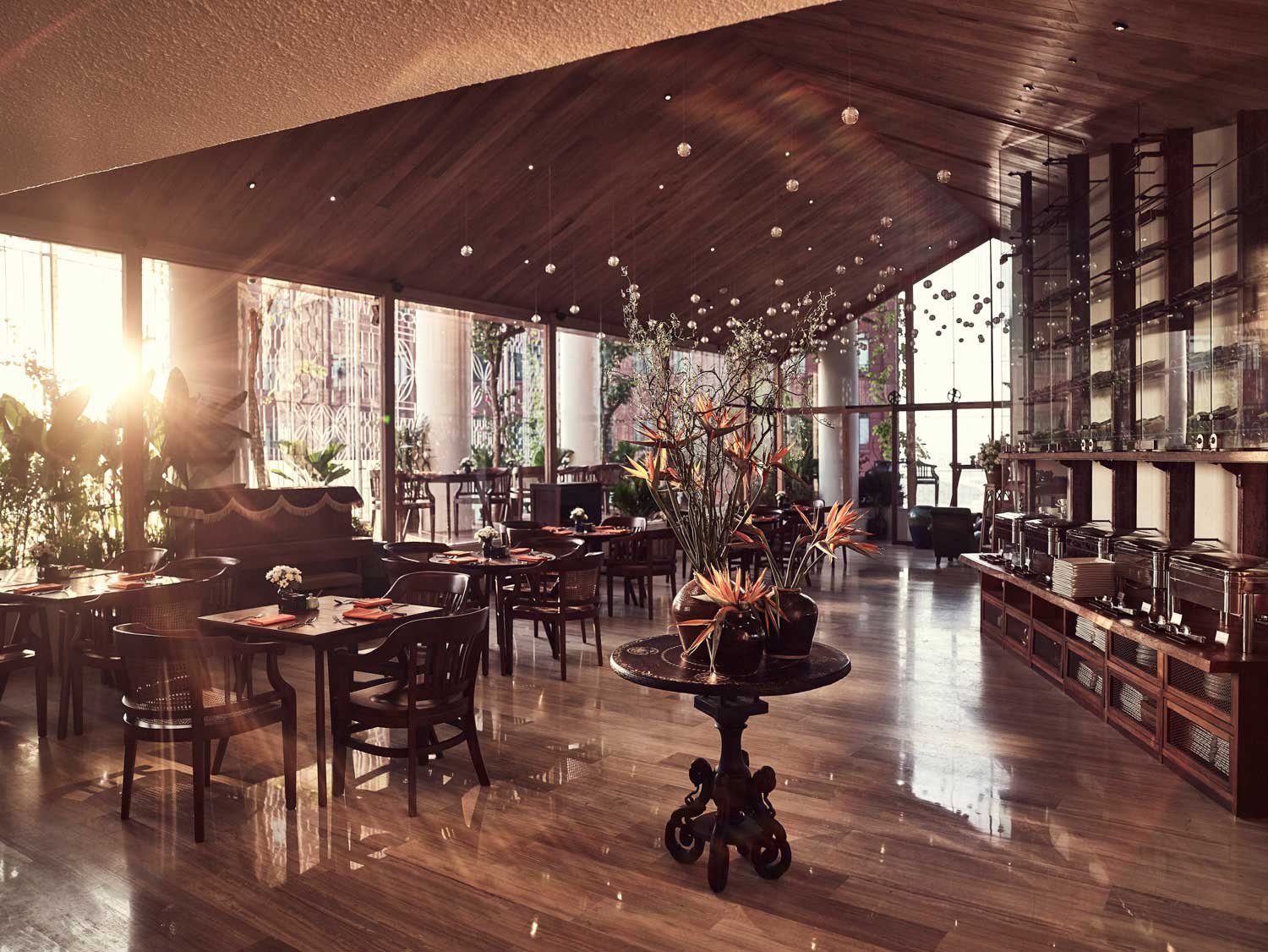
3. Service that gets the timing right
Good meeting service is felt more than seen. The water is refilled without a word, the plates clear at a natural pause, and nobody appears to take the order the moment you reach the crux of the discussion. Bad timing can quietly wreck an hour: a server hovering, a dish that arrives when you need both hands free, a bill that takes twenty minutes to settle while your guest checks their watch.
What you want is attentive but unobtrusive, and reliable on the clock. If you have ninety minutes before your guest is due back at their desk, the kitchen has to hold that pace. It helps to say so quietly when you book, along with anything else that matters. A team used to hosting working lunches will read the room without being asked, and that instinct is worth seeking out.
4. A menu that suits everyone
You rarely know in advance exactly how your guest eats. Someone may be vegetarian, someone may avoid pork or shellfish, someone may want nothing heavier than a salad before an afternoon of meetings, and someone may relax fully and expect a proper lunch. A menu that flexes across all of that, without a fuss, spares everyone an awkward moment.
Look for range and adaptability rather than a long list. A kitchen that moves easily between Vietnamese and Western dishes gives every guest something familiar and something to try. A few genuine vegetarian options, and a willingness to adjust a plate, signal a place that hosts guests rather than just feeds them. A considered wine list matters too: sometimes a shared glass sets the right tone, and sometimes the meeting stays dry, so the option should be there without being pushed. When in doubt, a lighter format is the safer default for a first meeting.
5. The right impression
The venue speaks for you before you say a word. You want it to say considered, established and quietly confident, not extravagant. Overspending on a first meeting can read as trying too hard, or worse, as a signal you expect something in return. The aim is a setting that makes your guest feel respected and comfortable, and reflects a business that pays attention to detail.
A view helps, in the sense that it gives the eye somewhere pleasant to rest during a pause, and a well kept room does the quiet work of suggesting you take care with things. But the real impression is made by the fit: the right level of formality for the relationship, a room that matches the seriousness of the conversation, and an ease that lets your guest focus on you rather than the surroundings.
When to book a private room
A regular table is fine for most meetings. But there are moments when a private room, or a properly equipped meeting room, is worth the extra arrangement. Reach for one when the discussion is genuinely confidential, when you need to lay out documents or run a short presentation, when the group is larger than four or five, or when you simply cannot risk being interrupted or overheard.
The trade off is atmosphere. A private room is more controlled but less warm, and for a relationship you are trying to build gently, the softer setting of a good table can serve you better. A useful rule of thumb: if the meeting is mostly about people, take a quiet table; if it is mostly about content, confidentiality or numbers, take the room. Many central hotels, including The Myst Dong Khoi, keep meeting rooms for exactly the larger or more formal case, so you can scale up without changing venue.
Meeting at The Nest
The Nest sits on the twelfth floor of The Myst Đồng Khởi, on Hồ Huấn Nghiệp in the heart of District 1, a short walk from the Đồng Khởi business area. Measured against the five criteria, it holds up well. The location is central and easy to reach; the room is calm and well spaced, the kind of place a conversation can actually happen, with wrought iron flower frames at the windows and the city and Saigon River below.
Service is discreet and attentive, and the kitchen works in a Vietnamese local fusion and Western style that gives mixed guests room to choose, with around forty five wines should a glass suit the occasion.
For a full working lunch, the restaurant serves through the middle of the day. For a lighter first meeting, afternoon tea offers a slower, gentler setting, and our note on the occasions that suit afternoon tea in a hotel covers where a working catch up fits. When the group is larger or the agenda more formal, the hotel has meeting rooms to hand. The simplest way to get the details right, from timing to any dietary needs, is to tell the team what the meeting is when you arrange the table.
Frequently asked questions
What makes a restaurant good for a business meeting?
Where is good for a business lunch in District 1?
Is a business lunch or dinner better for a first client meeting?
When should I book a private room instead of a table?
How do I handle guests with dietary needs at a business meal?
Can I hold a business meeting at The Nest at The Myst Dong Khoi?
Arrange a business lunch or meeting at The Nest
The Nest sits on the twelfth floor of The Myst Đồng Khởi, a boutique heritage hotel in the heart of District 1, moments from the Đồng Khởi business area. Our team is glad to hold a calm table for a working lunch, arrange a lighter meeting over afternoon tea, or set up a meeting room for a larger group. Tell us what the occasion is and we will get the details right.
→ Discover dining at The Myst Dong Khoi
→ Stay with us and wake above the city
Crafted by Silverland Hotels.