
Afternoon Tea vs High Tea: What’s the Difference?
Two names, endless confusion. Most people assume high tea is the grander, fancier one, the champagne-and-chandeliers version of afternoon tea. It is almost exactly the opposite. Afternoon tea is the dainty, leisured spread; high tea was a working family’s evening meal. This guide untangles the two properly, from where they came from and when they […]

Two names, endless confusion. Most people assume high tea is the grander, fancier one, the champagne-and-chandeliers version of afternoon tea. It is almost exactly the opposite. Afternoon tea is the dainty, leisured spread; high tea was a working family’s evening meal. This guide untangles the two properly, from where they came from and when they are served to what actually lands on the table, and clears up the one myth that trips everybody up.
The short version. Afternoon tea is a light mid afternoon spread of tea, finger sandwiches, scones and small sweets, taken around three or four o’clock for pleasure. High tea was historically a hearty early evening meal, eaten after a working day, with hot savoury dishes and bread. The word “high” refers to the tall dining table it was served at, not to any sense of luxury. In Vietnam and much of Asia the two terms are used loosely, so it always pays to check the menu.
Table of Contents
The short answer
If you only remember one thing, make it this. Afternoon tea is the light, elegant one, taken in the middle of the afternoon as a treat between meals. High tea is the substantial one, a proper evening meal that happens to include tea. The grandeur most people attach to the words runs backwards: the delicate tiered stand is afternoon tea, and the plate of hot food is high tea. Everything else in this guide simply explains how that came to be.
A little history
Afternoon tea has a tidy origin story. In the 1840s Anna, Duchess of Bedford, found the long stretch between an early lunch and a fashionably late dinner hard to bear, and began asking for a pot of tea with bread, butter and cake in the afternoon. She started inviting friends to join her, the habit spread through polite society, and within a generation it had become a recognised social ritual among people who had the leisure to fill an afternoon this way.
High tea grew from an entirely different soil. In the industrial north of England and Scotland, workers came home from the mill or the field in the early evening, hungry for a real meal. What they sat down to was tea poured strong alongside hot dishes, cold meats, bread and cheese, taken at the ordinary dining table. It was supper by another name, the main meal of the day for households that had been working since dawn. Two rituals, then, born at opposite ends of the same society and named more by accident than by design.
Timing: when each is served
The clock is the cleanest way to tell them apart. Afternoon tea belongs to the mid afternoon, roughly three to five o’clock, in the calm gap between lunch and dinner. It was never meant to replace a meal, only to bridge one. High tea sat later, closer to five or six, and it was the evening meal, the thing you ate instead of a separate dinner. So if someone offers you “high tea” at half past three with a tower of pastries, they are, strictly speaking, serving you afternoon tea and calling it something grander.
The food on the table
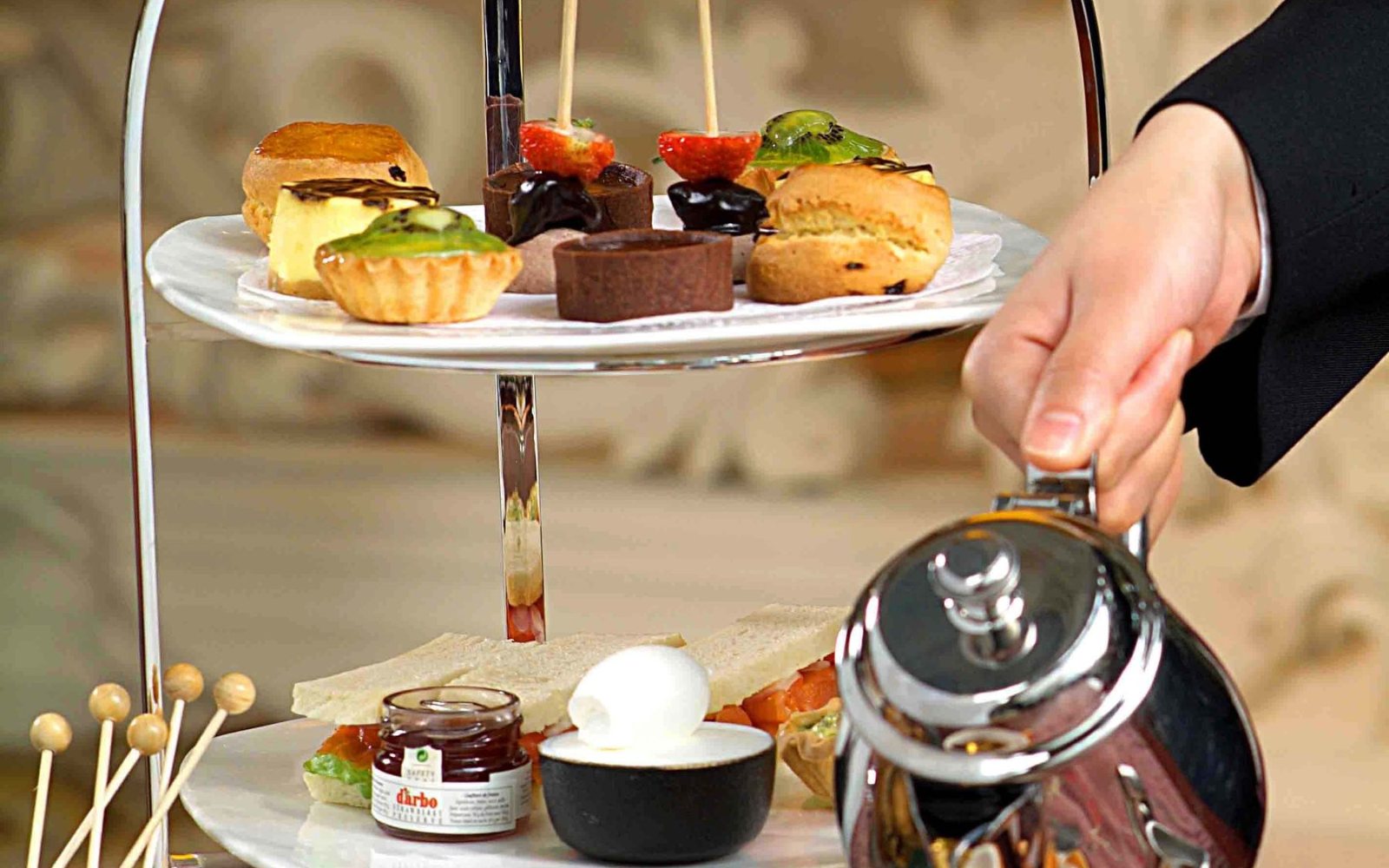
Look at what is actually served and the difference becomes obvious. Afternoon tea is deliberately light and pretty. A pot of loose leaf tea, a tier of crustless finger sandwiches, warm scones with clotted cream and jam, and a run of small cakes and pastries, usually arranged on a stand so the table stays uncluttered. It is food designed for grazing and conversation rather than filling you up.
High tea was built to satisfy. Think hot savoury dishes, a meat pie or cold cuts, cheese, baked beans, thick bread and butter, all served flat on the table rather than stacked on a stand, with a strong pot of tea to wash it down. There might be a slice of cake at the end, but the heart of it was the hearty course. One is an interlude; the other is dinner.
Where the confusion comes from (the “high” myth)
Here is the knot at the centre of it all. The word “high” in high tea has nothing to do with high society, high tables of the aristocracy, or anything upmarket at all. It refers, quite literally, to the height of the furniture. High tea was eaten sitting up at a tall dining table, the everyday table where a family took its main meals. Afternoon tea, by contrast, was often taken lounging in low armchairs around a low tea table in a drawing room, which some accounts call “low tea” for exactly that reason.
So the naming is the reverse of what instinct suggests. “Low tea” was the refined, leisured affair of people with time to spare. “High tea” was the honest evening meal of people who had spent the day working. Hotels and restaurants, sensing that “high tea” simply sounds more luxurious, have spent the last century quietly borrowing the grander-sounding name for what is really an afternoon tea service. That marketing habit is the single biggest reason the two terms are now so thoroughly muddled.
Afternoon tea, high tea and trà chiều in Vietnam
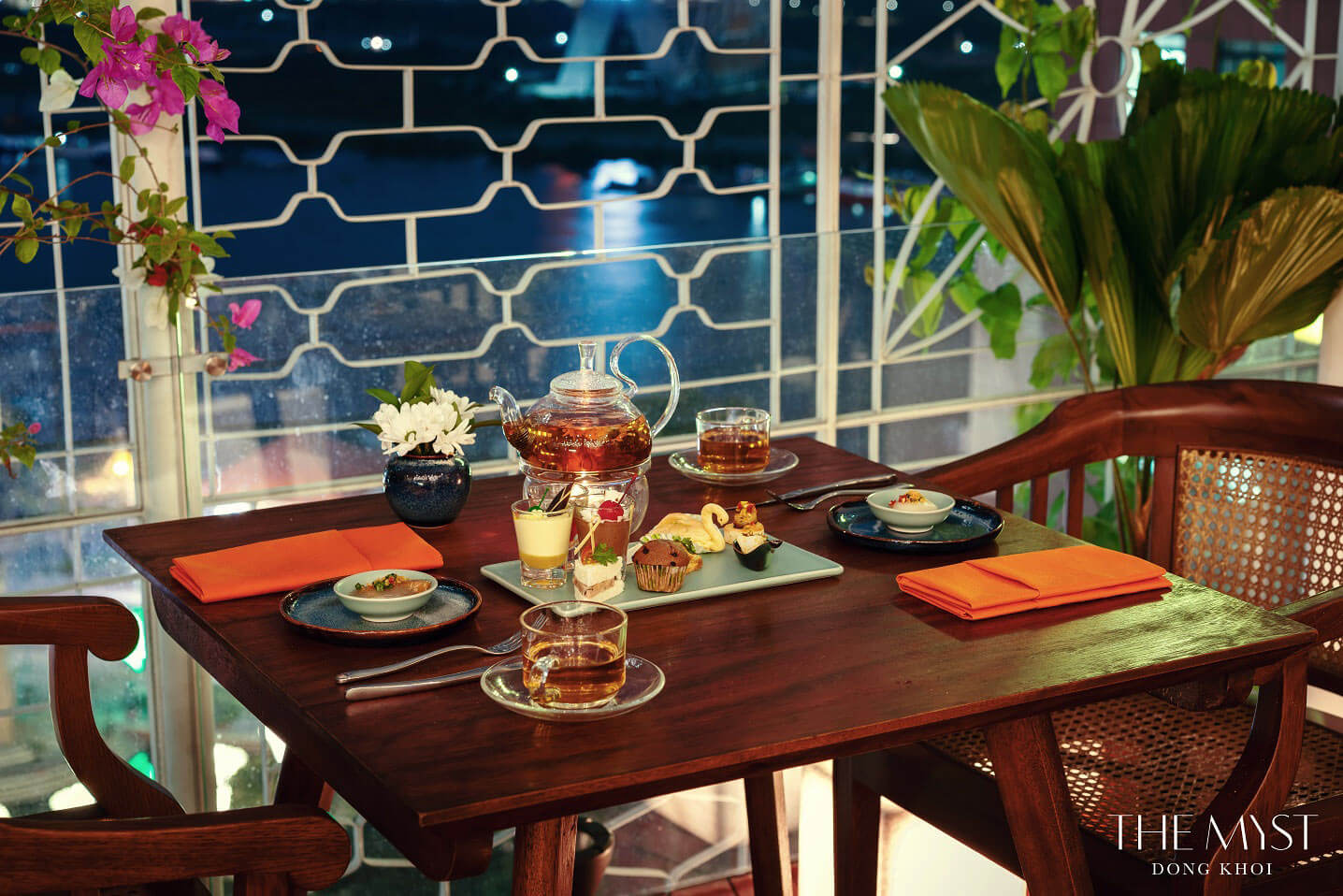
In Vietnam the lines blur further, and mostly for happy reasons. Menus here reach for “high tea” and “afternoon tea” more or less interchangeably, both usually pointing to the same thing: a light, elegant tiered spread taken in the afternoon. The historical distinction that mattered in nineteenth century Britain rarely survives the trip. What you are almost always being offered, whichever term a café or hotel prints, is afternoon tea in the leisurely sense.
Vietnamese has its own warm name for it, trà chiều, which simply means afternoon tea. Among locals it has come to stand for a relaxed treat with friends or family, often with a Saigon accent woven through the spread rather than a strict British template. If you want the fuller picture of the ritual itself, our pillar guide to afternoon tea in Saigon is the place to start.
Afternoon tea vs high tea at a glance
| Afternoon tea | High tea | |
|---|---|---|
| When | Mid afternoon, around 3–5pm | Early evening, around 5–6pm |
| Purpose | A light treat between meals | The main evening meal |
| Food | Finger sandwiches, scones, small pastries | Hot savoury dishes, meats, bread and cheese |
| Served on | A tiered stand, low tea table | Flat on a tall dining table |
| Origin | Leisured, aristocratic households | Working households after a day’s labour |
| “High” means | Not applicable | The tall table, not luxury |
Where to enjoy afternoon tea in Saigon
Once the difference is clear, most people find that what they were after all along is afternoon tea: the light, unhurried, pretty one. In central Saigon you can settle into exactly that at The Nest, the twelfth floor restaurant at The Myst Dong Khoi in District 1. The room takes its cue from the swallow that heralds spring, with wrought iron flower frames at the windows and a nine metre wooden flower boat serving as the buffet counter, and it looks out over the city and the Saigon River below.
The kitchen leans local, weaving Vietnamese flavours through the classic tiered spread in the same Vietnamese and Western fusion that runs through the whole restaurant. The offering changes with the season and the produce, so the surest way to know what is on the stand today is to ask when you book. Afternoon tea is served through the early afternoon, and a window table is worth requesting. For ideas on when it suits best, see our note on the occasions for afternoon tea, and come December, our guide to Christmas afternoon tea in Saigon.
Frequently asked questions
What is the difference between afternoon tea and high tea?
Afternoon tea is a light spread of tea, finger sandwiches, scones and small sweets taken in the mid afternoon as a treat between meals. High tea was historically a hearty evening meal with hot savoury dishes, eaten at a tall dining table after a working day. Afternoon tea is the dainty one; high tea was the filling one.
What is high tea?
High tea is a substantial early evening meal that originated among working households in nineteenth century Britain. It featured hot dishes, cold meats, bread and cheese served with a strong pot of tea, and it took the place of dinner. Despite the grand-sounding name, it was an everyday working meal rather than a luxurious occasion.
Why is it called “high” tea if it isn’t fancy?
The “high” refers to the tall dining table it was eaten at, not to high society or luxury. High tea was taken sitting up at the ordinary dining table, while the more refined afternoon tea was often enjoyed in low armchairs around a low table, sometimes called “low tea” for that reason. The name is the opposite of what most people assume.
What does afternoon tea mean?
Afternoon tea means a light mid afternoon meal of tea served with finger sandwiches, scones and small pastries, usually on a tiered stand. It began in the 1840s as a way to bridge the long gap between an early lunch and a late dinner, and became a relaxed social ritual enjoyed for pleasure rather than to satisfy hunger.
Is high tea more upscale than afternoon tea?
No, and this is the most common misunderstanding. Historically afternoon tea was the leisured, refined ritual of households with time to spare, while high tea was the practical evening meal of working families. Many venues today use “high tea” simply because it sounds more luxurious, but the original meaning runs the other way.
What do they serve in Vietnam, afternoon tea or high tea?
In Vietnam the two terms are used loosely and usually point to the same thing: a light, elegant tiered spread taken in the afternoon, which is afternoon tea in the traditional sense. Locally it is known as trà chiều. Whichever name a venue prints, it is worth checking the menu, though you are almost always being offered the afternoon tea style.
Enjoy afternoon tea at The Nest
The Nest sits on the twelfth floor of The Myst Đồng Khởi, a boutique heritage hotel in the heart of District 1, with the city and the Saigon River laid out beyond its windows. Our team is glad to hold a table for afternoon tea and to talk you through what the season is bringing to the stand.
→ Discover dining at The Myst Dong Khoi
→ Stay with us and wake above the city
Crafted by Silverland Hotels.
Others
The Myst Dong Khoi awards: what each recognition tells you before you book
Stand on Hồ Huấn Nghiệp street in the early evening and look up. The windows and balconies of The Myst...
What Is a Cultural Luxury Hotel? How to Spot One Before You Book
It is eleven at night and you have seven booking tabs open for a trip to Saigon. Every hotel calls...

Wedding Color Palette 2026 and 2027: Six Schemes to Love
Color is the first decision that touches everything else. Before the flowers are chosen or the invitations are printed, a...
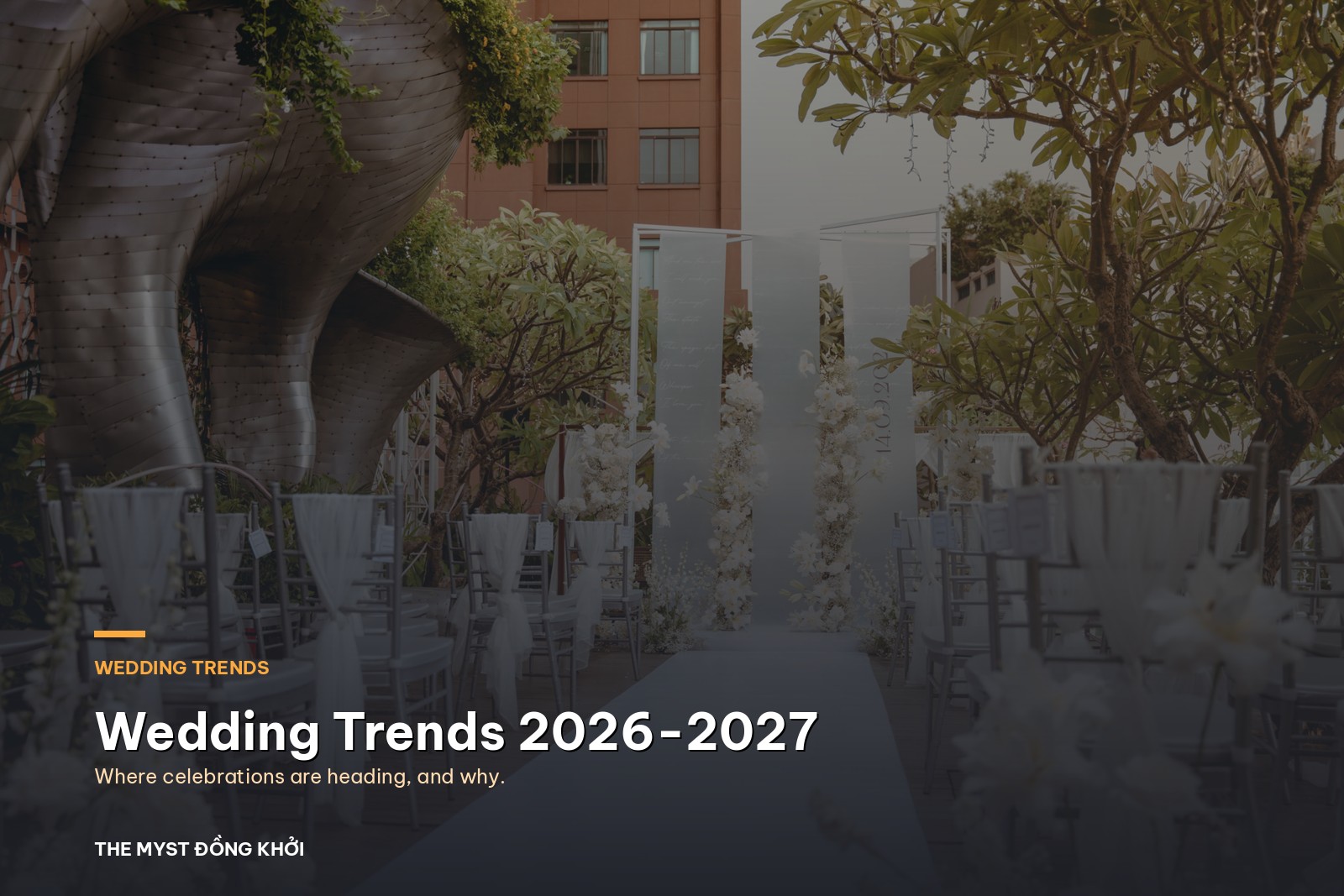
Wedding Trends 2026-2027: Where Celebrations Are Heading
Weddings are quietly changing shape. The five hundred guest banquet is no longer the default, the flower budget is being...
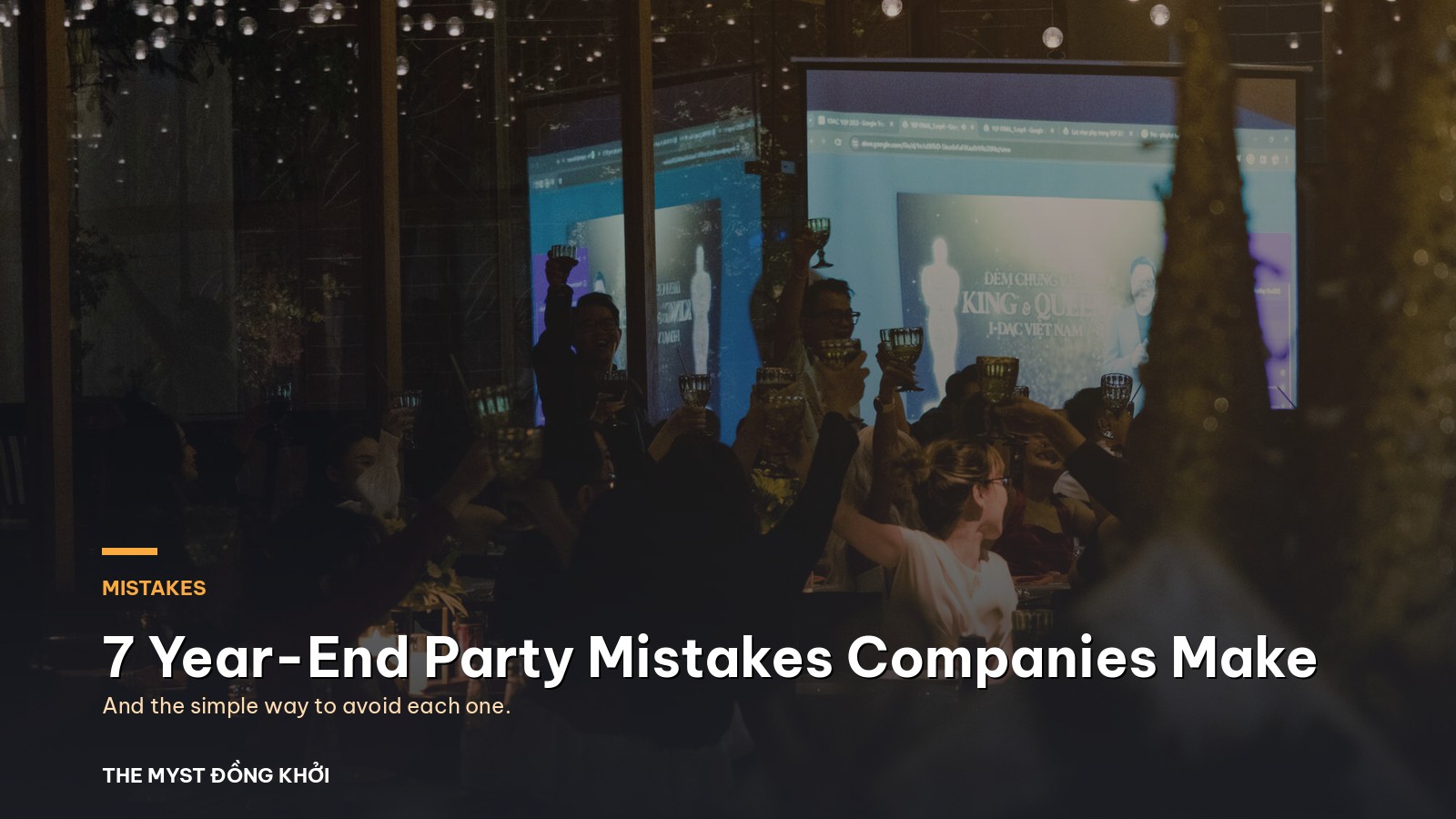
7 Year-End Party Mistakes Companies Make (and How to Avoid Them)
Every December, the same story plays out in offices across Saigon. The year-end party gets talked about in October, half-planned...
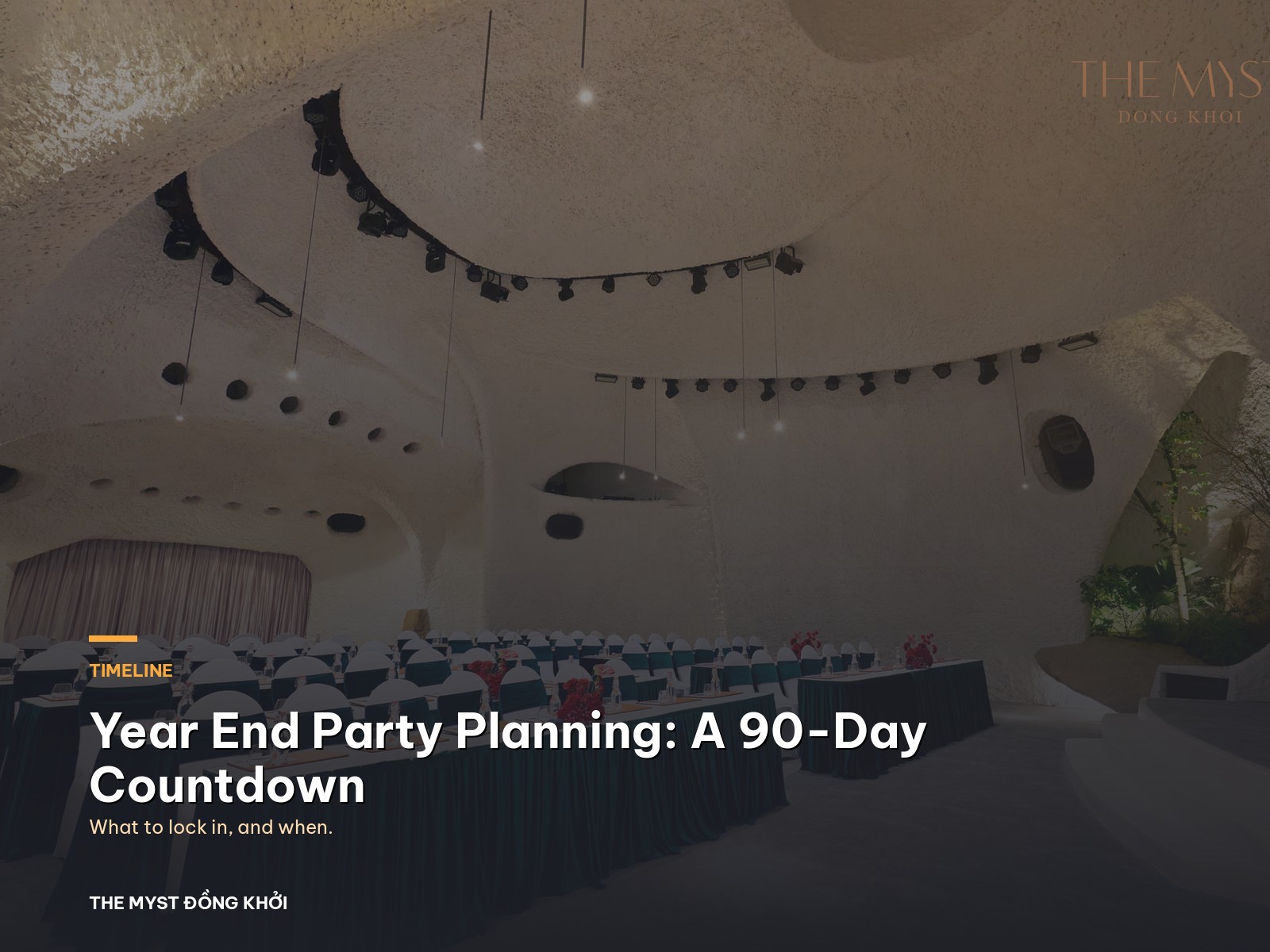
Year End Party Planning Timeline: A 90-Day Countdown
The year end party looks effortless only when the work behind it started early. Three months out, a good venue...