Blog, Blog
Saigon does Christmas its own way. There is no snow, no frost on the window, just warm strings of light down Đồng Khởi, families out taking photos, and an evening air that in December finally turns cool enough to want a jacket.
It is a fine city to be out in at the end of the year. And there are few better places to take it all in than a rooftop bar, high above the crowds, with a seasonal drink in hand and the whole lit skyline in front of you. This guide is about why that makes such a lovely Christmas night, and how to plan one in the centre of District 1.
At a glance. A rooftop bar is one of the easiest, most relaxed ways to celebrate Christmas in central Saigon. December evenings are pleasantly cool, the decorated streets and river look their best from above, and a rooftop suits a date or a small group far better than a packed restaurant. In District 1, ROOTY Bar sits on the roof of The Myst Đồng Khởi, with a 20-metre infinity pool, wide city views and a run of Saigon-inspired cocktails. December weekends and Christmas Eve fill up, so book ahead.
Table of Contents
Christmas above the city
Christmas in Ho Chi Minh City is a street festival more than a quiet family night. From early December the shopping streets go up in lights, the big hotels dress their lobbies, and on the weekends before the twenty-fifth the centre fills with people simply out to enjoy the mood. It is warm, cheerful and busy. Wonderful for an hour, tiring after two, especially if you are trying to hold a conversation or mark the occasion with someone.
Going up changes the whole feeling. From a rooftop you keep every good part of a Saigon Christmas, the lights, the buzz, the sense that the city is celebrating, and leave behind the parts that wear you down. You are above the noise. The air moves. The decorated streets become a picture laid out below rather than a crowd you are pushing through. It is the difference between being in the festival and watching it from a good seat, and at Christmas that second option has a lot to recommend it.
Why a rooftop beats a crowded room in December
Come the third week of December, the popular restaurants in the centre are running set menus and second sittings, and the good tables were spoken for weeks ago. You can have a fine meal that way. What you often cannot have is room to breathe. A rooftop bar solves a different problem. It is somewhere to sit rather than somewhere to eat through a fixed three courses, which means the evening runs at your pace, not the kitchen's.
The weather is on your side too. December is the one month when an open-air table in Saigon is a pleasure rather than a test of endurance. The heat of the year has finally eased, the evenings turn cool, and sitting outside after dark actually feels like the season. A rooftop leans into that instead of hiding from it behind the air conditioning. You get the cool air, the sky and a drink, without dressing up for a formal dinner or committing to three hours at a table.
- It suits a date. Two seats by the rail, the city lights, a cocktail each and no rush. Hard to improve on for a Christmas evening with someone.
- It suits a small group. Friends who want to mark the season without the logistics of a big booked dinner can simply come up, find a corner and stay as long as the night is good.
- It flexes around your plans. A drink before a Noel dinner, or somewhere to go after one when the restaurants are turning tables. It works at either end of the evening.
If the plan is to end the night up high rather than begin it there, we have gathered a few ideas for where to head after a Noel dinner in Saigon.
The view when Saigon lights up
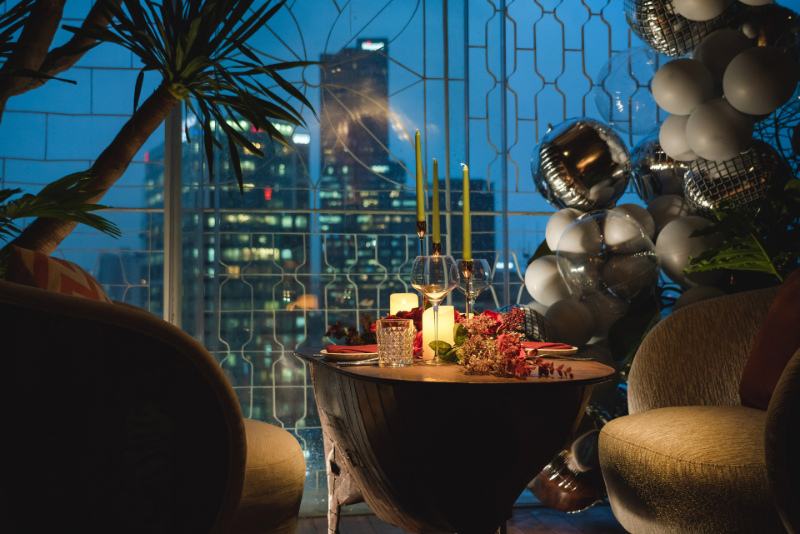
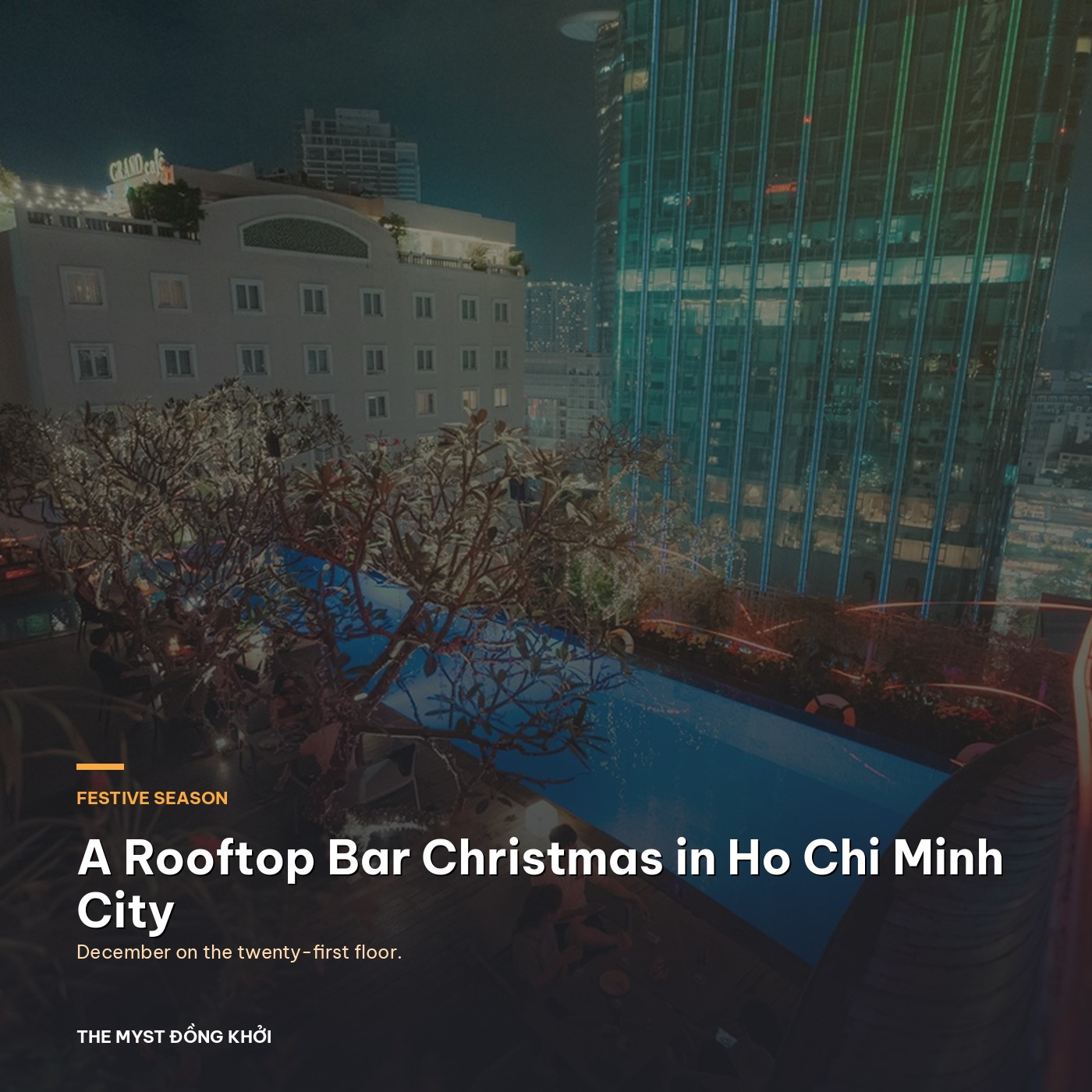
The reason a rooftop earns its name at Christmas is the view, and in December the view is at its best. It starts with the sunset. The sky over the river goes through its colours, the light drops, and then, in that short window as dusk turns to dark, the whole of District 1 switches on beneath you. Office towers, the ribbon of traffic along the boulevards, the lit-up length of Nguyễn Huệ, the boats on the Saigon River. At Christmas there is an extra layer over all of it, the festive lights that only appear this one month of the year.
From street level you see one decorated corner at a time. From above you see the pattern. Nguyễn Huệ and Đồng Khởi are both dressed up for the season, and from a rooftop you can trace them running through the centre like bright seams, the crowds small and cheerful far below. It is the kind of view people queue to photograph, and up here it simply sits in front of you while you have your drink. That slow turn from a gold sunset to a sparkling night skyline is the heart of a festive rooftop evening, and it costs nothing but the price of arriving in time to watch it.
A festive evening at ROOTY
In the centre of District 1, this is what an evening at ROOTY Bar is built for. ROOTY is the rooftop bar of The Myst Đồng Khởi, set on the roof around a 20-metre infinity pool, with plants softening the edges and the city and the river opening out on every side. By day it is a pool-deck bar in the sun. As the light fades it becomes something quieter and warmer, the pool lit, the skyline coming on, the kind of place you settle into rather than pass through.
The drinks lean local in the best way. The list runs to Saigon-inspired cocktails, a few Vietnamese nibbles to go with them, and a proper choice of premium wines if a glass of something suits the night better. Come December the rooftop takes on a festive touch, though rather than promise specifics here we would say the seasonal details are worth asking the bar about closer to the time, since they settle nearer the season.
What we can promise is the setting: a cool December evening, the lights of District 1 below, and a Saigon Christmas seen from one of the better seats in the centre. For the drinks side of a festive night, our notes on Christmas cocktails are a good place to start.
ROOTY sits above a boutique heritage hotel, so an evening here folds easily into a wider Christmas in the centre, whether that is a stroll along the lit streets first or a quiet nightcap after everything else is done. And if the daytime version appeals, a Christmas afternoon tea in central Saigon is the same spirit an hour earlier in the day.
Planning your Christmas rooftop night
A festive rooftop night rewards a little planning. December is the busiest stretch of the year for a rooftop in District 1, and the best evenings, the weekends and Christmas Eve above all, are exactly the ones everyone else wants too.
- Book ahead. For any date in the second half of December, and certainly for Christmas Eve, reserve well in advance. Walk-ups can work midweek; they are a gamble on the nights that matter.
- Come for sunset. The best of the view is the turn from dusk to a lit skyline, so arrive with time to catch it rather than after dark.
- Dress for cool air. December evenings up high are genuinely fresh once the sun is down. Comfortable is fine, but bring a light layer.
- Ask about the season. Any festive touches, seasonal drinks or timing details for the Christmas period are best confirmed with the bar closer to December, when the plans are set.
Do that much and the rest looks after itself. You arrive with the light still gold, take a seat, order something seasonal, and watch a Saigon Christmas come on beneath you.
Frequently asked questions
Is a rooftop bar a good place to spend Christmas in Saigon?
Why choose a rooftop bar over a restaurant at Christmas?
What is the weather like on a Saigon rooftop in December?
Where is ROOTY Bar and what is it like?
Do I need to book a rooftop bar for Christmas?
What can I expect from a festive evening at ROOTY?
Spend a festive evening at ROOTY
ROOTY Bar sits on the roof of The Myst Đồng Khởi, a boutique heritage hotel in the heart of District 1, with the lights of Saigon and the river spread out beyond the pool. Our team is glad to hold a table for a festive evening and to talk you through what the season is bringing to the rooftop.
→ Book a festive evening at ROOTY
→ Stay with us and wake above the city
Crafted by Silverland Hotels.
Blog, Blog
Dinner is done, the plates are cleared, and here comes the small question that decides a whole evening: home, or not yet? On a Christmas night in District 1 the answer is easy. The streets are lit, the air has that rare December cool, and the best part of the date is often the hour that comes after the meal, not during it. This is a gentle after dinner itinerary for two, ordered the way the night actually unfolds: a walk where the city is glowing, a quiet pause by the water, and a rooftop nightcap to end on a high.
At a glance. After a Christmas dinner in central Saigon, District 1 is made for walking. Nguyễn Huệ and Đồng Khởi are strung with lights, the Bạch Đằng riverfront is a short stroll away, and the night rounds off nicely with a rooftop drink. At The Myst Dong Khoi that last stop is ROOTY Bar, the hotel's rooftop bar with an infinity pool, city and river views and Saigon-inspired cocktails, open until after midnight. A calm, romantic place to end the evening.
Table of Contents
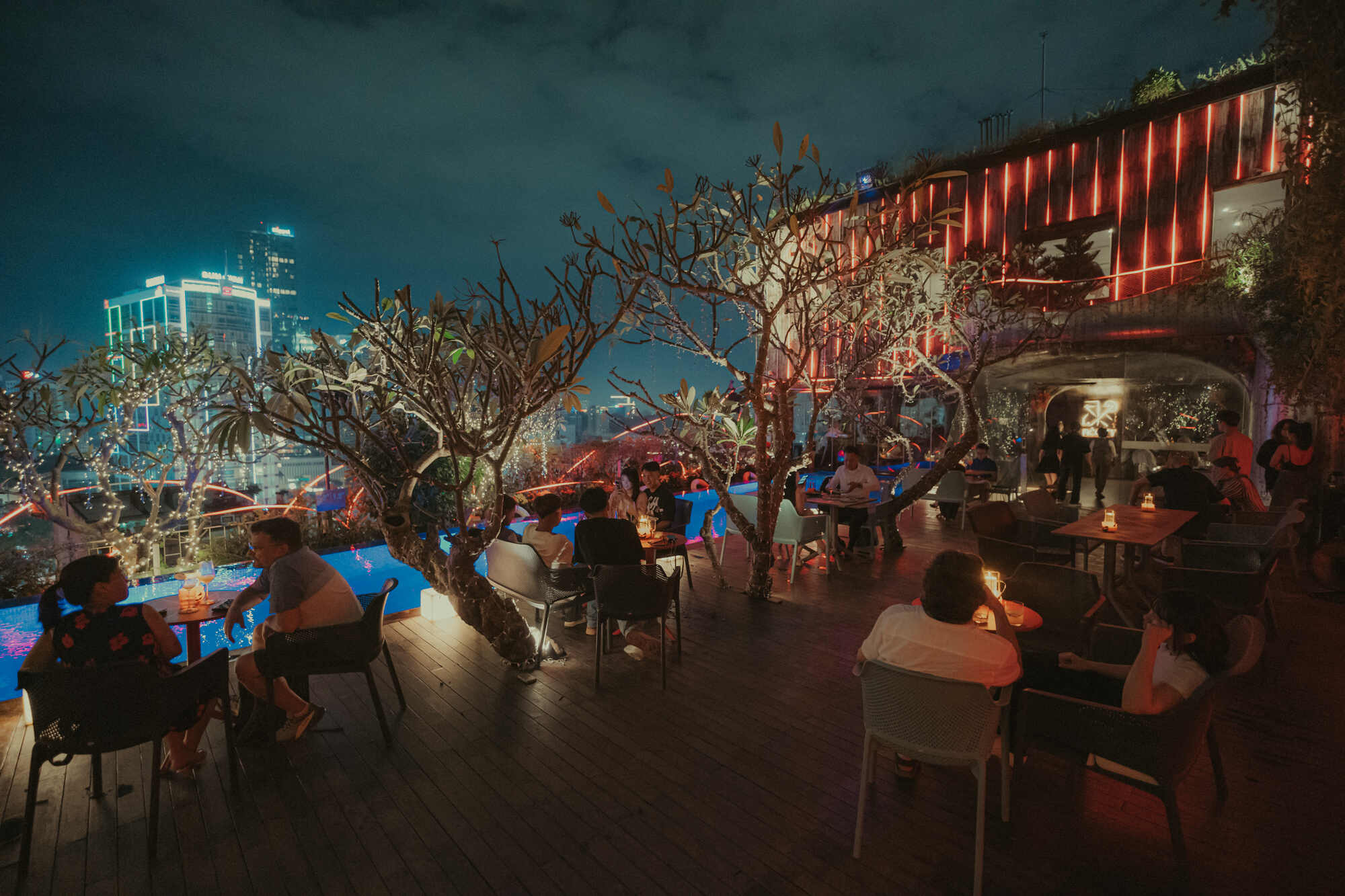
The night is still young
There is a habit worth breaking on a Christmas date, and it is the instinct to call it a night the moment the bill is paid. A dinner, however lovely, keeps you sitting across a table under one light for two hours. The evening has more to give. December in Saigon hands you the one thing the rest of the year rarely does, a genuinely pleasant temperature after dark, and the whole of District 1 leans into it. Families are out. Couples are out. The shopfronts are dressed up and the trees are wrapped in light.
So think of the meal as the first act, not the finale. If dinner itself is still being planned, a table high above the city sets the tone, and the rooftop at Christmas is a fine place to begin or to end. What follows here assumes you have eaten well and you are standing on the pavement, coats on, with the night wide open in front of you. The good news is that the best of it is within walking distance, and none of it needs a booking, right up until the last stop.
A walk where the city is lit
Start on foot. Nguyễn Huệ, the wide walking street that runs from the old People's Committee building down toward the river, is where Saigon does Christmas out loud. In late December it fills up: kids on scooters that light up, students in Santa hats, whole families posing for photos under the displays. It is loud and cheerful and completely alive, and walking its length arm in arm is half the fun of a Noel evening. You do not need a plan here. You drift, you stop for a photo, you people-watch.
Then let the mood shift. A block over, Đồng Khởi is the quieter, more elegant sister to all that noise. This is the old rue Catinat, lined with heritage facades, the Opera House, and the lit windows of the luxury houses. It is a lovely street simply to stroll after dark, and if the shops are still open it is worth a slow look at the luxury shopping on Đồng Khởi, even if only through the glass. The contrast is the point: the bright, busy energy of Nguyễn Huệ, then the calmer glow of Đồng Khởi, two moods in a ten minute walk.
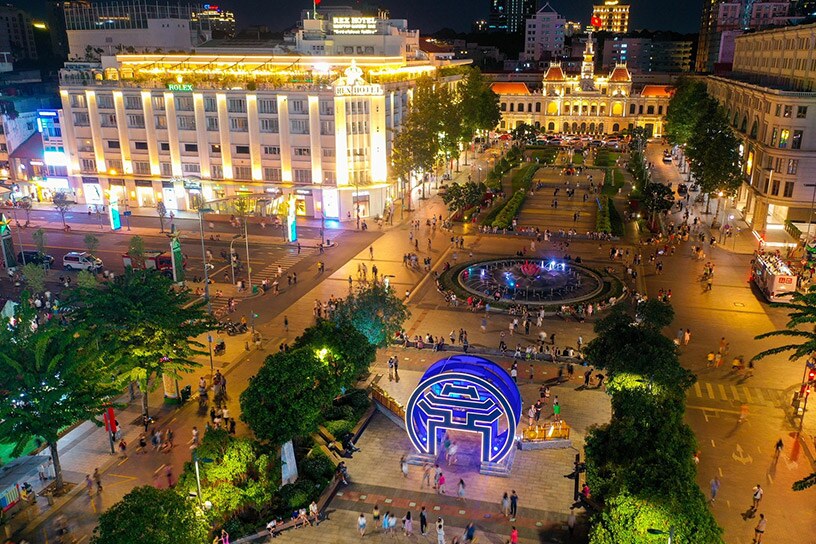
A quiet moment by the river
Every good evening needs a lull, a moment where the volume drops and it is just the two of you. In District 1 that moment is by the water. Walk to the end of Nguyễn Huệ and you are almost at the Bạch Đằng riverfront, the wide promenade along the Saigon River where the breeze comes off the water and the far bank glitters with the towers of Thủ Thiêm.
It is a short stroll and an easy one, and at night it slows everyone down. Couples lean on the railing. The river taxis and dinner cruises slide past, lit up like ornaments. You can hear yourself talk again after the crowds of the walking street. Give it ten minutes, or half an hour, whatever the mood asks for. If you want to make more of this stretch another day, our guide to the Saigon riverfront covers it in daylight too. Tonight, though, the river is doing exactly one job, and doing it well: it is giving you a quiet beat before the last stop.
A rooftop nightcap to end on
End high. After the crowds and the river breeze, the natural close to a Christmas date is a rooftop, above the noise, with a drink you are in no hurry to finish. At The Myst Dong Khoi that place is ROOTY Bar, the hotel's rooftop bar, and it was practically built for this hour. It sits at the top of the house with an infinity pool that catches the lights, an open view over the District 1 skyline and the river beyond, and a list of Saigon-inspired cocktails to share.
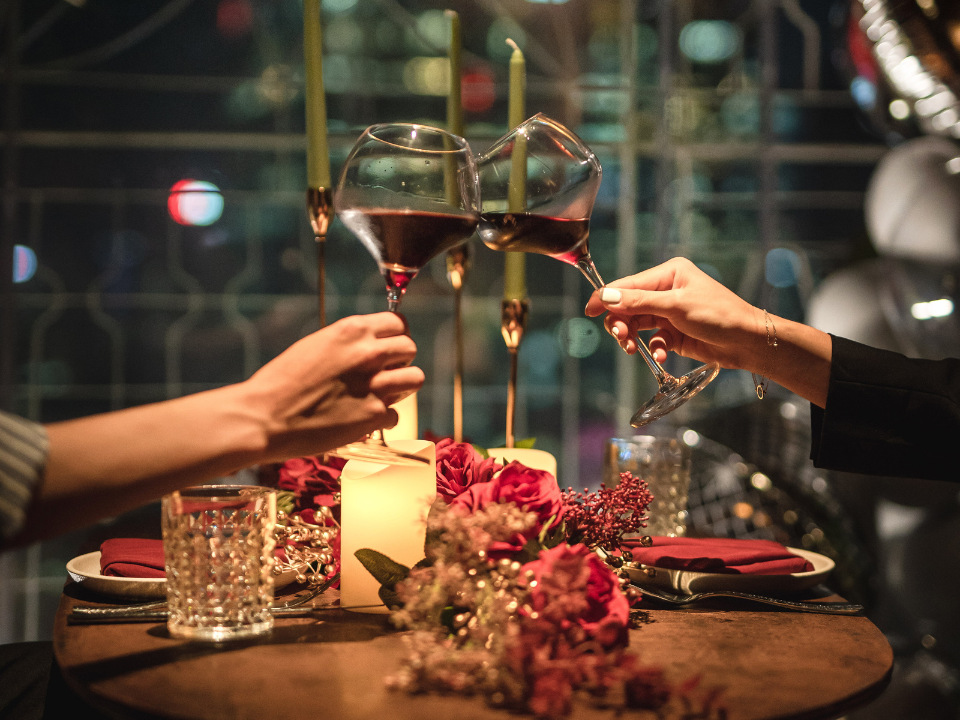
The pleasure of it is the calm. After a night of movement you finally sit still, up where the air is cool and the city is a field of lights below rather than traffic to cross. A single shared cocktail, two chairs by the rail, the pool glowing behind you: it is romantic without trying too hard, and it is the kind of last scene a date is remembered by.
ROOTY stays open until after midnight, so there is no rush to leave, and on Christmas that late, unhurried hour is the whole gift. If you would like the fuller picture of the space before you go, our rooftop bar guide walks through it. And if dinner is still on the table as a decision, The Nest, the hotel's twelfth-floor restaurant, keeps the whole evening under one roof.
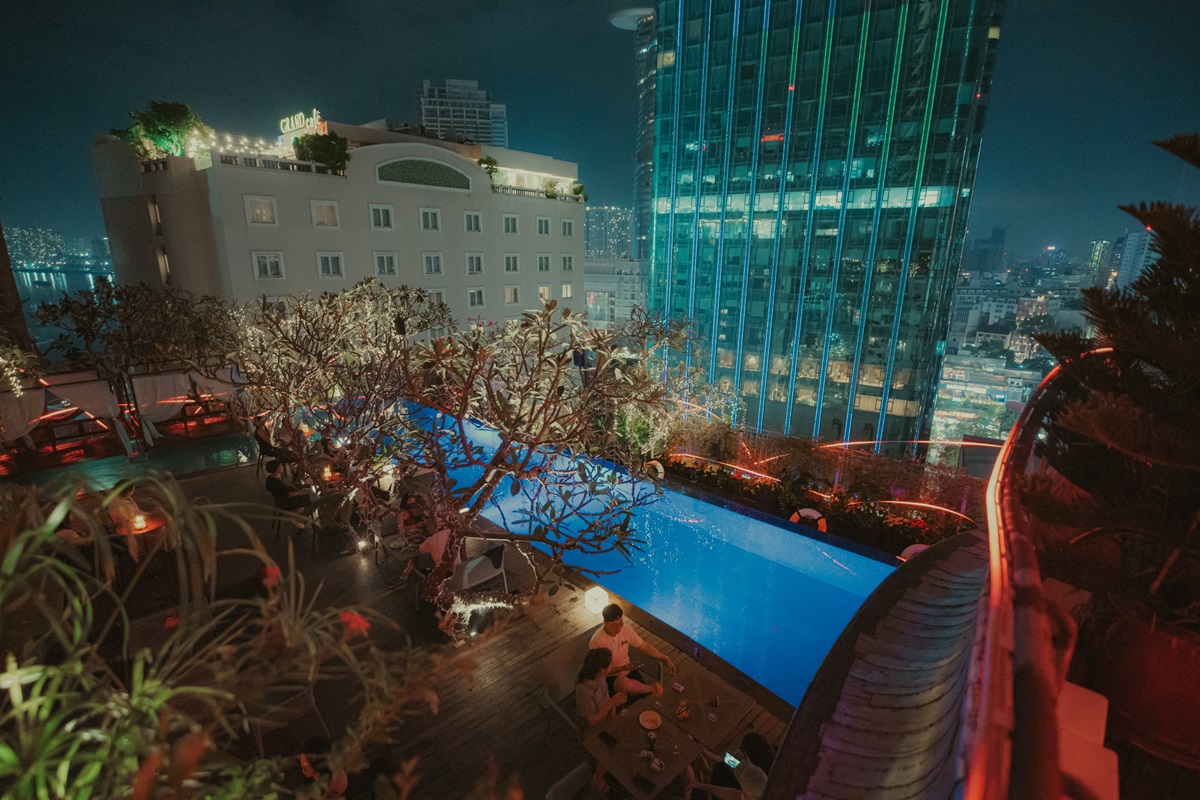
Making it a night to remember
A little forethought keeps the evening flowing instead of stalling. A few things worth knowing before you set out.
- Walk the loop, do not drive it. Nguyễn Huệ, Đồng Khởi and the riverfront sit within a few hundred metres of one another. On Christmas night the traffic is heavy and parking is scarce, so the walk is genuinely the faster, nicer way to move between them.
- Time the river for the lull. Hit the crowded walking street first while the energy is high, then drift to the water when you want to talk. The order matters more than the clock.
- Book the last stop. The walk and the river need no reservation, but a rooftop on Christmas night is popular. A table at ROOTY is worth arranging ahead so the evening ends the way you pictured it.
- Dress for the cool. December evenings by the river carry a real breeze, and it is cooler still up on the roof. A light layer means you can linger without cutting the night short.
None of this is complicated, which is the point. The best after dinner dates are not engineered, they are simply given a little room to unfold. Feed the evening a lit street, a quiet river and a high, calm place to land, and it tends to take care of the rest.
Frequently asked questions
What is there to do after dinner on a date in District 1?
Where can we go for a drink after a Christmas dinner in Saigon?
Is central Saigon walkable at night for a date?
What is a romantic thing to do on a Noel date in Saigon?
Do we need to book a rooftop bar on Christmas night?
How late can we stay out after dinner near Đồng Khởi?
End your night at ROOTY
ROOTY Bar sits on the rooftop of The Myst Đồng Khởi, a boutique heritage hotel in the heart of District 1, with an infinity pool, the city lights and the Saigon River laid out below. It is the calm, romantic last stop a Christmas date deserves, open late for an unhurried nightcap. Our team is glad to hold a table for you.
→ Discover dining and ROOTY Bar at The Myst Dong Khoi
→ Stay with us and wake above the city
Crafted by Silverland Hotels.

Blog, Blog
Standing in front of a bar for the first time can feel like reading a menu in a language you never studied. Old Fashioned, Negroni, Sazerac, the list keeps going, and none of it tells you what will actually taste good. The good news is that you do not need to know any of it. A handful of friendly, widely available cocktails will carry you through almost any first visit, and once you know what each one tastes like, ordering stops feeling like a test. This guide walks through seven easy cocktails for beginners, what to expect from each, and a few simple tips for your first night out.
At a glance. Easy cocktails for beginners are the ones with clean, familiar flavours and not too much alcohol bite. Think gin and tonic, mojito, Aperol Spritz, piña colada, margarita, whiskey sour and cosmopolitan. Most lean refreshing, citrusy or lightly sweet. Tell the bartender whether you prefer sweet or sour, start with one drink, and drink some water alongside. At ROOTY, our rooftop bar at The Myst Dong Khoi, the bartenders are happy to point a newcomer toward something easy to like.
Table of Contents
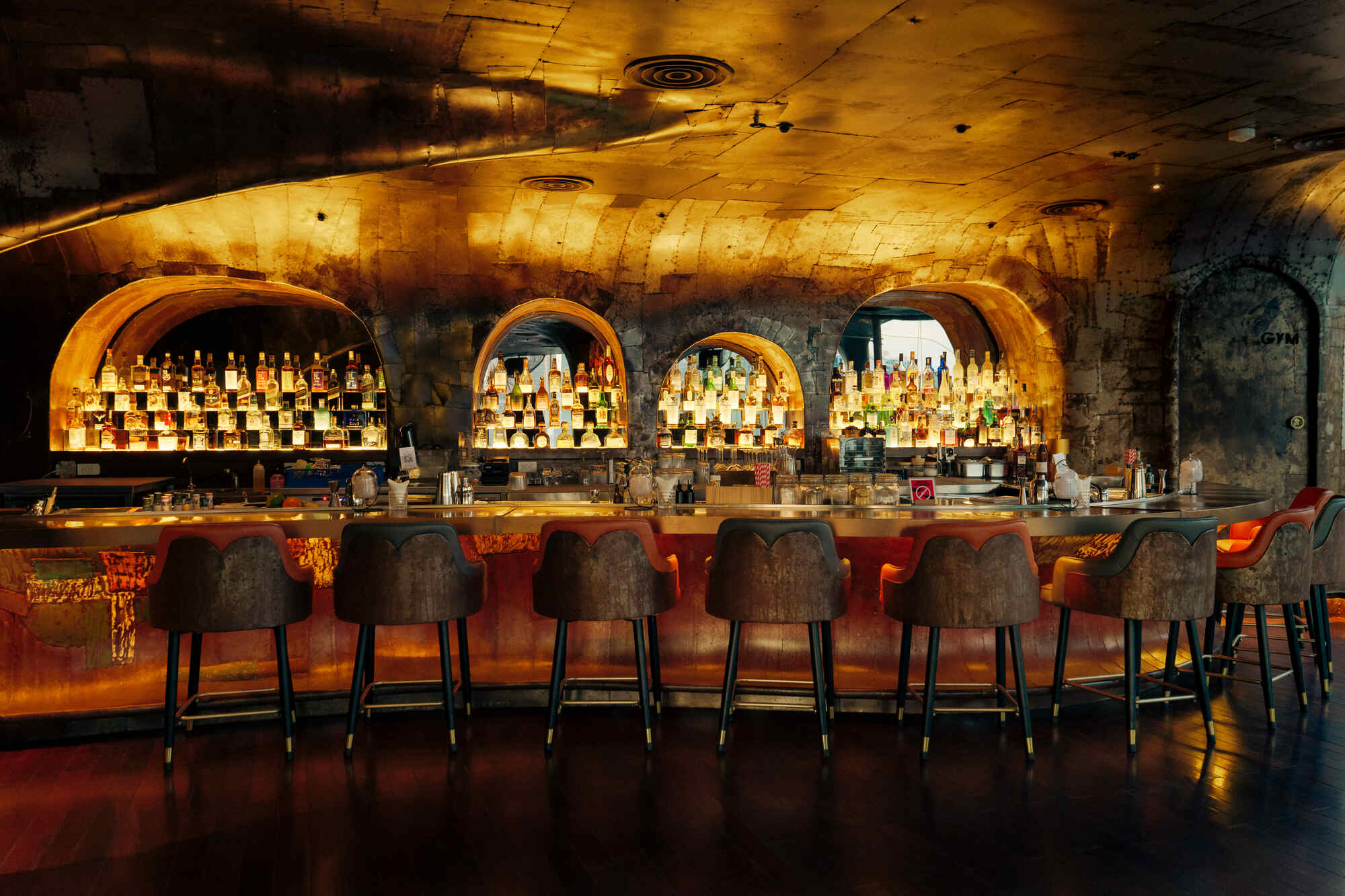
How to think about ordering
Before the drink names, one idea makes the whole menu easier. Almost every cocktail is a balance of three things: sweet, sour and bitter, with the alcohol woven through. If you know which of those you lean toward, you already know how to order.
Like sweet, gentle flavours? Aim for a piña colada or a cosmopolitan. Prefer something sharp and refreshing? A gin and tonic or a whiskey sour will suit you better. Not sure yet? A mojito sits comfortably in the middle, cool and lightly sweet, which is why it wins over so many first timers. You do not need the vocabulary. You just need to know that "I like sweeter drinks" or "I want something sour and refreshing" tells a good bartender almost everything they need.
The 7 easy cocktails for beginners
Here are seven drinks you will find on menus almost anywhere, each chosen because it is easy to like and hard to get wrong. For each one, a quick note on how it tastes and why it works for a beginner.
1. Gin and Tonic
Crisp, clean and lightly bitter, the gin and tonic is the reliable starting point. Gin brings a botanical, herbal note, tonic water adds fizz and a gentle bitterness, and a wedge of lime keeps it bright. It is not sweet, so it suits anyone who finds sugary drinks too much. Easy to sip slowly, easy to like, and one of the least intimidating things you can ask for.
2. Mojito
If you are unsure, order this. A mojito is white rum, fresh lime, mint, a little sugar and soda, and it tastes like a cool afternoon. The mint keeps it fresh, the lime keeps it lively, and the sweetness is light rather than cloying. It is one of the most forgiving cocktails on any list, which is exactly why so many people start here.
3. Aperol Spritz
The soft orange drink you see on every summer terrace. Aperol is a lightly bitter Italian aperitif, and mixed with prosecco and soda it turns into something bubbly, citrusy and easy. It is low in alcohol compared with most cocktails, faintly bitter rather than sweet, and it goes down beautifully at sunset. A gentle way to ease in.
4. Piña Colada
For anyone with a sweet tooth, this is the friendly one. Pineapple, coconut cream and rum blended cold, it tastes more like a tropical dessert than a strong drink. The alcohol hides behind the fruit, so newcomers often find it the easiest to enjoy. Rich, creamy and unmistakably holiday, it is hard not to smile at.
5. Margarita
A margarita is the classic sour-and-refreshing choice: tequila, lime and orange liqueur, often with a salted rim. It is tart and zesty, with just enough sweetness to round it off, and the salt makes each sip pop. If you like the sharp side of citrus, this is your drink. Ask for it on the rocks rather than frozen if you want to taste it clearly.
6. Whiskey Sour
A gentle introduction to whiskey without the harshness. Whiskey is balanced with lemon and a touch of sugar, so the result is smooth, tangy and rounded rather than fiery. Some versions add a little egg white for a soft, silky top, which sounds odd but works beautifully. A good pick if you are curious about spirits but not ready to drink them neat.
7. Cosmopolitan
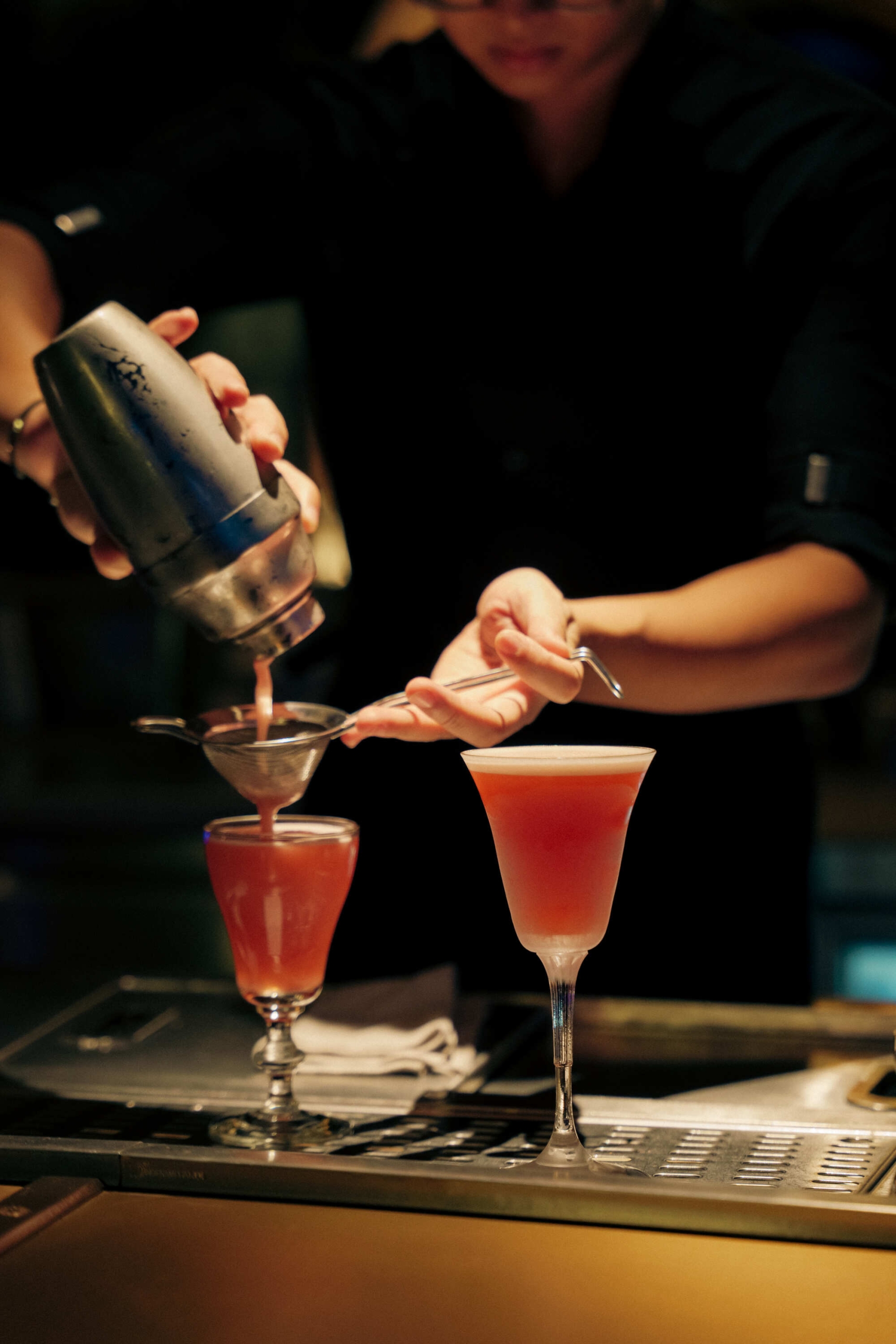
Pretty, pink and easy to drink. A cosmopolitan is vodka, orange liqueur, cranberry and lime, which lands as fruity and a little tart, never heavy. Vodka has a soft, neutral flavour, so nothing about it overwhelms. It is light, approachable and a nice step up if the sweeter drinks feel too simple.
Tips for your first visit
Knowing the drinks is half of it. The rest is just feeling at ease, and a few small habits make a first bar night go smoothly.
- Tell the bartender what you like. You do not need cocktail names. "Something sweet and refreshing" or "not too strong, a bit sour" is plenty for them to work with.
- Ask for a recommendation. A good bartender loves this question. Mention a flavour you enjoy, fruity, citrusy, minty, and let them suggest something.
- Start light. Begin with something lower in alcohol like an Aperol Spritz or a mojito, and see how you feel before going bolder.
- Pace yourself. Sip slowly, enjoy the setting, and keep a glass of water going alongside your drink. There is no rush.
- Sweet or sour, pick a side. If a drink arrives and it is not for you, say so kindly. Most bartenders will happily point you somewhere better next round.
Above all, treat the first drink as an experiment rather than a commitment. If you love it, you have found your go-to. If not, you have learned something about your own taste, and the next order will be easier. A little curiosity goes a long way at a bar.
Trying your first cocktail at ROOTY
If your first bar happens to be in central Saigon, ROOTY is a gentle place to begin. It is the rooftop bar at The Myst Dong Khoi, set above District 1 with a twenty metre infinity pool, greenery around the loungers, and a long view over the rooftops toward the Saigon River. The sunset here is the headline act, so an early evening arrival gives you the light and an easy, unhurried mood to settle into.
The list leans into Saigon-inspired cocktails alongside the familiar classics, with Vietnamese nibbles and a considered wine selection if you would rather sip a glass. You do not need to decode any of it on your own. Tell the bartender it is one of your first times out and what kind of flavours you enjoy, and they will guide you toward something easy to like. It changes with the season, so asking is always the best move.
For the wider picture of what an evening up here looks like, see our guide to the rooftop bar in Saigon. A first cocktail also makes a relaxed way to round off an evening, whether that is after a Noel dinner or over festive Christmas cocktails come December. Whatever you order, take it slowly and enjoy the view.
Frequently asked questions
What is the easiest cocktail to order as a beginner?
What cocktail should I order if I do not like the taste of alcohol?
How do I order a cocktail without knowing the names?
Are cocktails very strong?
Sweet or sour, which cocktail is better for a first timer?
Where can I try beginner cocktails in District 1, Saigon?
Come up to ROOTY
ROOTY is the rooftop bar at The Myst Đồng Khởi, a boutique heritage hotel in the heart of District 1, with an infinity pool, greenery and the Saigon skyline stretching out beyond the loungers. Whether it is your first cocktail or your fiftieth, the team is glad to pour you something easy to love as the sun goes down.
→ Discover dining and drinks at The Myst Dong Khoi
→ Stay with us and wake above the city
Crafted by Silverland Hotels. Please drink responsibly.

Blog, Blog
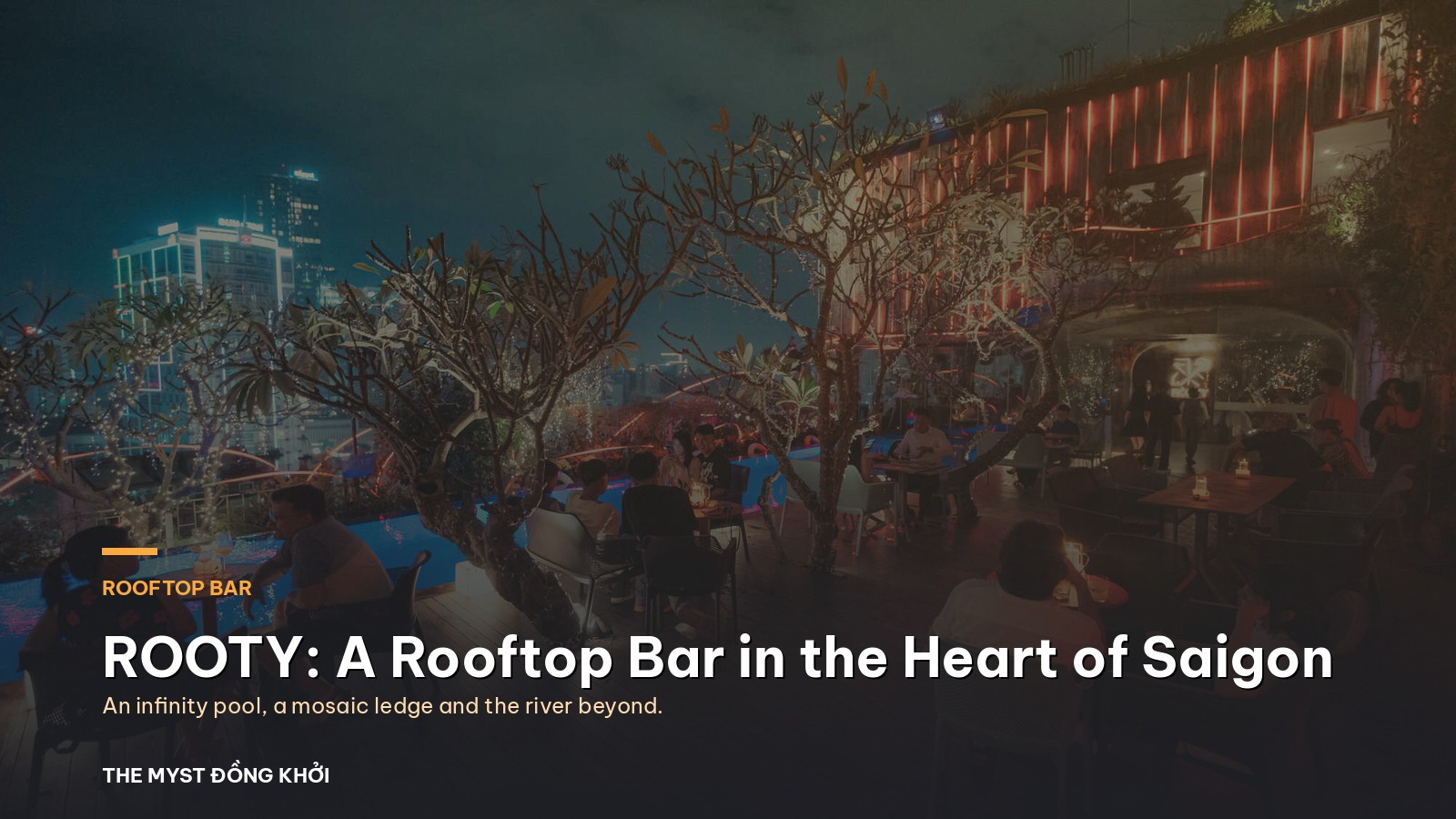
Saigon is a city best understood from a little height. Down at street level it is all motion, horns and neon and the smell of grilled somewhere close by. Rise a few floors and the same city softens into something you can actually take in: rooftops, river, the long gold of a District 1 sunset. A rooftop bar is the easiest way to trade one for the other for an evening. This is a guide to ROOTY, the rooftop bar at The Myst Dong Khoi, and to what an evening up here is really like, from the first drink to the last.
At a glance. ROOTY is the rooftop bar of The Myst Dong Khoi, a boutique heritage hotel on Hồ Huấn Nghiệp in District 1. It is open from mid morning until after midnight, with around thirty indoor seats plus standing room, a 20 metre infinity pool tiled in tiny Bát Tràng mosaic, and wide views over District 1 and the Saigon River. The draw is Saigon-inspired cocktails, Vietnamese nibbles and premium Old World wines, best enjoyed as the sun goes down. It sits a few minutes from Nguyễn Huệ and Đồng Khởi.
Table of Contents
An evening above District 1
There is a moment, most evenings, when a rooftop bar earns its name. The heat of the day has let go. The lights are coming on across the district, one building at a time, and the noise of the streets has thinned to a hum you can talk over. You have a cold glass in your hand and nowhere in particular to be. That is the whole promise of a rooftop bar in Saigon, and it is a surprisingly hard one to find well in the centre, where the good views are often paired with a crowd three deep at the bar.
ROOTY works the other way. It is small on purpose, with around thirty seats indoors and a bit of standing room, so it feels more like a good perch than a club. You can hear the person across from you. The mood is calm but sociable, the kind of place a couple settles into for a slow one and a group of friends folds into just as easily. It sits on the roof of a 108-room boutique hotel rather than a tower, which is part of why the scale feels human. You are above the traffic, not above the clouds.
The view and the pool
The view is the reason you come up, and it delivers in two directions. One way is the tight, low-rise weave of District 1, the balconies and rooftops and the odd colonial facade that give the old centre its texture. The other is the Saigon River, a broad grey ribbon that catches whatever the sky is doing, which around six in the evening is usually something worth watching. Sunset is the headline act. The light comes in low across the water and turns the whole rooftop warm for half an hour before the city switches over to its night colours.
Then there is the pool. ROOTY shares its roof with a 20 metre infinity pool, its edge lined with tiny Bát Tràng mosaic tiles, the same blue-and-white ceramic tradition that has come out of that village north of Hanoi for centuries. Plants soften the edges, and the water holds the sky and the last of the light. You do not have to swim to enjoy it. Most people do not. The pool simply gives the rooftop its shape and its calm, a bright still surface with the city stacked up behind it.

Saigon in a glass: the cocktails
The drinks list leans local, in the best sense. Rather than run through the usual global roster, ROOTY builds Saigon-inspired cocktails, the kind that borrow a fruit or a herb or a spirit you would actually meet in a market a few streets away, and put it into a proper glass.
The list shifts with the season and with what is good that week, so the honest answer to what to order is to tell the bar what you like and let them steer. That is half the fun of a small bar. Alongside the cocktails there are Vietnamese nibbles to keep a drink company, and a wine list that leans toward premium Old World bottles for anyone in the mood for a glass of red as the light drops.
One small ritual is worth knowing about. Fresh coconuts are carried up to the roof each day, so a cold coconut is always an option if you would rather begin gently, or steady yourself between rounds. If cocktails are new territory for you, our companion piece on easy cocktails for beginners is a friendly place to start before you come up. And when December arrives, the list picks up a seasonal accent, which we cover in our note on Christmas cocktails.
The best time to come up
A rooftop bar rewards timing more than most places, and ROOTY is open across a long stretch of the day, from mid morning until the small hours, so there is more than one good answer. A few windows stand out.
- Sunset. The obvious one, and the best one. Aim to be seated a good half hour before the sun actually goes, so you catch the build as much as the finish. It is the busiest window, so it pays to come a little early.
- After dinner. Once the plates are cleared somewhere in the centre, the rooftop is a natural next move, quieter than the sunset rush and open well past midnight. It makes an unhurried second act to an evening out.
- Weekends. A Friday or Saturday evening has more life to it, more of a hum, if that is the mood you are after. Midweek runs calmer, closer to a private terrace.
Whichever you choose, the rhythm of a rooftop evening tends to be the same: come up in the light, watch it go, and stay on into the dark once the city has changed costume.
From sunset to a nightcap
The nice thing about ROOTY keeping long hours is that a single visit can carry a whole evening, or slot neatly onto the end of one. Arrive around six and you get the sunset and the first drink together. Stay through and the rooftop settles into its evening self, lower light, the pool glowing, the city noise a floor or two away. Now and then a Saigon-inspired film is screened up here, which turns an ordinary night into something you did not plan.
It also works as a destination in its own right after you have been elsewhere. If you have had a late meal in the district, a rooftop is one of the gentler ways to keep the night going, an idea we open up in our guide to where to go after a Noel dinner. Around the festive season the rooftop takes on its own character, which we cover in the rooftop bar at Christmas in Saigon. And on any warm night, the last drink up here makes a fine nightcap before you drift back down and out along the Saigon riverfront.
Finding ROOTY
ROOTY sits on the roof of The Myst Dong Khoi at 6-8 Hồ Huấn Nghiệp, a short, quiet street in District 1 that runs down toward the river. From Nguyễn Huệ or Đồng Khởi you are only a few minutes on foot, which makes it easy to fold into an evening in the centre rather than treat as an expedition across town. You come in through the hotel and up, and the rooftop opens out at the top.
Because the bar is small, a sunset table is worth thinking about ahead if you have your heart set on the golden hour, particularly at the weekend. There is no need to make an event of it otherwise. Come as you are, take the lift up, and let the evening find its own pace. That ease is rather the point of the place.
Frequently asked questions
What is ROOTY?
Where is ROOTY and how do I get there?
What time does ROOTY open?
What kind of drinks does ROOTY serve?
Do I need to book a table at ROOTY?
Is ROOTY a good rooftop bar for couples or groups?
Spend an evening at ROOTY
ROOTY is the rooftop bar of The Myst Đồng Khởi, a boutique heritage hotel in the heart of District 1 and a Michelin Guide selection named 2025 World Luxury Hotel Awards Country Winner for Vietnam. Come up for the sunset, the pool and a Saigon-inspired cocktail, with the city and the river laid out below.
→ Discover dining and drinks at The Myst Dong Khoi
→ Stay with us and wake above the city
Crafted by Silverland Hotels.
Blog, Blog
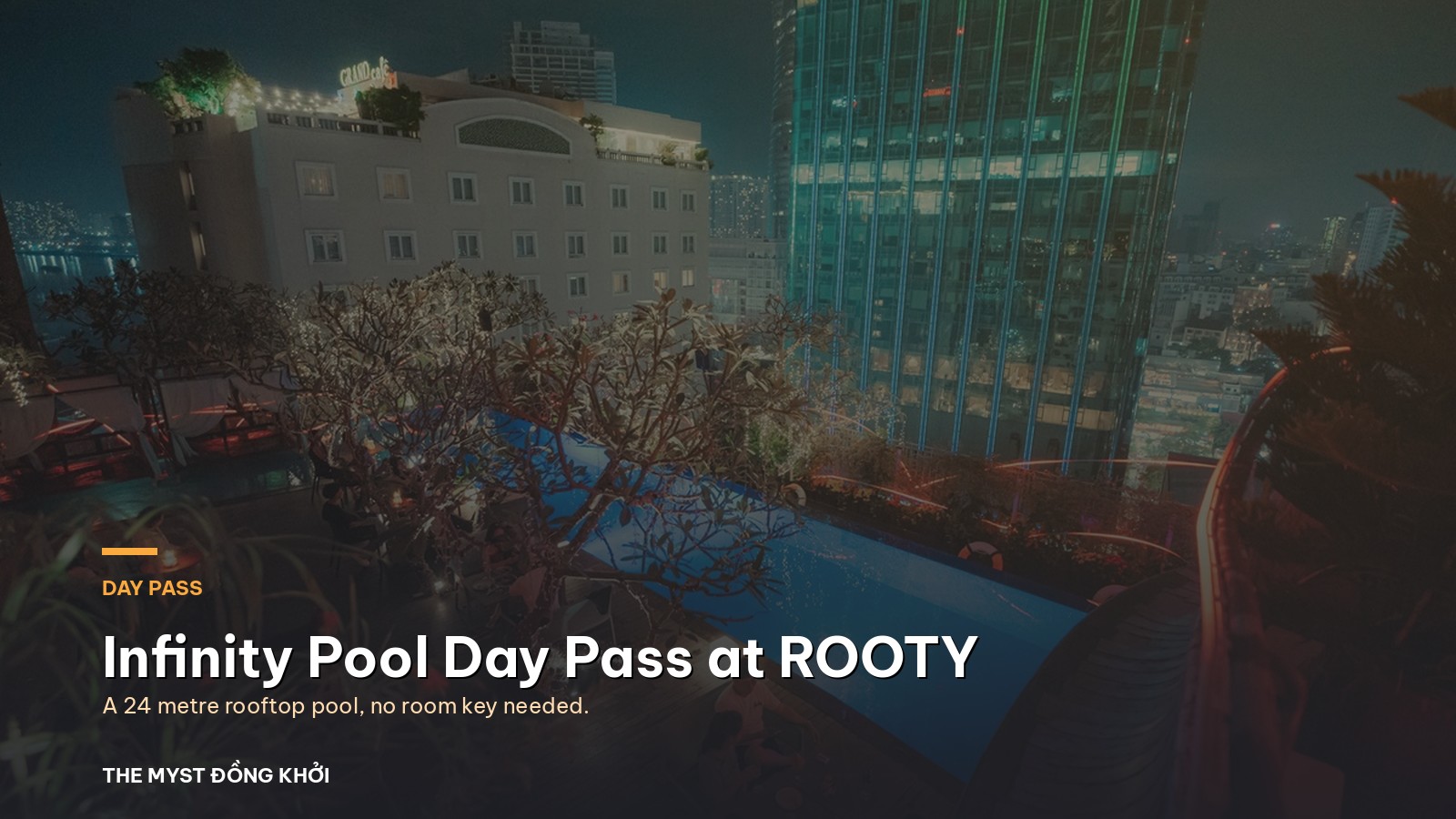
A day by a rooftop infinity pool sounds like something reserved for hotel guests, a perk you unlock only after checking in for the night. It is not. At ROOTY Bar, on the fifteenth floor of The Myst Đồng Khởi, you can buy a day pass and spend the whole afternoon by a 24 metre infinity edge high above central Saigon, no room key required. This guide covers the appeal of a rooftop pool day, then the practical part in full: what the ROOTY day pass costs, exactly what it includes, the hours, and how to plan the day so you make the most of it.
At a glance. ROOTY Bar sits on the fifteenth floor rooftop of The Myst Đồng Khởi at 4-6-8 Hồ Huấn Nghiệp, Phường Sài Gòn, TP.HCM. Non-staying guests are welcome. The pool is open 07:00 to 18:00 daily. A day pass is 375,000++ VND for an adult and 195,000++ VND for a child under 1.3 m, and it includes the pool, the gym, the sauna and the steam bath. The adult ticket also comes with one free drink. To book, call (+84) 888 641 122.
Table of Contents
A rooftop pool day, no room key needed
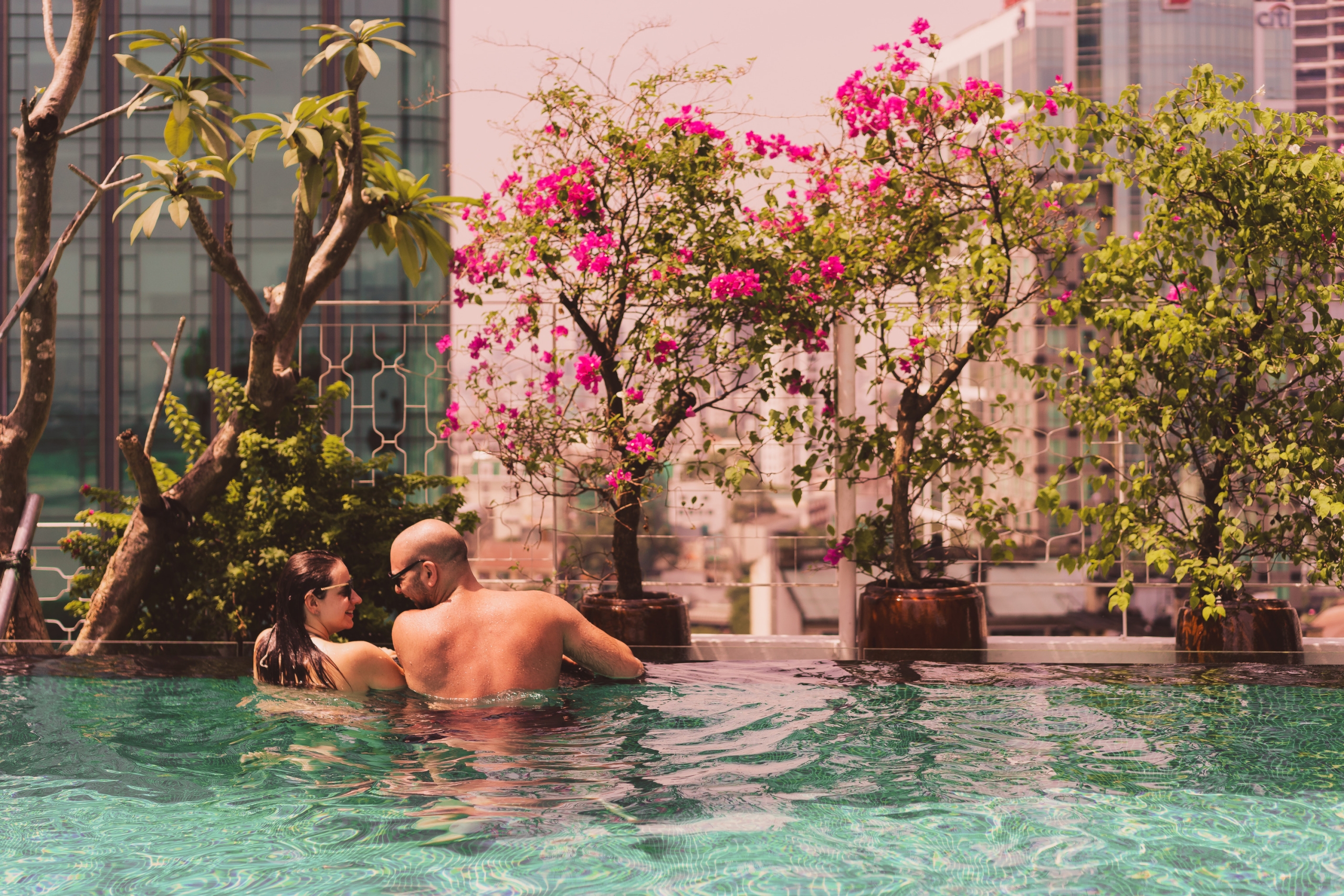
There is a quiet assumption that a hotel pool belongs only to the people staying upstairs. At ROOTY that is not the case. The rooftop welcomes non-staying guests on a day pass, which means a pool afternoon in the centre is open to anyone: someone who lives in the city, a friend visiting for the weekend, a couple who fancy a swim without booking a room, a family looking for somewhere to cool off that is not a public pool.
The idea is simple. You pay for a ticket, you come up, and the fifteenth floor is yours for the day within the pool hours. No overnight stay, no minimum spend beyond the pass itself. It turns a rooftop that most people only picture at night, drink in hand, into a place you can enjoy in full daylight, when the water is the main event rather than the cocktails.
The pool and the view
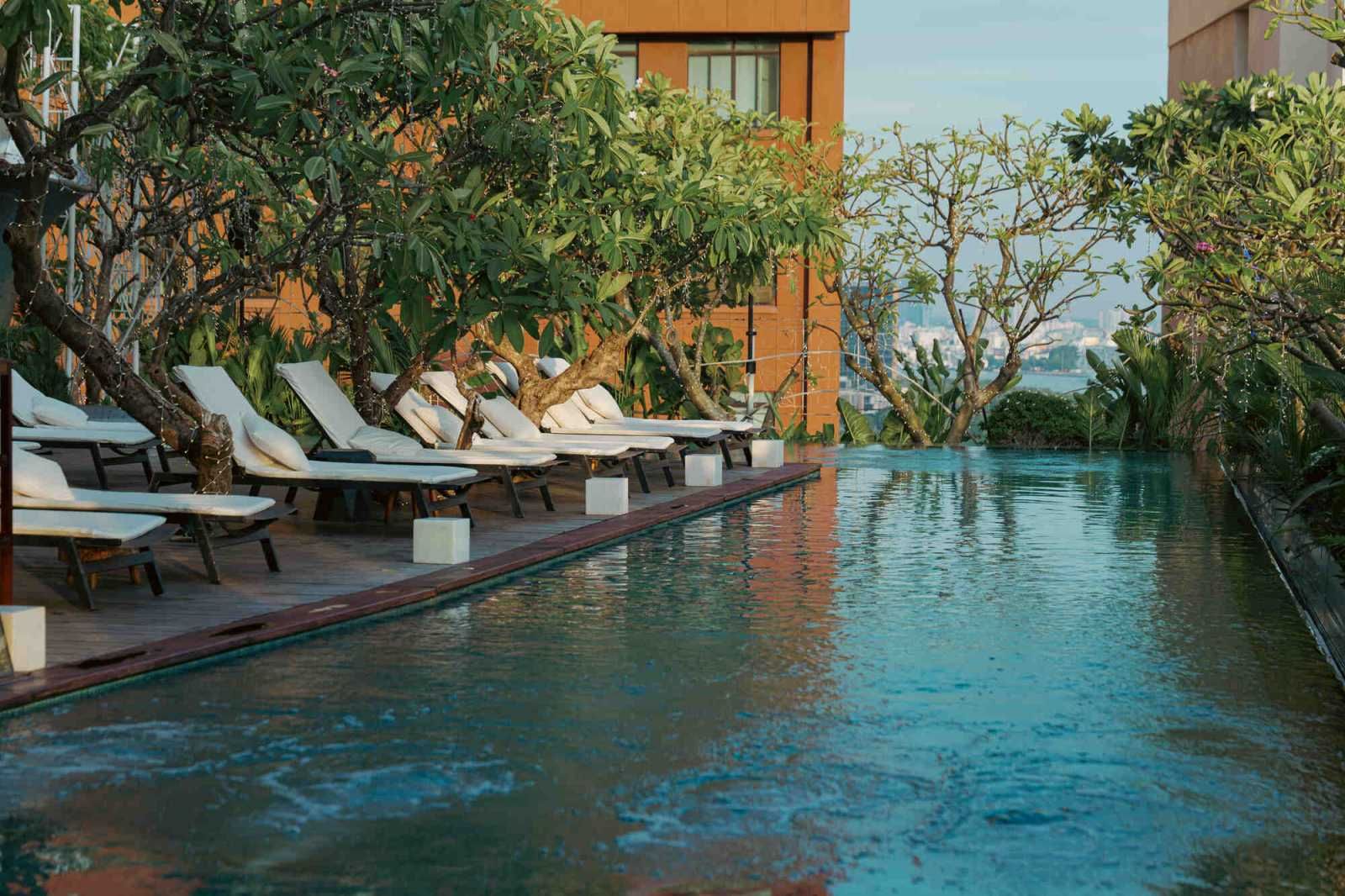
The pool itself runs 24 metres, long enough to actually swim rather than just stand in, with an infinity edge that drops the water line into the skyline. From the fifteenth floor you look out over the rooftops of central Saigon toward the Saigon River, the kind of outlook that usually costs a night's stay to wake up to. Sun loungers line the deck. You can order from the bar without leaving your seat, and the drink that comes with your ticket is yours to enjoy whenever you like.
What makes it work as a day out, rather than a quick dip, is the height and the calm. Fifteen floors up, the traffic is a distant hum. You swim a few lengths, dry off on a lounger, order a coffee, read for an hour, slide back in when the sun gets warm. It is the rhythm of a resort pool, dropped into the middle of the city. If you want the fuller picture of the rooftop and what it becomes after dark, our ROOTY rooftop bar guide walks through the whole floor.
How the day pass works: price and what is included
The pricing is straightforward, and worth stating plainly. A day pass for an adult is 375,000++ VND per ticket. A day pass for a child under 1.3 m tall is 195,000++ VND per ticket. The "++" means service charge and VAT are added on top, so the final figure on your bill sits a little above the headline number.
Here is what the ticket actually gets you:
- The infinity pool. Full use of the 24 metre rooftop pool and the loungers on the deck, within the pool hours.
- One free drink (adult ticket). The adult day pass includes one drink of your choice: a beer, a coffee, a juice or a soft drink. You do not pay extra for it.
- The gym. Access to the fitness room, if you want to train before or after your swim.
- The sauna. Use of the sauna, part of the same ticket.
- The steam bath. Use of the steam bath as well.
So the pass is not only pool access. For one ticket you get the pool, a drink, the gym, the sauna and the steam bath, which makes a full afternoon of it rather than a single swim. For a family, the child rate under 1.3 m keeps it reasonable to bring the little ones along.
Hours and what to bring
The pool is open 07:00 to 18:00, daily. Note that this is earlier than the bar closes: the water is a daytime pleasure here, and by six in the evening the pool itself winds down while the rooftop shifts into its evening life. Plan around that and the day runs smoothly.
A few practical notes worth having before you come up:
- Come earlier for a lounger. The best spots on the deck go first, especially on a warm weekend afternoon. An earlier arrival gives you the pick of the loungers and the quieter water.
- Bring your swimwear. Pack a swimsuit, and a change of clothes if you plan to stay on into the evening. A towel is on hand at the pool.
- Use your free drink. The adult ticket includes one drink, so there is no need to buy your first coffee or beer. Order it when you settle in, or save it for later in the afternoon.
- Sunset is after pool hours. The pool closes at 18:00, which is before the best of the evening light. If you want the sunset, plan to move from the pool to the bar for that stretch rather than expecting to swim through it.
From the pool to the bar
Because the pool closes at 18:00 and the rooftop keeps going, the natural shape of the day is a swim in the afternoon and a drink as the light turns. You do not have to leave when the pool does. Dry off, change, and the same floor becomes an evening bar with Saigon-inspired cocktails and the city lighting up below you.
It is a genuinely good way to spend a day in the centre, and it lines up with the rest of the rooftop's calendar. On the big nights the view earns its keep: our guide to the National Day fireworks from the rooftop is worth a look if you are timing a visit. And once you are back down at street level, the Saigon riverfront is a short walk away for an evening stroll.
Frequently asked questions
Can I use the pool at ROOTY without staying at the hotel?
How much is the pool day pass at ROOTY?
What does the day pass include?
What are the pool hours?
What should I bring for a pool day?
Where is ROOTY Bar and how do I book?
Book a pool day pass at ROOTY
ROOTY Bar sits on the fifteenth floor of The Myst Đồng Khởi, with a 24 metre infinity pool high over central Saigon and the river beyond. Non-staying guests are welcome, and one ticket covers the pool, a drink, the gym, the sauna and the steam bath. Our team is glad to arrange your day pass.
→ Book a pool day pass at ROOTY, call (+84) 888 641 122
→ Explore ROOTY, the rooftop bar
→ Stay with us and wake above the city
Crafted by Silverland Hotels.
Blog, Blog
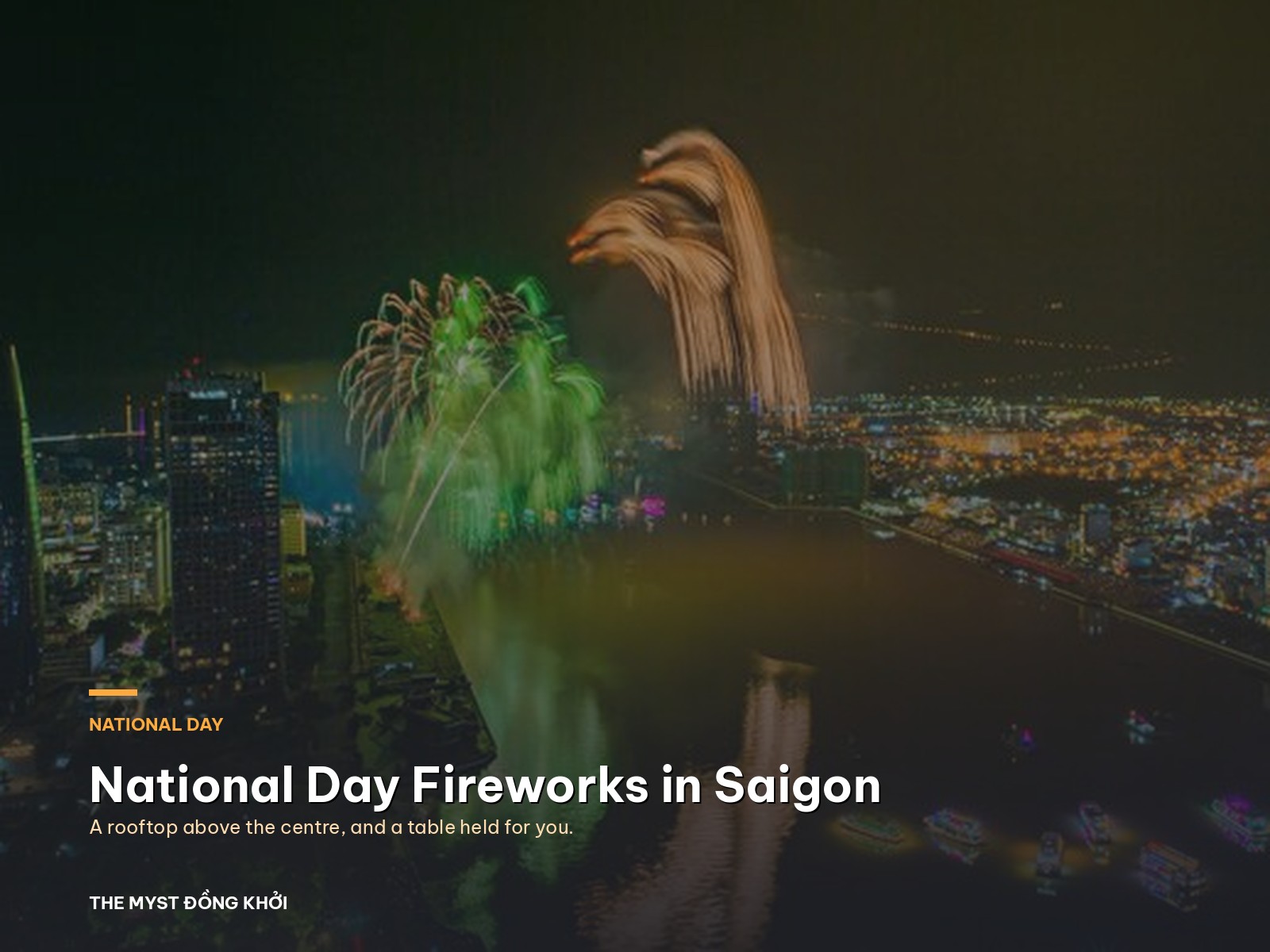
Every 2 September the city tilts toward the river. Families pack the promenades, motorbikes fill every side street near the water, and by early evening the best of the riverbank is already three deep with people waiting for the National Day fireworks. It is a wonderful, noisy, shared thing to be part of. It is also a lot of standing, jostling and craning your neck. This guide is for anyone who would rather watch the same sky from somewhere calmer: a rooftop above the centre, a drink in hand, a seat that is yours, and a clean line to the fireworks over the water.
At a glance. On 2 September Ho Chi Minh City launches its National Day fireworks over the river toward the Thủ Thiêm side, and the streets along the water grow very crowded. A rooftop bar in the centre offers a private alternative, above the crush, with a table you can reserve. At The Myst Đồng Khởi, ROOTY sits on the fifteenth floor facing the river, the fireworks are visible from the deck, and reservations are taken for the night. Book ahead, as these tables fill fast.
Table of Contents

The fireworks, without the crowd
There is no doubt the National Day fireworks are a highlight of the year in Saigon. The problem is never the show. It is everything around it. To hold a decent spot on the riverbank you often need to arrive a couple of hours early, then stand your ground while the crowd thickens behind you. Phones go up. Someone taller drifts in front. When the first shells finally climb, you catch them between shoulders, and when it ends you are folded into a slow river of people all leaving at once.
None of that is a reason to skip the night. It is a reason to change your vantage. Lift yourself a dozen storeys above the street and the whole equation flips. The crowd is a hum somewhere below. The heat eases into a breeze. You are sitting, not shuffling, and the sky is simply open in front of you, with the fireworks reading clean against the dark instead of glimpsed through a forest of raised arms. For a couple, or a small group who want the occasion without the ordeal, a rooftop is the quiet luxury of the evening.
Why a rooftop beats the riverbank on 2/9
Height does most of the work. The National Day fireworks are launched high over the water so that as much of the city as possible can see them, which means the higher and clearer your line of sight, the better the show reads. From street level a building, a tree or a truck can swallow half of it. From a rooftop that faces the river, there is nothing between you and the burst.
Then there is everything a table gives you that a patch of pavement cannot. Somewhere to sit for the whole evening, not just the ten minutes of the finale. A cold drink brought to you rather than queued for. Shade and a breeze while you wait, and no anxious guarding of your spot. You arrive when you like, settle in, and let the night come to you. If any of your group tires of standing, a child, a parent, anyone, a rooftop makes the difference between an endurance test and an easy evening out.
It is worth being honest about one thing. A rooftop trades a little of the ground-level roar for comfort and a clear view. If what you want is to be pressed shoulder to shoulder in the thick of the celebration, the riverbank is unbeatable. If you would rather watch the same fireworks with room to breathe and a seat that is yours, the calculation is easy.
The view from ROOTY
ROOTY is the rooftop bar on the fifteenth floor of The Myst Đồng Khởi, at 4-6-8 Hồ Huấn Nghiệp in central Saigon. On an ordinary evening it is a place for a slow drink at altitude: a 24-metre infinity pool that seems to spill toward the skyline, Saigon-inspired cocktails, and a long open view across the centre toward the Saigon River and Thủ Thiêm on the far bank. The bar keeps generous hours, from 07:00 through to 01:00, so the deck is already yours well before the first shell goes up.
That orientation is exactly why the night works here. Because ROOTY faces the river and the Thủ Thiêm side, where the National Day fireworks are set off, the show opens up in front of the deck rather than behind your back. You are fifteen floors up, above the tangle of streets and the crowds along the water, with the lit skyline as a foreground and the fireworks blooming over it. It is a private, elevated vantage on a night when most of the city is looking up from the pavement.
If you would like the fuller picture of the space, our guide to the ROOTY rooftop bar walks through the pool, the cocktails and the view, and you can read more about the water itself in our note on the Saigon riverfront.
What a fireworks night looks like
A festive evening at ROOTY tends to be built around more than the fireworks themselves, so the hours before and after have their own mood. On occasions like this the programme typically leans into live entertainment: a Jazz Night, a DJ, or live piano to carry the deck through the evening. We say typically on purpose. The exact line-up is set closer to the night, so the honest advice is to confirm what is on when you book, rather than take any single version as fixed.
Booking ahead also unlocks a couple of touches that make the night feel marked rather than merely attended. For couples, birthdays or anniversaries, reserving in advance usually lets the team lay on some complimentary basic decoration, a small thing that quietly turns a table into an occasion. For groups, a party of four or more is typically welcomed with a free cocktail shot to open the evening. Treat both as things to ask about and confirm when you call, since offers on a big night can shift. The point is simply that a little planning is rewarded here.
Good to confirm when you book. Whether the fireworks are going ahead and the expected timing, which sitting or arrival time holds your table for the show, the entertainment planned for the night, and any decoration for a couple or celebration, or the welcome shot for a group of four or more. A quick call settles all of it: (+84) 888 641 122.
Booking your table for 2/9
The one firm piece of advice for the National Day fireworks is to book early. A rooftop that faces the river has a limited number of seats with a clear line to the sky, and 2 September is one of the busiest nights of the year, so the good tables go well before the day itself. The moment you know you want to be there, reserve. It costs nothing to hold a plan and everything to leave it to the evening.
When you call, it helps to say how many you are and what the night is for, whether it is a quiet two, a birthday, or a group of friends, so the team can suggest the right table and arrival time and note any decoration or welcome touch. Ask them to walk you through the timing too, since arriving in good time means you are settled with a drink before the sky lights up rather than hurrying in as it starts.
If you are making an afternoon of it beforehand, the rooftop is a natural pairing with a lazy afternoon by the water, and our infinity pool day pass is one easy way to be up here with time to spare.
Frequently asked questions
Where can I watch the National Day fireworks in Ho Chi Minh City?
Can you see the fireworks from ROOTY?
Does ROOTY take reservations for the 2 September fireworks?
Is there entertainment on the night?
Are there any perks for booking ahead?
What time should I arrive?
Reserve your table for the 2/9 fireworks at ROOTY
ROOTY sits on the fifteenth floor of The Myst Đồng Khởi in central Saigon, facing the river where the National Day fireworks light the sky. Reserve a table for the night and watch from above the crowds, with a drink in hand and the skyline laid out below. Call (+84) 888 641 122 to book, and ask about the night's line-up and any touches for your table.
→ Reserve a table for the 2/9 fireworks at ROOTY
→ Explore the ROOTY rooftop bar
Crafted by Silverland Hotels.
Blog, Blog
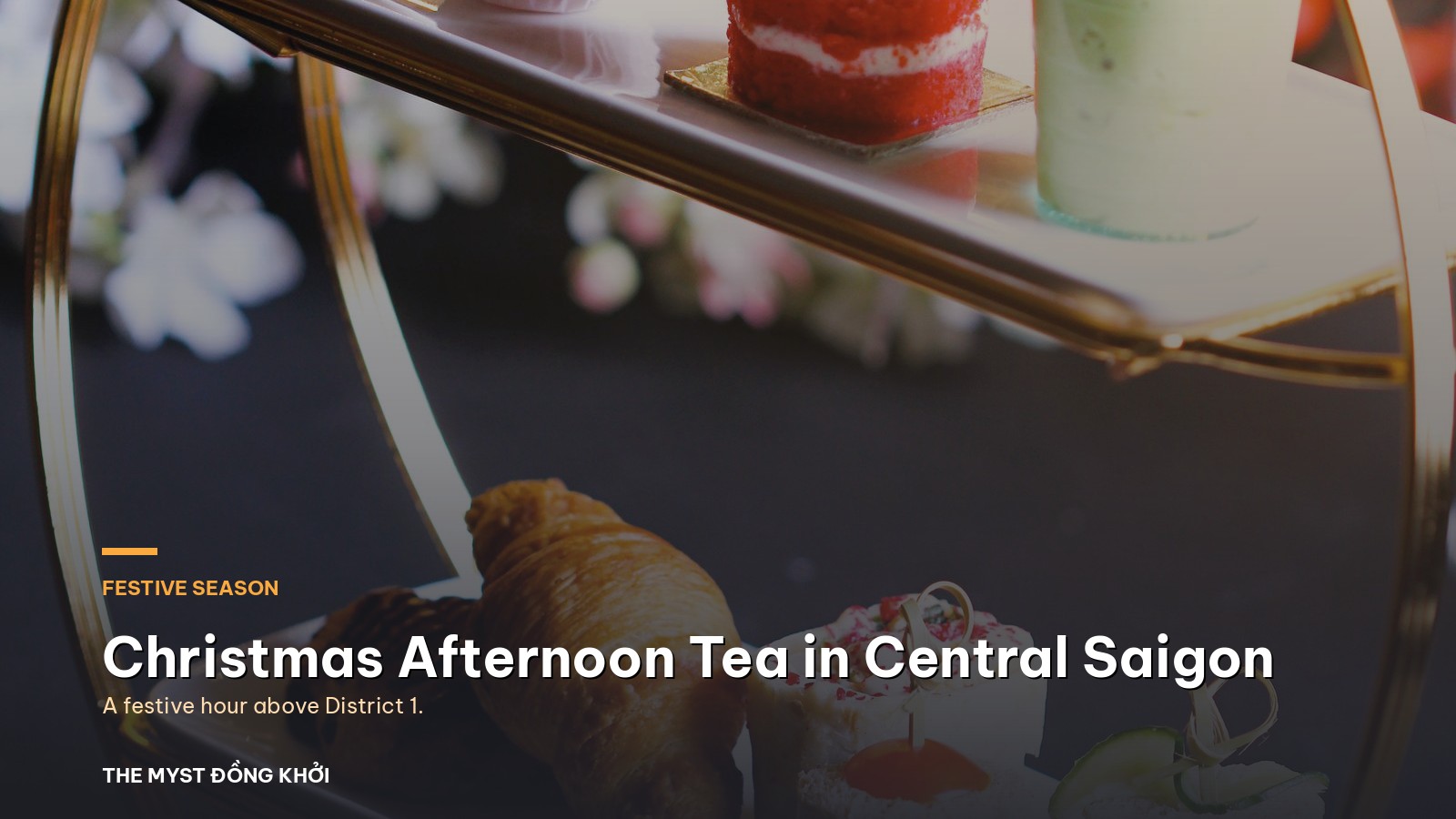
December in Saigon does not bring snow, but it brings its own kind of Christmas. The evenings turn a shade cooler, the streets in the centre string themselves with lights, and there is a warmth in the way the year begins to wind down. It is a lovely season for afternoon tea.
A festive stand, a pot poured slowly, and an hour set aside for the people you have been meaning to see all year. This guide looks at why the ritual suits the season, what a Christmas afternoon tea in the heart of District 1 can be, and how to make an afternoon of it around the lights and the river.
At a glance. A Christmas afternoon tea is the familiar ritual dressed for the season, with festive flavours and a little sparkle on the stand, taken in the early afternoon. December in central Saigon suits it well, with lit-up streets and cooler evenings a short walk away. At The Myst Dong Khoi it is served at The Nest, the twelfth floor restaurant overlooking the city and the Saigon River. Weekend tables in December fill quickly, so it is best to reserve ahead. Festive details are announced closer to the season, so do ask when you book.
Table of Contents
Why Christmas afternoon tea suits the festive season
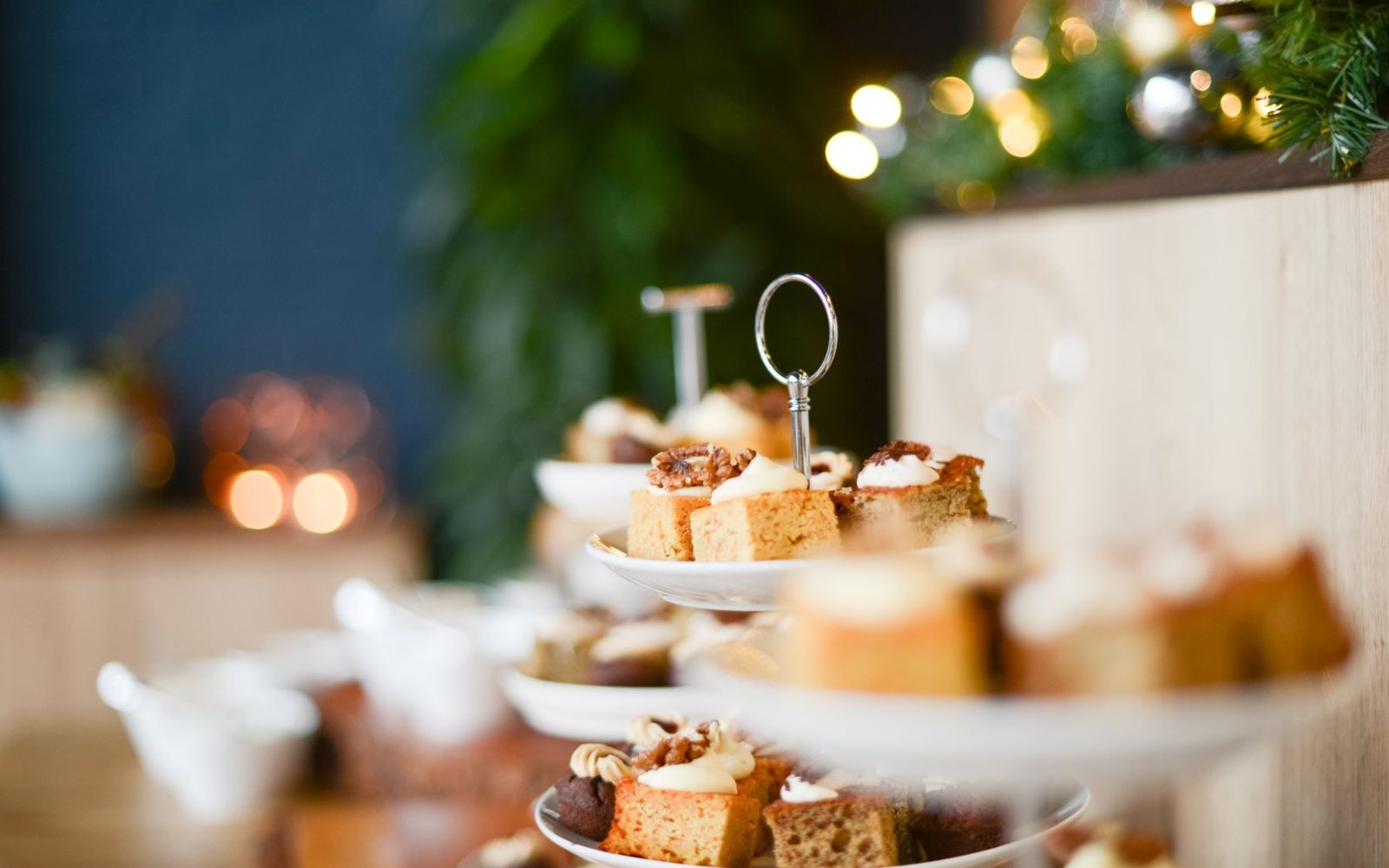
December has a way of filling up. There are dinners to fit in, gifts to find, deadlines to clear before the office closes, and a long list of people you keep meaning to catch. It is easy for the whole month to rush past in a blur of evenings out. Afternoon tea offers a gentler alternative. It is light, it is early, and it asks for an hour rather than a whole evening, which makes it one of the easiest ways to actually sit down with someone amid the December rush.
There is something about the ritual of afternoon tea that fits Christmas naturally. The season is, at heart, about pausing and gathering, and afternoon tea is built for exactly that. It carries festive touches gracefully too. A hint of cinnamon or orange in the sweets, a warmer spiced brew alongside the classic pot, a little seasonal colour on the stand. Nothing heavy, nothing that leaves you too full for the evening ahead, just enough to mark the season. It suits every kind of gathering, from a family treat to a quiet catch up with an old friend to a small end-of-year thank you with colleagues.
A Christmas tea in the heart of the city
Where you take a festive tea matters as much as the tea itself, and central District 1 makes a strong case. Come December the centre is at its best. Đồng Khởi and Nguyễn Huệ dress up in lights, shop windows fill with seasonal displays, and the walking street draws families out in the cool of the evening to take photographs under the decorations. It is the part of the city that most feels like Christmas.
That setting turns a simple pot of tea into an afternoon out. You can drift through the lit-up streets, browse for gifts, then step in out of the crowd and settle somewhere calm and high above it all. Being in the centre means everything is within walking distance, so the tea is not a destination in itself but a warm pause in the middle of a festive afternoon. If a livelier evening appeals once the pot is empty, the season also brings a festive mood to the rooftop Christmas bar in Saigon upstairs.
Festive afternoon tea at The Nest
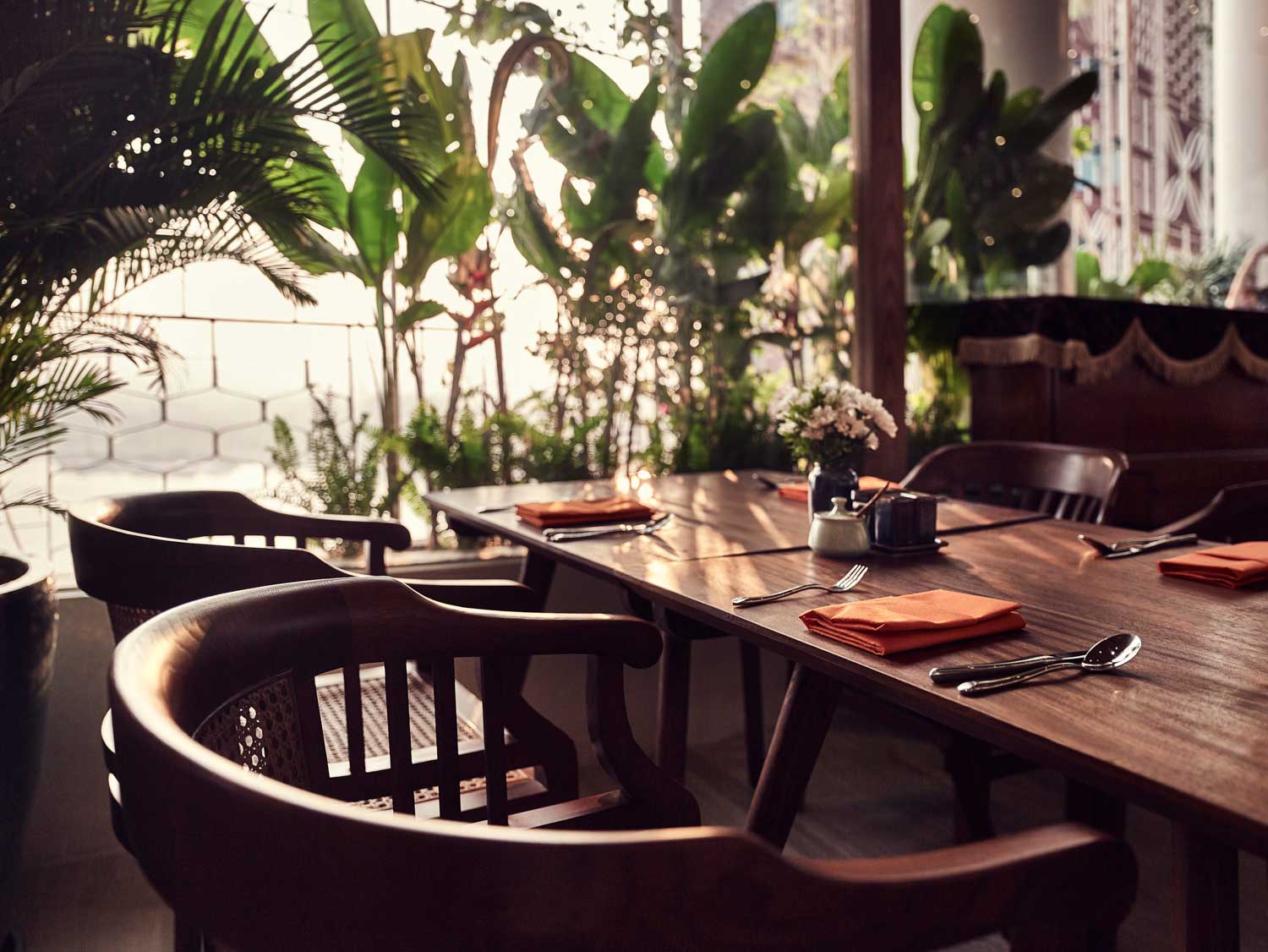
At The Myst Dong Khoi the ritual lives on the twelfth floor, at The Nest. The name means the nest of a swallow, the bird that heralds spring, and the room wears that theme lightly, from the wrought iron flower frames at its windows to a nine metre wooden flower boat that serves as its buffet counter. In December that calm perch takes on a festive glow, and the timing is part of the charm. Afternoon tea is served through the early afternoon, which in December means you can watch the daylight soften and the city lights begin to come on below the windows as you sit.
The kitchen leans local through the year, weaving Saigon flavours into the classic finger sandwiches and pastries, the sort of Vietnamese and Western fusion that runs through the whole restaurant. For the festive season the stand takes on a few seasonal touches of its own. Rather than list a fixed menu here, we would simply say that the festive details change with the produce and the year, and are announced closer to December.
The surest way to know what is on the stand this season is to ask when you book. A window table is worth requesting; the view is at its most magical after dark. If you are new to the ritual and wondering how it differs from a heavier spread, our guide to afternoon tea and high tea untangles the two.
Pairing it with a District 1 Christmas afternoon
A festive tea sits happily inside a wider afternoon in the centre, and December gives you plenty to build one around. A little planning turns a single sitting into a whole outing.
- Shopping first. The centre is the natural place to find gifts, and Đồng Khởi is its most elegant stretch. Browse the boutiques before your table, then arrive with your shopping done and your feet ready for a rest. Our guide to luxury shopping on Đồng Khởi maps out the street.
- The lights after. Time your tea for the later afternoon and you step back out as the decorations come on. The walking street on Nguyễn Huệ is at its liveliest in the early evening, strung with lights and busy with families.
- The river to finish. The Saigon riverfront is a short stroll away, cool and open in the December evenings, a quiet place to end an afternoon before dinner.
All of it sits within a few minutes on foot of the hotel, which is part of why the centre works so well for a festive afternoon. If you would like the wider picture of the ritual first, our guide to afternoon tea in Saigon covers the tradition and where to enjoy it year round.
Booking your festive tea
December is the busiest month for a table, so a little forward planning goes a long way. Weekend afternoons through the season fill quickly, and the closer you get to Christmas the more that is true, so reserve ahead if you can and ask for a window table if the view matters to you. Arrive with time to spare, since the whole point of the ritual is to slow down rather than watch the clock.
And do ask about anything festive when you book, as the seasonal touches are announced closer to December and are often the most interesting part of the stand. However you gather, and whoever you gather with, a festive tea is a gentle and generous way to mark the end of the year in the heart of the city.
Frequently asked questions
What is a Christmas afternoon tea?
Where can I enjoy a festive afternoon tea in central Ho Chi Minh City?
What makes The Nest good for a Christmas tea?
When should I book afternoon tea for December?
What festive flavours are on the stand?
Is a Christmas afternoon tea good for groups?
Reserve a festive afternoon tea at The Nest
The Nest sits on the twelfth floor of The Myst Đồng Khởi, a boutique heritage hotel in the heart of District 1, with the city and the Saigon River laid out beyond its windows. Come December our team is glad to hold a table for a festive afternoon tea and to talk you through what the season is bringing to the stand.
→ Reserve a festive afternoon tea at The Nest
→ Stay with us and wake above the city
Crafted by Silverland Hotels.
Blog
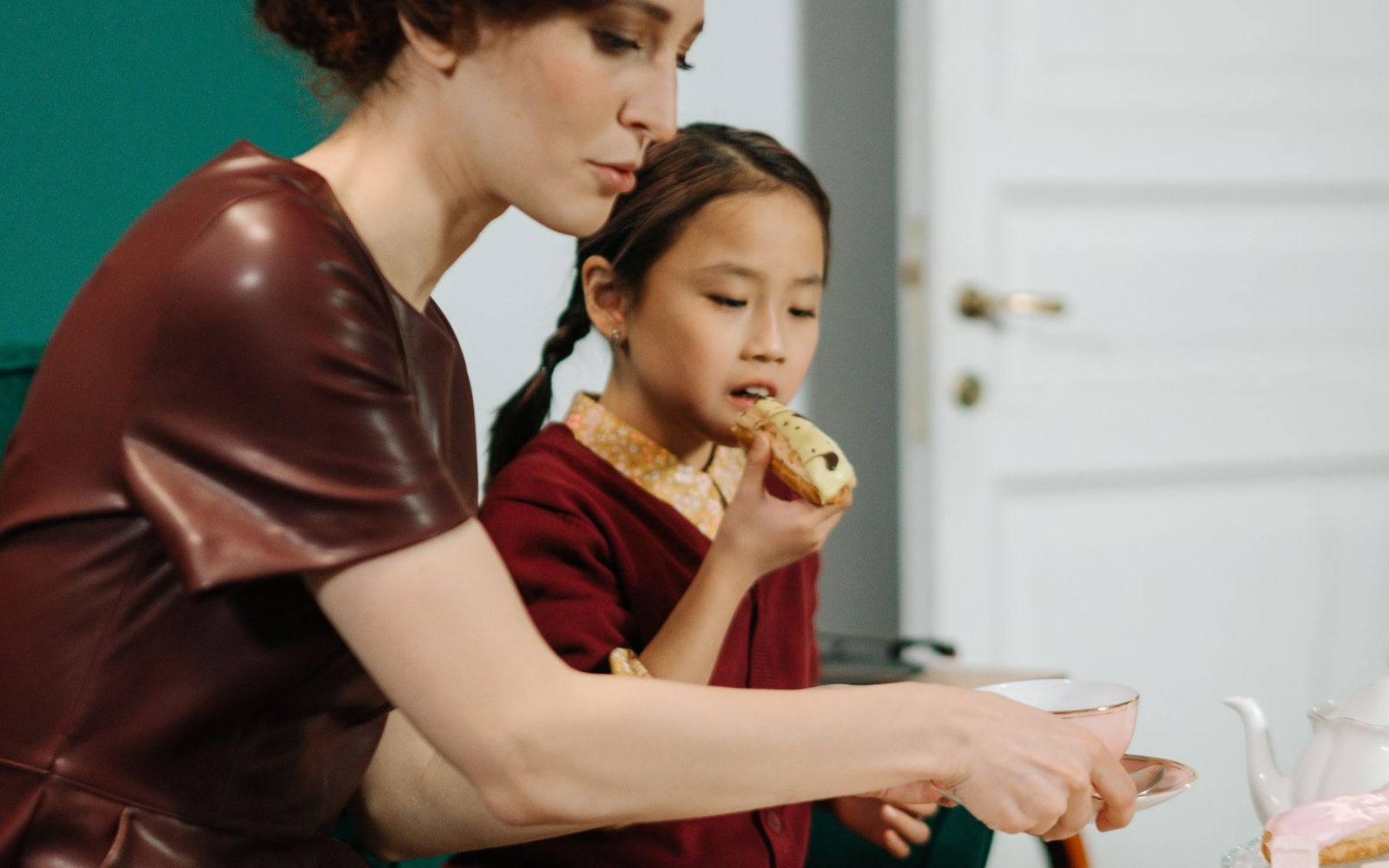
Ask your mother out to dinner and something happens: a big table, a full menu, the pressure to make an evening of it. Afternoon tea asks for none of that. It is a small, gentle thing, a pot of tea and a stand of little bites on a quiet Saturday, and somewhere in that hour you actually get to talk. This is a note on why a weekend afternoon tea is such a lovely way to spend unhurried time with your mother or grandmother, what makes a place right for it, and how to plan one in the heart of District 1.
At a glance. A weekend afternoon tea is a low-pressure, unhurried way to spend real time with your mother or grandmother. Look for somewhere calm and quiet, with comfortable seating, gentle service and a nice view. At The Myst Dong Khoi it is served each afternoon at The Nest, the twelfth floor restaurant overlooking the city and the Saigon River. For a weekend visit, reserve ahead and ask for a window table.
Table of Contents
Why tea beats a big meal for time with mum
Think about the last big dinner you shared. The food arrives in courses, someone is always chewing, the room is loud, and by the time the plates clear it is late and everyone is tired. A meal like that fills the evening but rarely leaves much room to simply be together. Afternoon tea works the other way around. The food is light and it comes all at once, set down on a single stand, so nobody is waiting on the next course and nobody is racing to finish. The table stays open. What fills the hour is the conversation.
That difference matters most with a parent. There is a particular ease to sitting across from your mother in the middle of a Saturday, no occasion required, a pot of tea between you. You pour, she tells you something you had never heard about her own mother, you lose track of the time. Because the setting is calm and the pace is yours, the talk drifts to the small things that a busy dinner never reaches. It is a low-pressure kind of closeness, and it is exactly the sort of afternoon that tends to be remembered long after a grander meal is forgotten.
It works across generations, too. A grandmother who finds a noisy restaurant tiring can settle happily into a quiet tea. A child can be handed a scone and left content. Nobody has to perform. That gentleness is a large part of why so many families reach for tea when they want time together rather than a spectacle, and it is one of the occasions afternoon tea suits best.
What makes a good spot for a weekend tea
Not every pretty café will do for this. The whole point is unhurried time with someone you love, so the room has to allow it. A few things matter more than the rest.
- Calm and quiet. You want to hear each other without leaning in. A room where the tables are not crammed together, where the music is low or absent, is worth far more than a fashionable address.
- Comfortable seating. An hour or two is a long time on a hard chair, especially for an older guest. Somewhere you can settle back and stay a while changes the whole afternoon.
- Gentle, unobtrusive service. A team that pours the tea, answers a question kindly and then leaves you to talk. Not hovering, not rushing you toward the bill.
- A nice view. Something to rest the eyes on gives a natural rhythm to the conversation. A pause to watch the city is never an awkward silence.
- An unhurried pace. The best places understand that you are not there to eat and leave. Nobody clears your stand the moment it is empty or asks whether you would like anything else in a way that means it is time to go.
Get those right and almost any spread becomes lovely. Get them wrong and the finest pastries in the city will not save a rushed, noisy hour.
An afternoon at The Nest
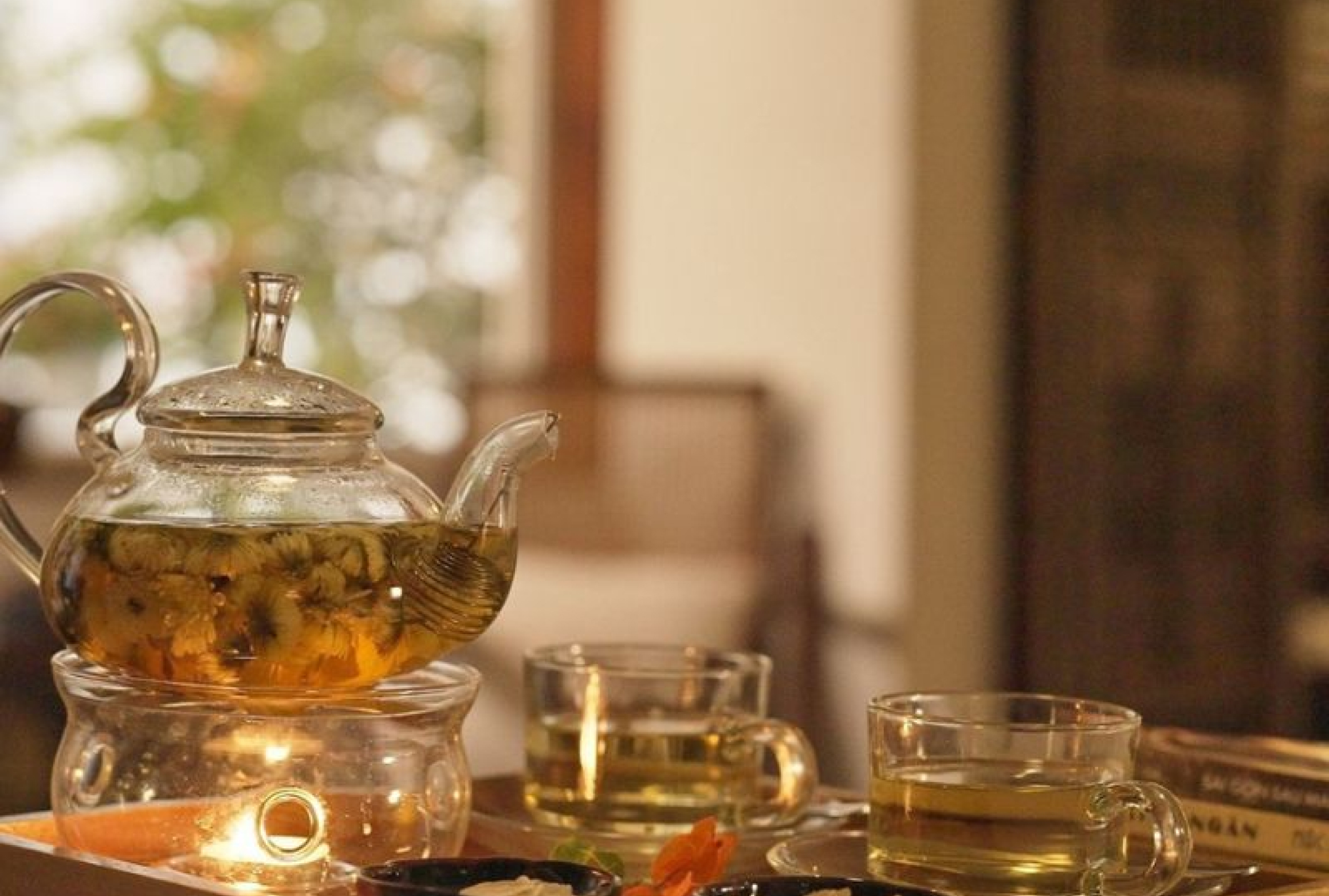
At The Myst Dong Khoi, afternoon tea lives on the twelfth floor, at The Nest. The name means the nest of a swallow, the bird that heralds spring, and the room wears that spring theme quietly, from the wrought iron flower frames at the windows to a nine metre wooden flower boat that serves as the buffet counter, a nod to the old Bình Đông flower wharf at Tết. It is built to feel like a calm perch above the streets, with the city and the river laid out below the glass. For an afternoon with your mother, that height does something kind: it lifts you out of the traffic and the heat, and hands you a quiet room and a long view instead.
Picture the shape of it. You step out of the lift into a cool, unhurried room and take a table by the window. The tea comes, then the stand, a run of finger sandwiches and small savouries with a Saigon accent, scones, and a line of little pastries, the sort of Vietnamese and Western fusion that runs through the whole restaurant. Rather than list a fixed menu here, we would say only that it changes with the season and the produce, so the loveliest thing to do is ask what is on the stand today when you book. Your mother watches the river while you pour. The afternoon is served in the early part of the day, which suits a weekend perfectly, with the whole of the evening still ahead once you have finished.
If a slow morning together appeals more than the afternoon, the same gentle spirit runs through a leisurely hotel breakfast buffet, the same calm room carried to the start of the day.
Little things that make it special
The difference between a nice afternoon and one your mother mentions for months is usually made of small touches. Ask for a window table when you book, and let her take the seat with the view. Arrive a little early so she is settled and comfortable before the tea arrives, rather than flustered from the lift and the search for the room. If the visit marks something, a birthday, Mother's Day, or simply a rare free Saturday, mention it quietly when you reserve; a kind team will often find a small way to acknowledge it without turning the afternoon into a performance.
Bring nothing to rush off to. The single most special thing you can offer is an afternoon with no clock running, where the answer to "shall we have another pot?" is always yes. Leave your phone in your bag. Ask her the questions you never quite get around to at a busy family gathering. The setting does a great deal of the work, but the unhurried attention is the real gift.
Planning your weekend tea
A little planning is all it takes. Weekends are the busiest time for afternoon tea, so reserve ahead rather than hoping for a table on the day, and say when you book that you would like one by the window. Come with time to spare on both sides of the visit, since the pleasure is in not watching the clock. Dress however feels comfortable; the room is refined but never stiff, and your mother should feel at ease, not on show. And do ask about anything seasonal, as the most interesting bites are often the ones that change with the month.
An afternoon tea also sits neatly inside a wider day in the centre. It pairs naturally with a gentle stroll along nearby Đồng Khởi or a slow turn toward the riverfront once the pot is empty. If you would like to understand the ritual itself in more depth, our guide to afternoon tea in Saigon covers what it is, how it differs from high tea, and where to enjoy it in District 1.
Frequently asked questions
Why is afternoon tea a good way to spend time with my mother?
When is the best time for a weekend afternoon tea?
Where can I take my mother for afternoon tea in District 1?
Should I book ahead for a weekend afternoon tea?
Can I request a window table?
Is afternoon tea suitable for older guests and children?
Book a weekend afternoon tea for you and your mother
The Nest sits on the twelfth floor of The Myst Đồng Khởi, a boutique heritage hotel in the heart of District 1, with the city and the Saigon River laid out beyond its windows. Our team is glad to hold a weekend table by the window and to talk you through what the season is bringing to the stand.
→ Reserve a weekend table at The Nest
→ Stay with us and wake above the city
Crafted by Silverland Hotels.
Blog
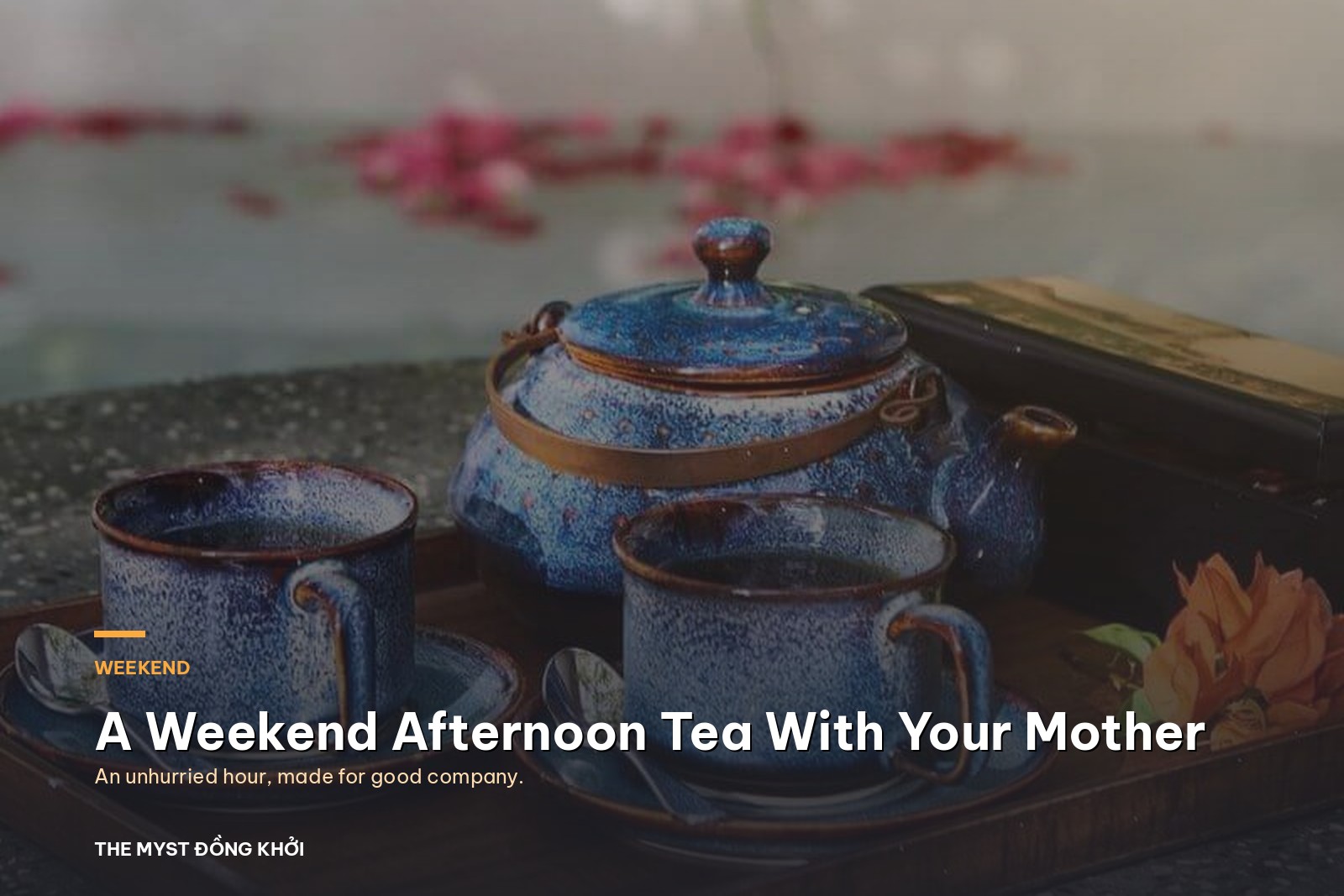
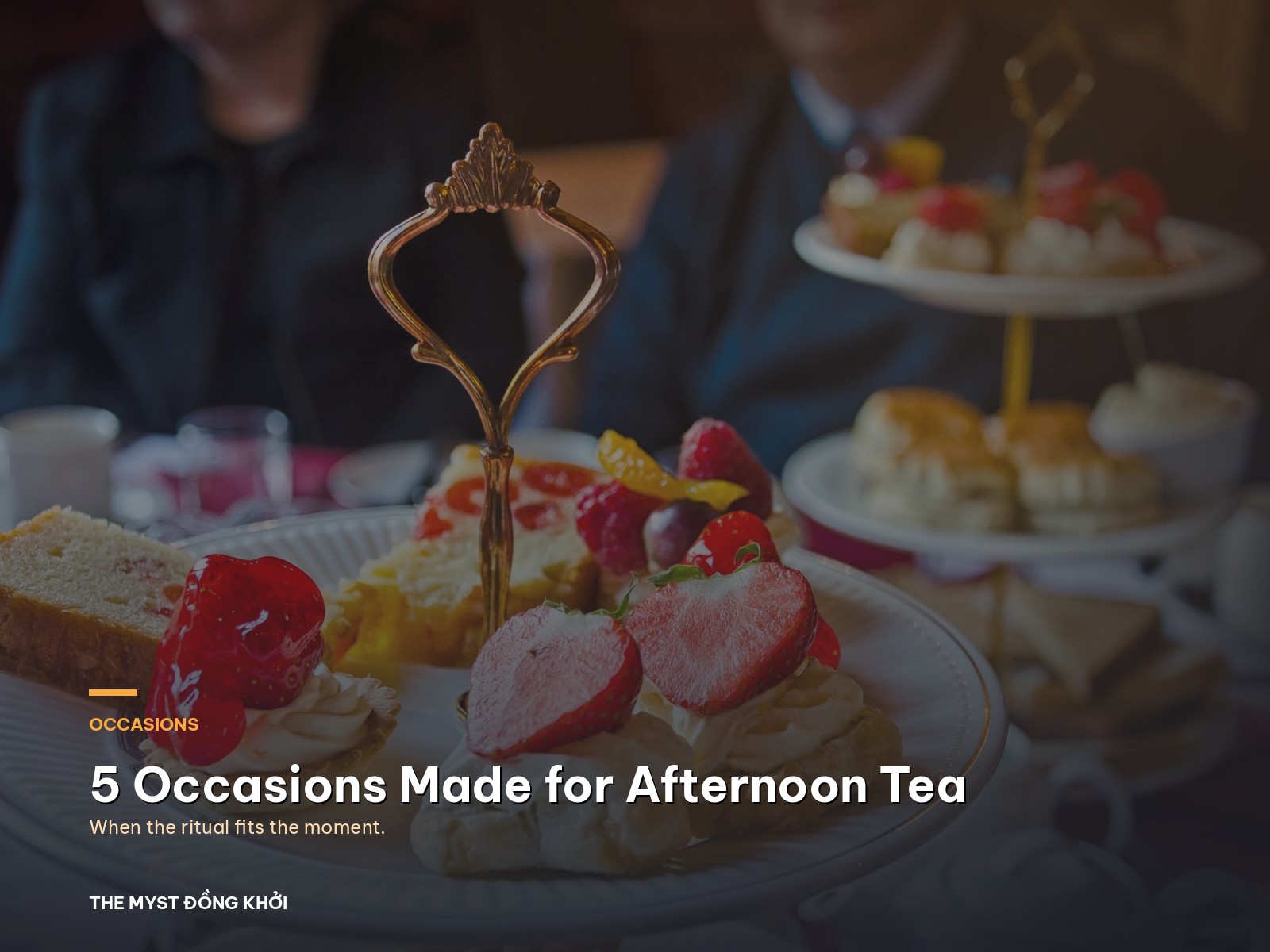
Dinner asks a lot of an evening. It runs long, it fills you up, and it tends to take over whatever you had planned around it. Afternoon tea asks almost nothing. It sits in the quiet middle of the day, it is light on its feet, and it leaves you free to talk for as long as the pot holds out. That lightness is exactly why it suits so many moments a big meal would overwhelm. Here are five occasions that afternoon tea in a hotel was practically made for, with a sixth that is worth a mention on its own.
At a glance. Afternoon tea is a light, unhurried spread of tea, savouries and sweets taken in the early afternoon. Its low-key format makes it ideal for a relaxed catch-up, a small celebration, time with family, a calm meeting or a festive gathering, and it works just as well as a solo treat. At The Myst Dong Khoi it is served each afternoon at The Nest, the twelfth floor restaurant overlooking the city and the river. A table is best reserved ahead.
5 occasions for afternoon tea

1. An unhurried catch-up with old friends
Some friendships are easy to schedule and hard to actually keep. Dinner needs everyone free on the same evening, and drinks can turn into a late night nobody asked for. An afternoon tea sidesteps both. You meet at two or three, when the day is calm and nobody is watching the clock, and you talk with the whole afternoon still ahead of you.
The format does the work for you. A pot keeps being topped up, a tier of small bites means there is always something to reach for, and the gaps between them are where the real conversation happens. Nobody has to perform the way a formal dinner sometimes demands. It is the kind of setting where two hours pass and you only notice because the light has changed over the rooftops.
2. A quiet celebration without the heavy dinner
Not every good thing needs a banquet. A birthday you would rather mark gently, an anniversary that means more than it needs to show, a promotion or a piece of news you want to sit with rather than shout about. Afternoon tea gives these moments a proper occasion without the weight of a set menu and three courses you have to work through.
There is room for a small flourish, too. A candle on a plate of sweets, a glass of something sparkling, a window table held for the two of you. The celebration reads as considered rather than staged, which is often what the moment actually wants. You raise a cup, you take your time, and you leave the afternoon feeling marked rather than stuffed. For anyone weighing an afternoon tea celebration in Saigon against a full dinner, this is the version that lets the reason for it stay in the foreground.
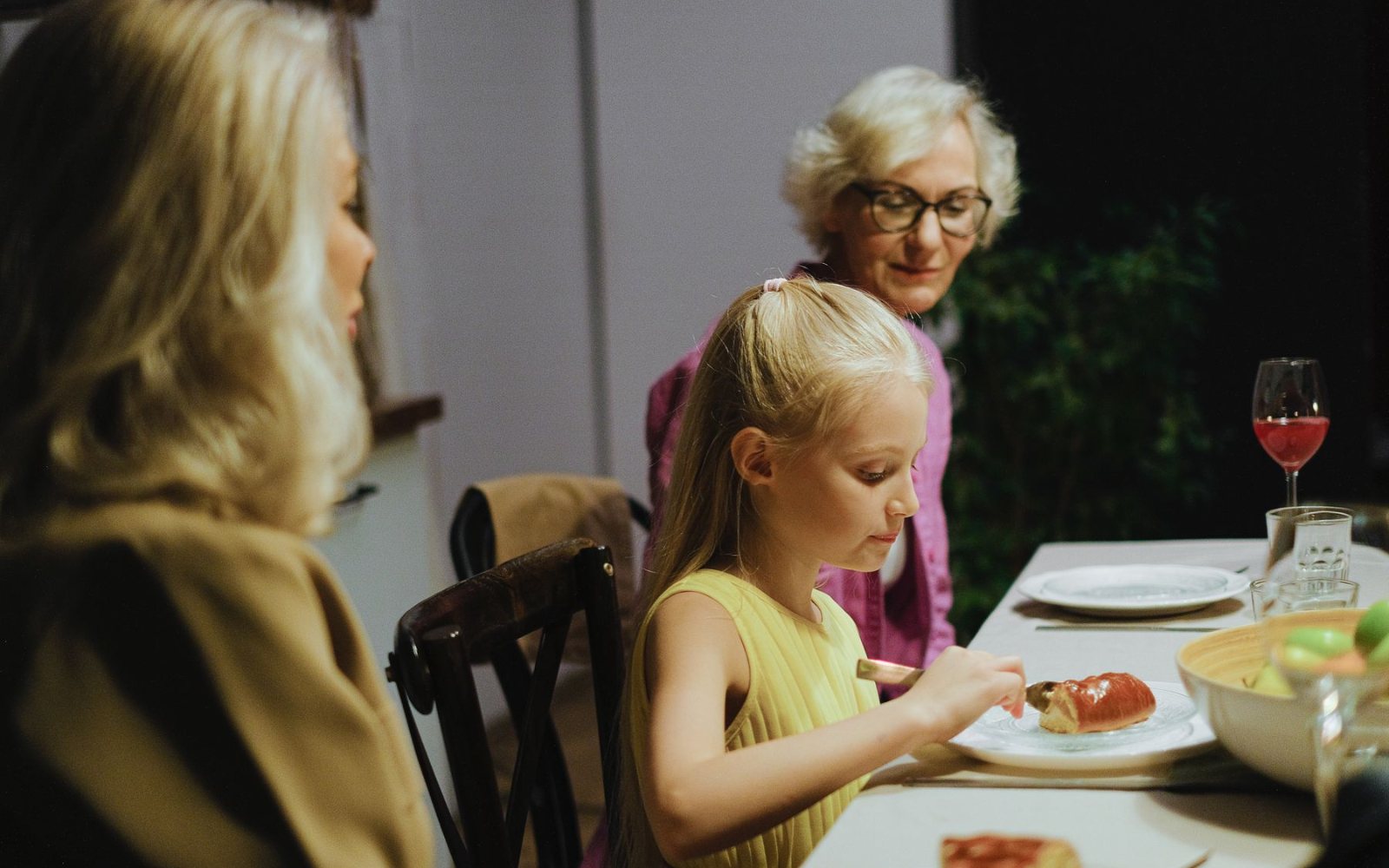
3. Time with family, especially a mother or grandmother
Afternoon tea travels well across generations, which is rarer than it sounds. A loud bar leaves the eldest out; a long tasting menu tires the youngest. A calm room, a gentle pace and a spread everyone can pick at from a shared stand suits a grandmother and a grandchild at the same table equally well. Nobody feels rushed and nobody feels left behind.
It is a particular favourite for time with a mother or grandmother, an occasion that can feel awkward to build a whole dinner around but sits naturally over tea. There is no pressure to fill silence, just an hour set aside on purpose. We look more closely at that in our note on a weekend afternoon tea with your mother, including why the weekend timing tends to work best.
4. A relaxed, discreet meeting
A first meeting with a partner or a client is a balancing act. A restaurant at dinner can feel too committed; a coffee shop can feel too thin, too noisy, too quick. Afternoon tea sits comfortably in between. There is enough on the table to signal that you took the meeting seriously, and enough calm around it to actually hear each other think.
A hotel setting adds the discretion these conversations often need. Tables are spaced, the room stays quiet, and the service is attentive without hovering, so a sensitive discussion stays between the two of you. You can talk for an hour, close things off cleanly, and neither party has to commit to the long evening a dinner implies. If you are choosing a room for exactly this kind of meeting, our guide to choosing a restaurant for a business meeting in Saigon covers what to look for.
5. The festive season and the year-end
Come December the whole idea takes on a little sparkle. The stand picks up seasonal touches, the room warms up in the way central Saigon does at year-end, and afternoon tea becomes a lovely way to gather a family or a team without the logistics of a full festive dinner. It is easier to organise, easier on everyone's evening, and it still feels like an occasion.
It also fits the shape of the season. Between the shopping and the parties and the general December rush, a slow hour over tea is a genuine pause rather than one more thing to get through. We gather the seasonal details in our guide to Christmas afternoon tea in central Saigon, from the festive touches to the best time to book.
And a sixth: a treat for yourself
Not every occasion needs company. There is a quiet luxury in booking a window table for one, bringing a book or nothing at all, and letting an afternoon belong entirely to you. No conversation to keep going, no plan to honour, just tea, a view and time. If you have never done it, it is worth trying once. Many people find it becomes a habit.
Why the hotel setting works for all of them
What ties these occasions together is that each one wants the same things: a calm room, a bit of space, unhurried service and somewhere pleasant to look. A hotel restaurant is built to provide exactly that. You step out of the heat and the traffic into a cool, quiet floor above the city, the tea comes without you having to chase it, and the setting lifts an ordinary afternoon into something that feels a little marked. That is the same easy comfort behind our pillar guide to afternoon tea in Saigon, applied to whatever reason brings you.
At The Myst Dong Khoi the ritual lives on the twelfth floor, at The Nest. The name means the nest of a swallow, the bird that heralds spring, and the room wears that theme lightly, from the wrought iron flower frames at its windows to a nine metre wooden flower boat that serves as its buffet counter. The kitchen leans local, weaving Saigon flavours through the classic finger sandwiches and pastries in a Vietnamese and Western fusion that runs through the whole restaurant. Rather than fix a menu here, the honest answer is that it changes with the season, so the best way to know what is on the stand is to ask when you book. Afternoon tea is served through the early afternoon; a window table is worth requesting.
Frequently asked questions
What occasions suit afternoon tea in a hotel?
Is afternoon tea a good way to celebrate a birthday?
When is the best time to have afternoon tea?
Is afternoon tea suitable for a business meeting?
Can I enjoy afternoon tea on my own?
Where can I have afternoon tea for these occasions in Saigon?
Reserve afternoon tea at The Nest
Whatever the occasion, The Nest sits on the twelfth floor of The Myst Đồng Khởi, a boutique heritage hotel in the heart of District 1, with the city and the Saigon River laid out beyond its windows. Our team is glad to hold a table for afternoon tea and to talk you through what the season is bringing to the stand.
→ Stay with us and wake above the city
Crafted by Silverland Hotels.
Blog
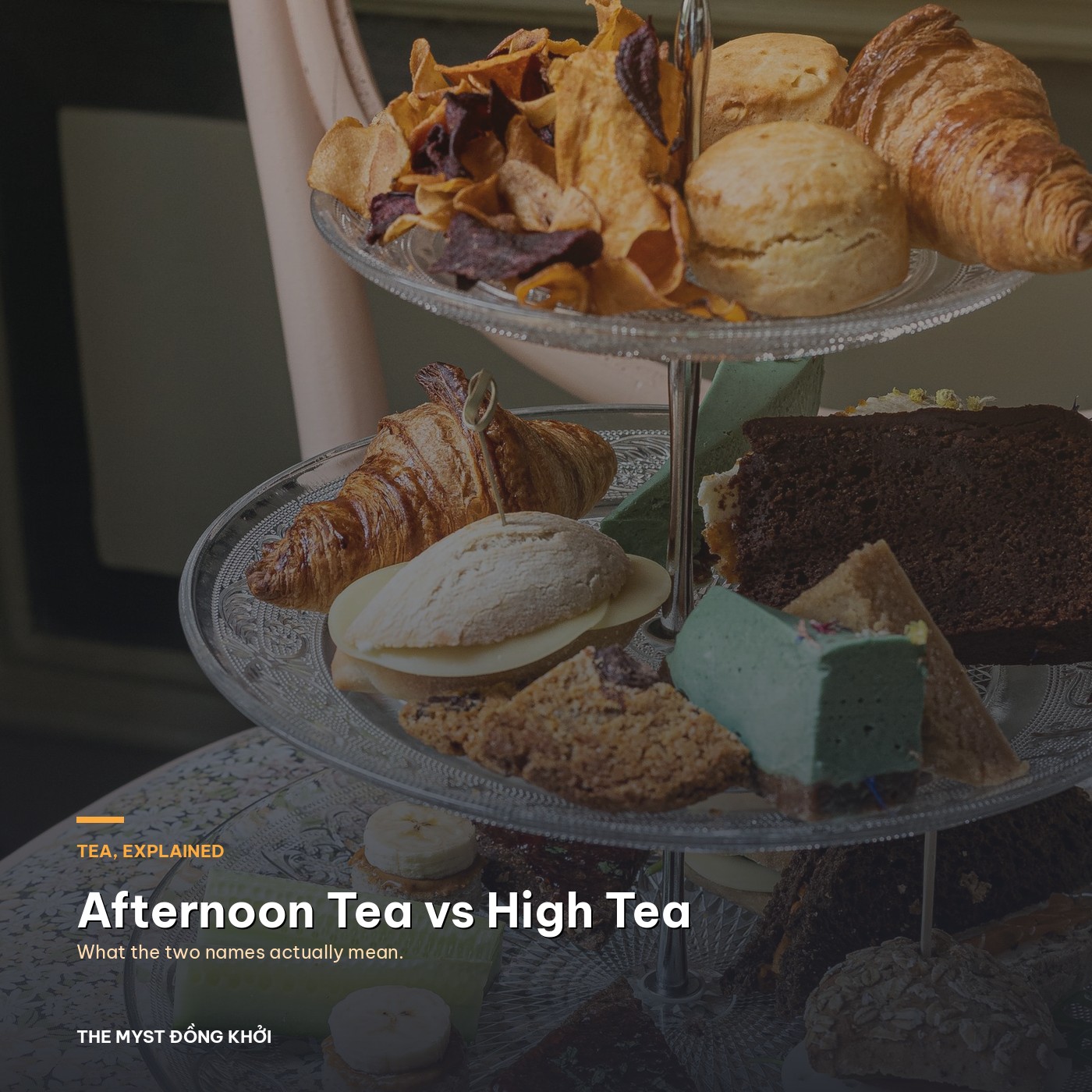
Two names, endless confusion. Most people assume high tea is the grander, fancier one, the champagne-and-chandeliers version of afternoon tea. It is almost exactly the opposite. Afternoon tea is the dainty, leisured spread; high tea was a working family's evening meal. This guide untangles the two properly, from where they came from and when they are served to what actually lands on the table, and clears up the one myth that trips everybody up.
The short version. Afternoon tea is a light mid afternoon spread of tea, finger sandwiches, scones and small sweets, taken around three or four o'clock for pleasure. High tea was historically a hearty early evening meal, eaten after a working day, with hot savoury dishes and bread. The word "high" refers to the tall dining table it was served at, not to any sense of luxury. In Vietnam and much of Asia the two terms are used loosely, so it always pays to check the menu.
Table of Contents
The short answer
If you only remember one thing, make it this. Afternoon tea is the light, elegant one, taken in the middle of the afternoon as a treat between meals. High tea is the substantial one, a proper evening meal that happens to include tea. The grandeur most people attach to the words runs backwards: the delicate tiered stand is afternoon tea, and the plate of hot food is high tea. Everything else in this guide simply explains how that came to be.
A little history
Afternoon tea has a tidy origin story. In the 1840s Anna, Duchess of Bedford, found the long stretch between an early lunch and a fashionably late dinner hard to bear, and began asking for a pot of tea with bread, butter and cake in the afternoon. She started inviting friends to join her, the habit spread through polite society, and within a generation it had become a recognised social ritual among people who had the leisure to fill an afternoon this way.
High tea grew from an entirely different soil. In the industrial north of England and Scotland, workers came home from the mill or the field in the early evening, hungry for a real meal. What they sat down to was tea poured strong alongside hot dishes, cold meats, bread and cheese, taken at the ordinary dining table. It was supper by another name, the main meal of the day for households that had been working since dawn. Two rituals, then, born at opposite ends of the same society and named more by accident than by design.
Timing: when each is served
The clock is the cleanest way to tell them apart. Afternoon tea belongs to the mid afternoon, roughly three to five o'clock, in the calm gap between lunch and dinner. It was never meant to replace a meal, only to bridge one. High tea sat later, closer to five or six, and it was the evening meal, the thing you ate instead of a separate dinner. So if someone offers you "high tea" at half past three with a tower of pastries, they are, strictly speaking, serving you afternoon tea and calling it something grander.
The food on the table
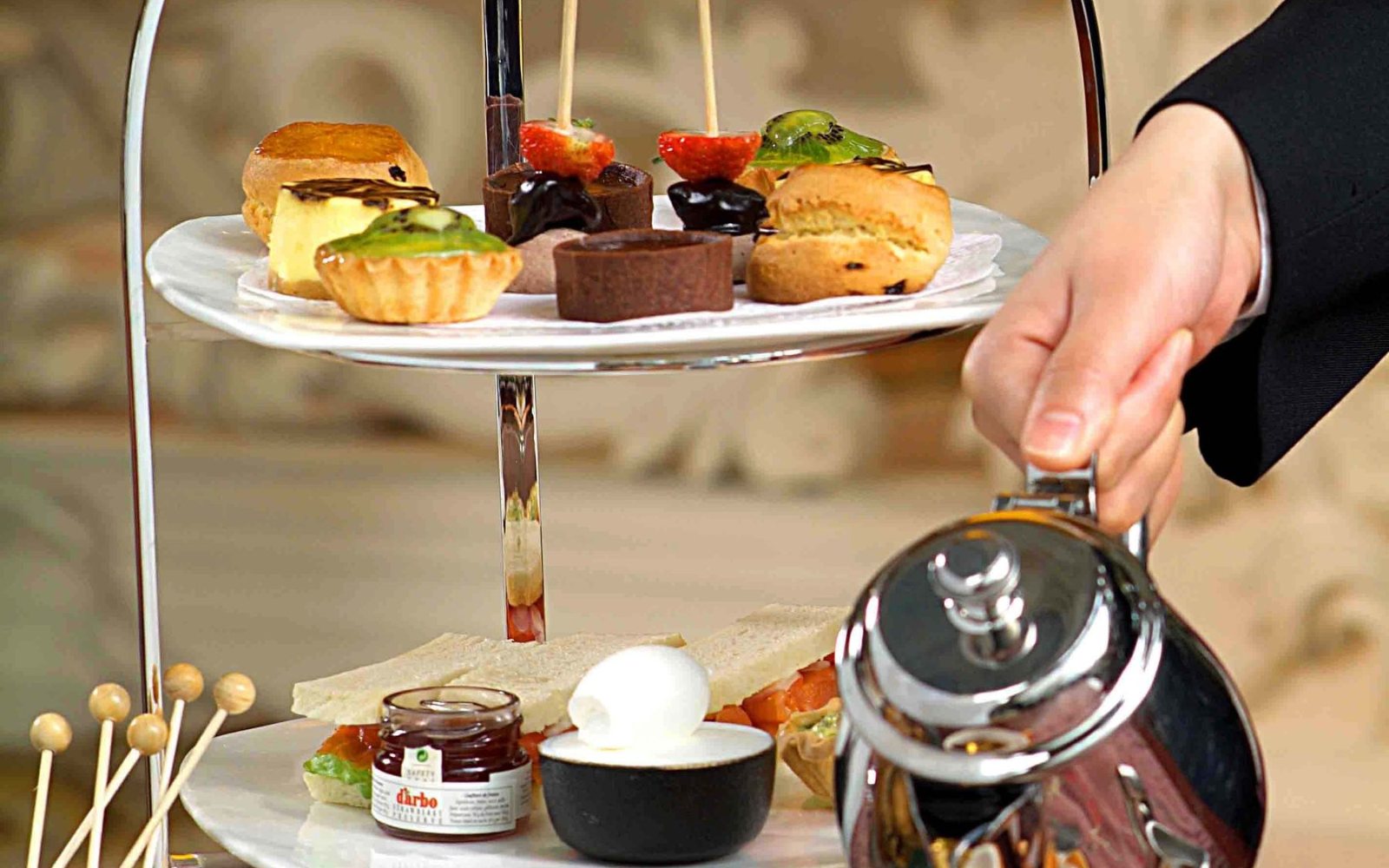
Look at what is actually served and the difference becomes obvious. Afternoon tea is deliberately light and pretty. A pot of loose leaf tea, a tier of crustless finger sandwiches, warm scones with clotted cream and jam, and a run of small cakes and pastries, usually arranged on a stand so the table stays uncluttered. It is food designed for grazing and conversation rather than filling you up.
High tea was built to satisfy. Think hot savoury dishes, a meat pie or cold cuts, cheese, baked beans, thick bread and butter, all served flat on the table rather than stacked on a stand, with a strong pot of tea to wash it down. There might be a slice of cake at the end, but the heart of it was the hearty course. One is an interlude; the other is dinner.
Where the confusion comes from (the "high" myth)
Here is the knot at the centre of it all. The word "high" in high tea has nothing to do with high society, high tables of the aristocracy, or anything upmarket at all. It refers, quite literally, to the height of the furniture. High tea was eaten sitting up at a tall dining table, the everyday table where a family took its main meals. Afternoon tea, by contrast, was often taken lounging in low armchairs around a low tea table in a drawing room, which some accounts call "low tea" for exactly that reason.
So the naming is the reverse of what instinct suggests. "Low tea" was the refined, leisured affair of people with time to spare. "High tea" was the honest evening meal of people who had spent the day working. Hotels and restaurants, sensing that "high tea" simply sounds more luxurious, have spent the last century quietly borrowing the grander-sounding name for what is really an afternoon tea service. That marketing habit is the single biggest reason the two terms are now so thoroughly muddled.
Afternoon tea, high tea and trà chiều in Vietnam
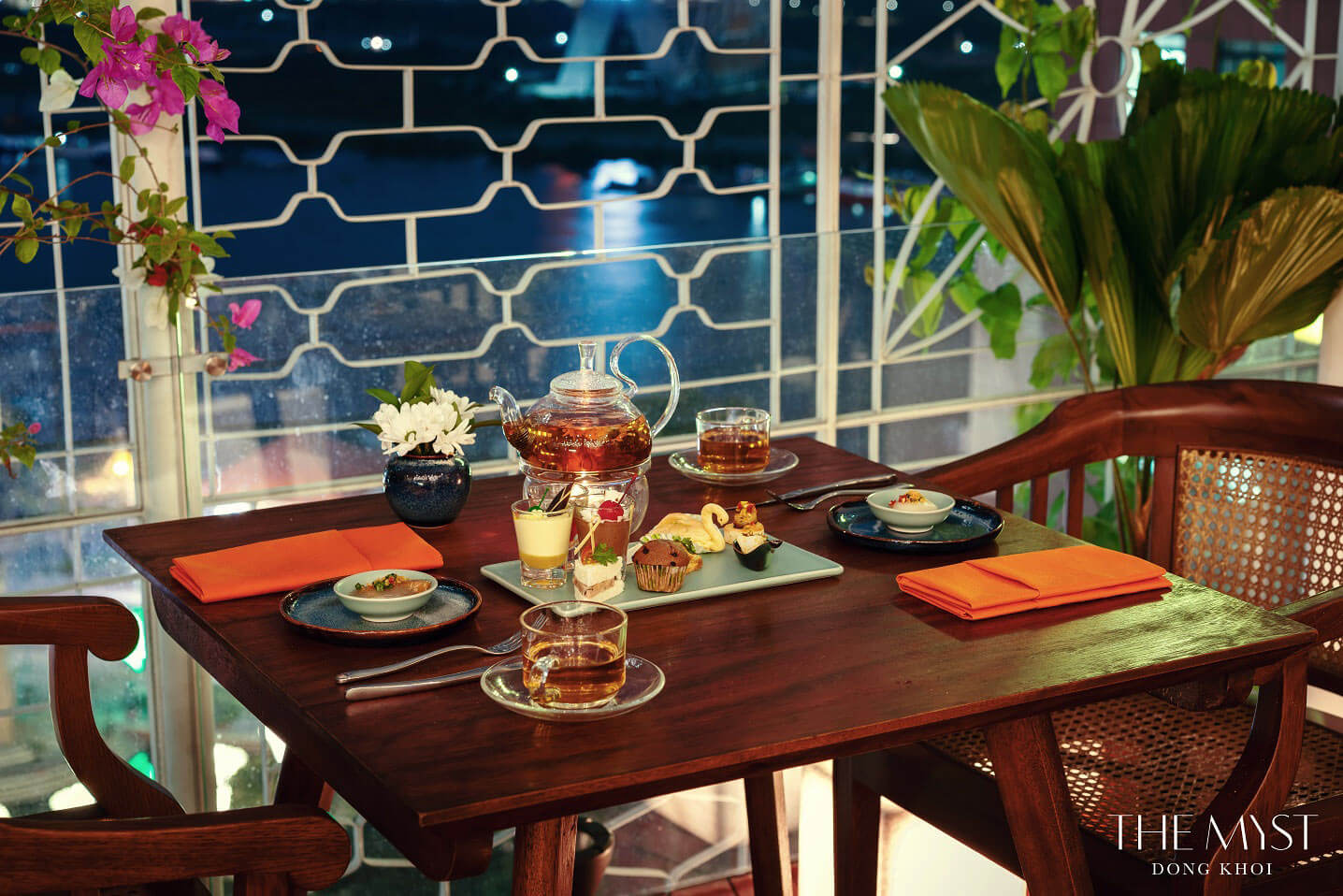
In Vietnam the lines blur further, and mostly for happy reasons. Menus here reach for "high tea" and "afternoon tea" more or less interchangeably, both usually pointing to the same thing: a light, elegant tiered spread taken in the afternoon. The historical distinction that mattered in nineteenth century Britain rarely survives the trip. What you are almost always being offered, whichever term a café or hotel prints, is afternoon tea in the leisurely sense.
Vietnamese has its own warm name for it, trà chiều, which simply means afternoon tea. Among locals it has come to stand for a relaxed treat with friends or family, often with a Saigon accent woven through the spread rather than a strict British template. If you want the fuller picture of the ritual itself, our pillar guide to afternoon tea in Saigon is the place to start.
Afternoon tea vs high tea at a glance
| Afternoon tea | High tea | |
|---|---|---|
| When | Mid afternoon, around 3–5pm | Early evening, around 5–6pm |
| Purpose | A light treat between meals | The main evening meal |
| Food | Finger sandwiches, scones, small pastries | Hot savoury dishes, meats, bread and cheese |
| Served on | A tiered stand, low tea table | Flat on a tall dining table |
| Origin | Leisured, aristocratic households | Working households after a day's labour |
| "High" means | Not applicable | The tall table, not luxury |
Where to enjoy afternoon tea in Saigon
Once the difference is clear, most people find that what they were after all along is afternoon tea: the light, unhurried, pretty one. In central Saigon you can settle into exactly that at The Nest, the twelfth floor restaurant at The Myst Dong Khoi in District 1. The room takes its cue from the swallow that heralds spring, with wrought iron flower frames at the windows and a nine metre wooden flower boat serving as the buffet counter, and it looks out over the city and the Saigon River below.
The kitchen leans local, weaving Vietnamese flavours through the classic tiered spread in the same Vietnamese and Western fusion that runs through the whole restaurant. The offering changes with the season and the produce, so the surest way to know what is on the stand today is to ask when you book. Afternoon tea is served through the early afternoon, and a window table is worth requesting. For ideas on when it suits best, see our note on the occasions for afternoon tea, and come December, our guide to Christmas afternoon tea in Saigon.
Frequently asked questions
What is the difference between afternoon tea and high tea?
What is high tea?
Why is it called "high" tea if it isn't fancy?
What does afternoon tea mean?
Is high tea more upscale than afternoon tea?
What do they serve in Vietnam, afternoon tea or high tea?
Enjoy afternoon tea at The Nest
The Nest sits on the twelfth floor of The Myst Đồng Khởi, a boutique heritage hotel in the heart of District 1, with the city and the Saigon River laid out beyond its windows. Our team is glad to hold a table for afternoon tea and to talk you through what the season is bringing to the stand.
→ Discover dining at The Myst Dong Khoi
→ Stay with us and wake above the city
Crafted by Silverland Hotels.