
What’s within 15 minutes’ walk of The Myst Dong Khoi
At six in the morning, a one-minute walk along Hồ Huấn Nghiệp street brings you out onto Đồng Khởi. Shutters are still down, the traffic is thin and a breeze is coming up from the river. A few minutes on, Nguyễn Huệ walking street is quiet enough to hear your own footsteps. That is the […]

At six in the morning, a one-minute walk along Hồ Huấn Nghiệp street brings you out onto Đồng Khởi. Shutters are still down, the traffic is thin and a breeze is coming up from the river. A few minutes on, Nguyễn Huệ walking street is quiet enough to hear your own footsteps. That is the point of a walkable hotel in District 1, Saigon: the city starts at the door. From The Myst Dong Khoi, Nguyễn Huệ is about four minutes away, the Bạch Đằng riverside five and the Opera House seven, while Bến Thành Market, the furthest point, takes 12 to 15. Each stop below comes with a piece of its history, followed by two routes and advice on the heat.
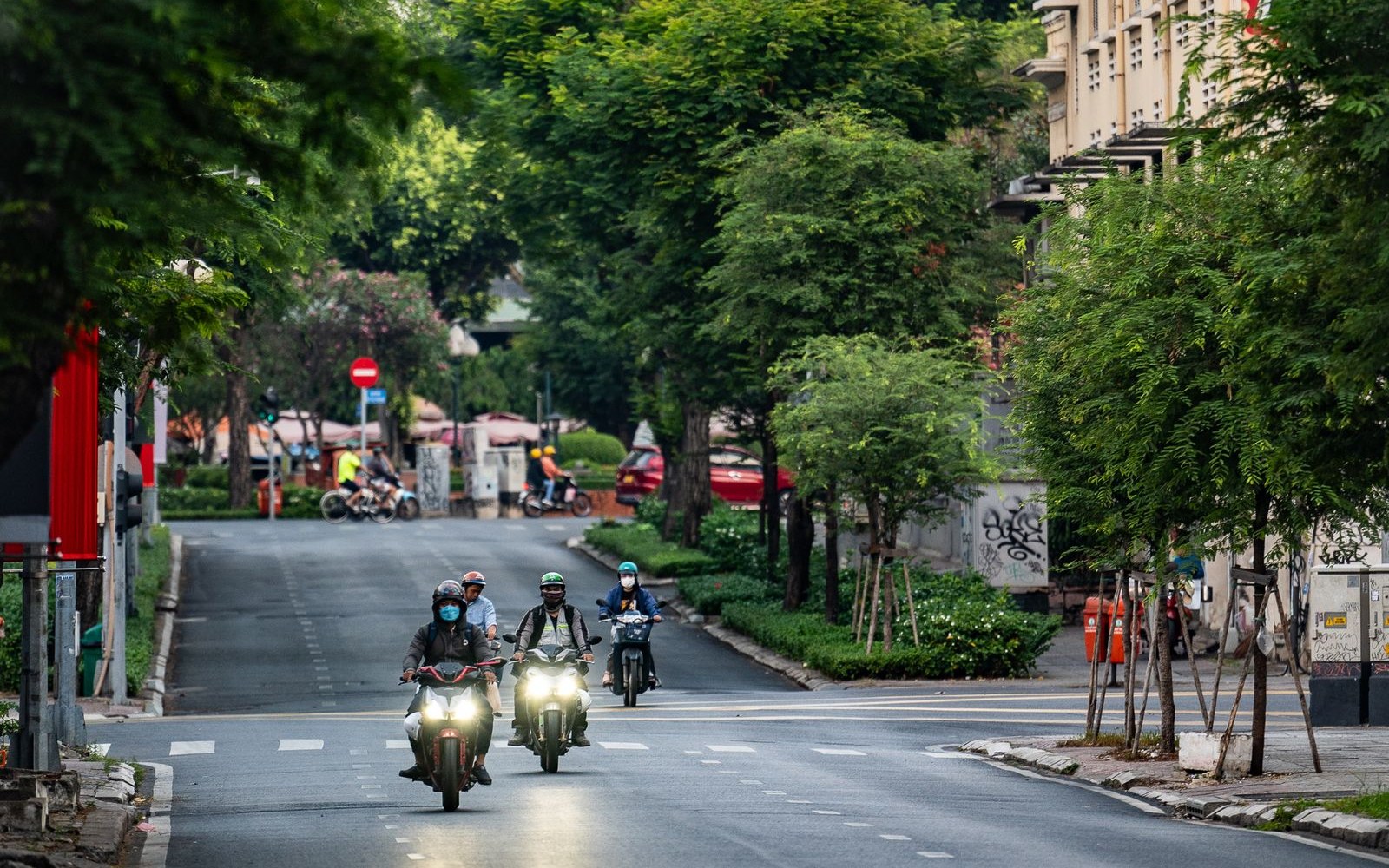
At a glance. The Myst Dong Khoi is at 6-8 Hồ Huấn Nghiệp, Sài Gòn Ward. Đồng Khởi street is about a minute away along Hồ Huấn Nghiệp, Nguyễn Huệ about 4 minutes, the Bạch Đằng riverside about 5, the Opera House about 7 and Bến Thành Market 12 to 15. The nearest metro stop is Opera House station on Line 1.
In this guide
The 15-minute circle at a glance
Times are approximate and measured from the hotel. Add a few minutes for photos, a bottle of water or a red light.
| Stop | On foot from the hotel | Worth knowing |
|---|---|---|
| Đồng Khởi street | About 1 minute, along Hồ Huấn Nghiệp street | Named rue Catinat from 1865; renamed Đồng Khởi in 1975 |
| Nguyễn Huệ walking street | About 4 minutes | A canal filled in 1887; a pedestrian street 670 m long and 64 m wide since 2015 |
| Bạch Đằng riverside | About 5 minutes | At the river end of Đồng Khởi |
| Opera House | About 7 minutes | Begun in 1898, opened on 1 January 1900 |
| Notre-Dame Cathedral and Central Post Office | Past the Opera House, at the top of Đồng Khởi | Cathedral completed in 1880; post office built 1886 to 1891 |
| Bến Thành Market | About 12 to 15 minutes | Built 1912 to 1914; clock tower over the south gate |
| Old Ba Son shipyard site | About 1 km, 15 to 20 minutes (just outside the circle) | Ba Son station is the next metro stop after Opera House |
Đồng Khởi: a minute from the door
The walk to Đồng Khởi is so short that, the first time, you may reach for the map only to find you have already arrived. The street runs from Notre-Dame Cathedral down to the Bạch Đằng riverside, the easiest line to steer by. Walk with the river behind you and you reach the cathedral. Turn round and you reach the water.
The name itself is fairly young. Under the French this was rue Catinat, named on 1 February 1865 after a marshal of France, and it later spent some years as Tự Do street before becoming Đồng Khởi in 1975. Come across Catinat in an old book about Saigon and you will know exactly which pavement the writer was walking. For a morning among its shops, start with the designer boutiques along Đồng Khởi.
Nguyễn Huệ and the riverside: four or five minutes
About four minutes from the hotel, Nguyễn Huệ opens up in front of you, so wide that it is hard to picture water here. There was, though. This was once a canal known as Kinh Lớn. The French filled it in 1887 to lay out a boulevard they named Charner, and it became Nguyễn Huệ in 1955. In 2015 the whole street was rebuilt as a pedestrian promenade 670 metres long and 64 metres wide. The full story is in the history of Nguyễn Huệ Boulevard, from canal to promenade.
Come early if you like it quiet. The street is empty, the sun is still low and nobody drifts into your photos. The Bạch Đằng riverside is a little further, about five minutes from the hotel. After dark both fill up; that evening walk is covered in an after-dark stroll from the riverside to Nguyễn Huệ.
The Opera House: seven minutes, and a façade worth a second look
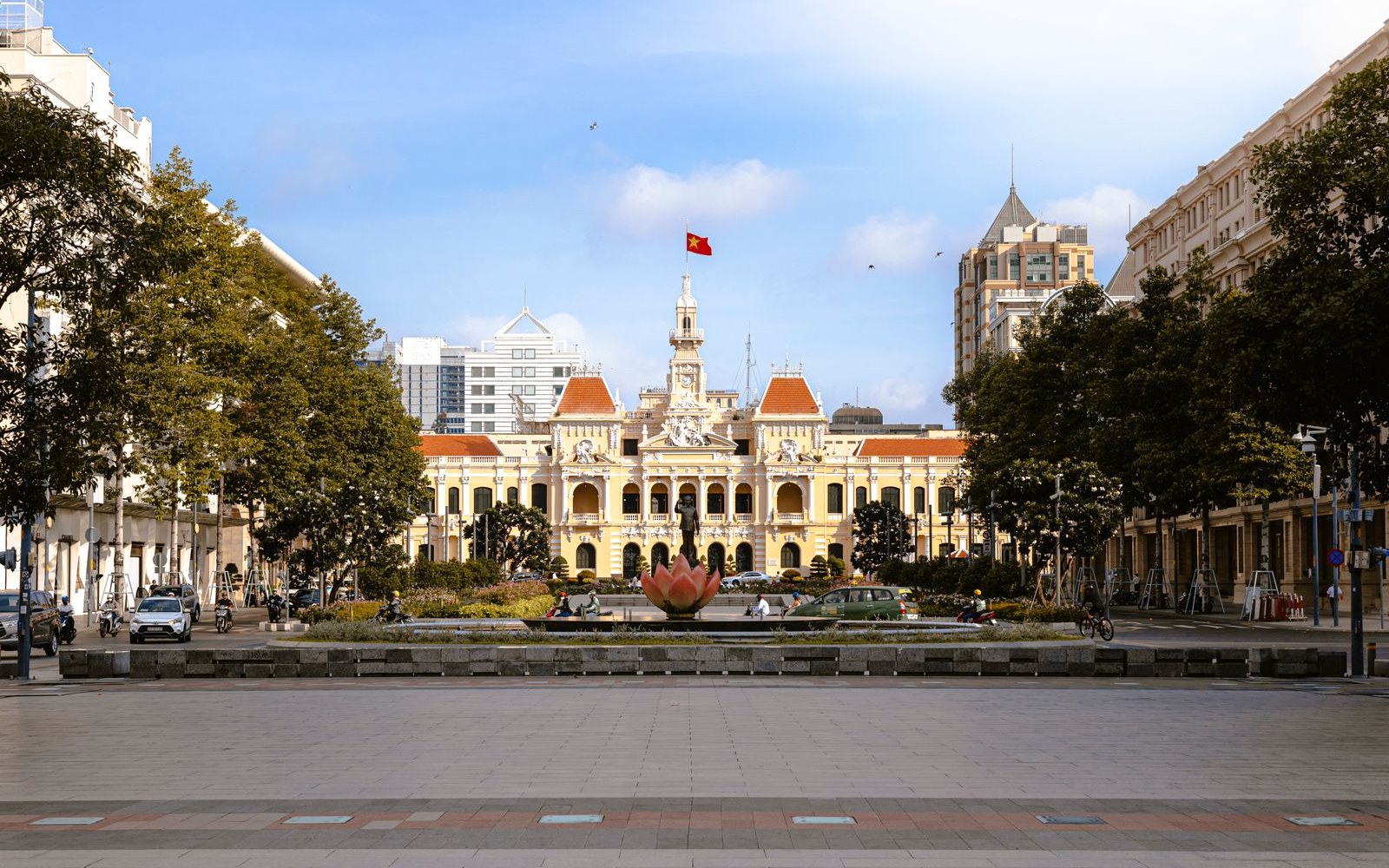
The Opera House stands at No. 7 Lam Sơn Square, facing Đồng Khởi, about seven minutes on foot. Construction began in 1898 and the doors opened on 1 January 1900. It was built in the Flamboyant style of the French Third Republic, hence a front thick with statues and lamps.
That façade has had an odd life. In 1943 its statues and decorations were stripped away. They came back only in 1998, restored for Saigon’s 300th anniversary. So the figures you photograph today spent more than half a century missing.
Holding tickets for an evening performance? For somewhere to sit beforehand, see where to find coffee near the Opera House before a show.
A little further: the cathedral and the post office
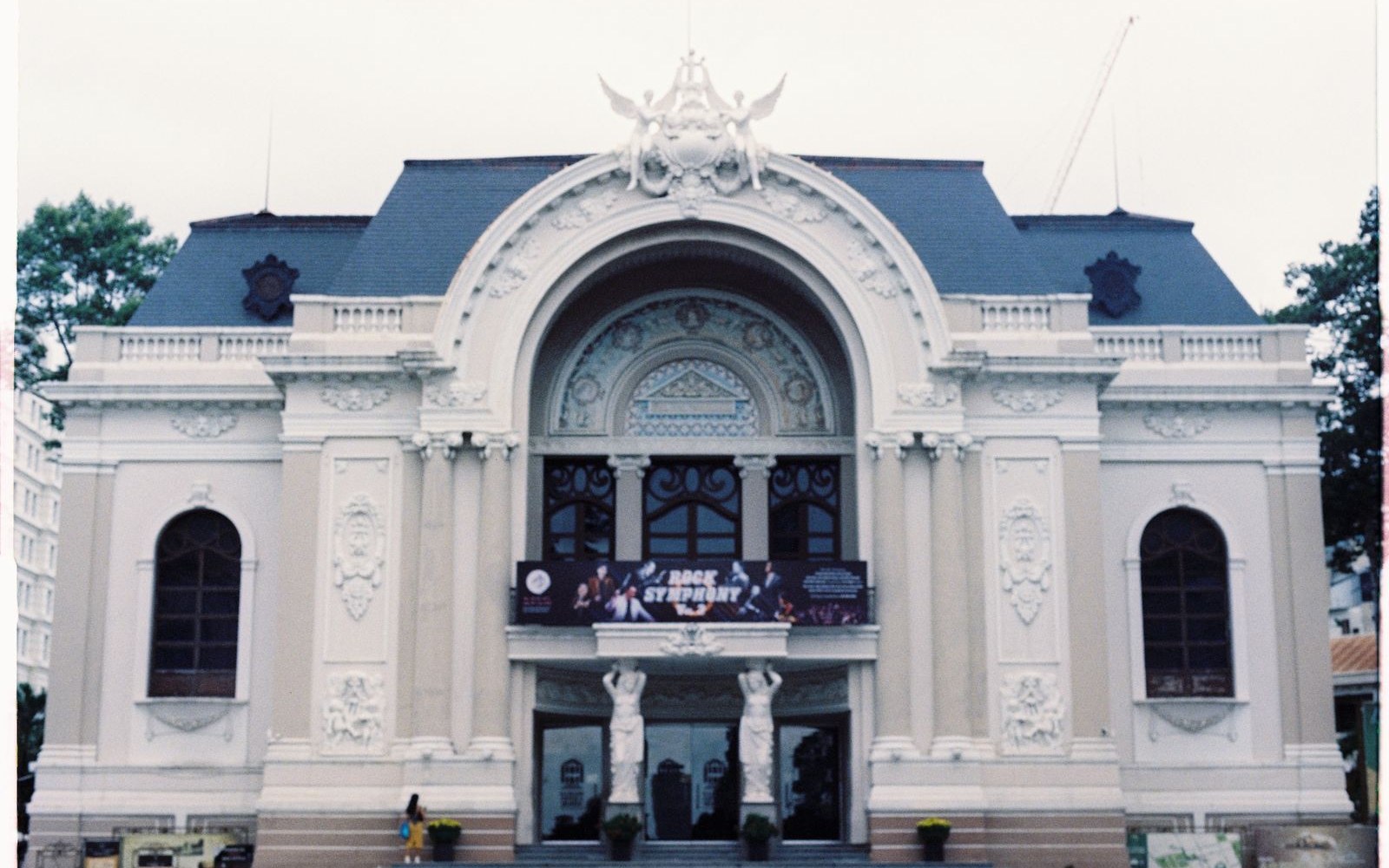
Keep walking up Đồng Khởi past the Opera House until the street runs out, and you arrive at Paris Commune Square, where Notre-Dame Cathedral and the Central Post Office stand side by side.
The cathedral’s first stone was laid on 7 October 1877, and it was blessed as complete on Easter Day, 11 April 1880. It is currently under restoration. Work began on 29 June 2017 and the latest estimate runs to 2027, so check opening arrangements before planning a visit inside.
Next door, the post office you see today went up between 1886 and 1891, replacing an earlier telegraph building. Step inside and look up: arched vaults resting on iron columns, with decorative ironwork almost everywhere. After a few days among the wrought-iron flower motifs at The Myst, it feels oddly familiar.
Bến Thành Market: the edge of the circle
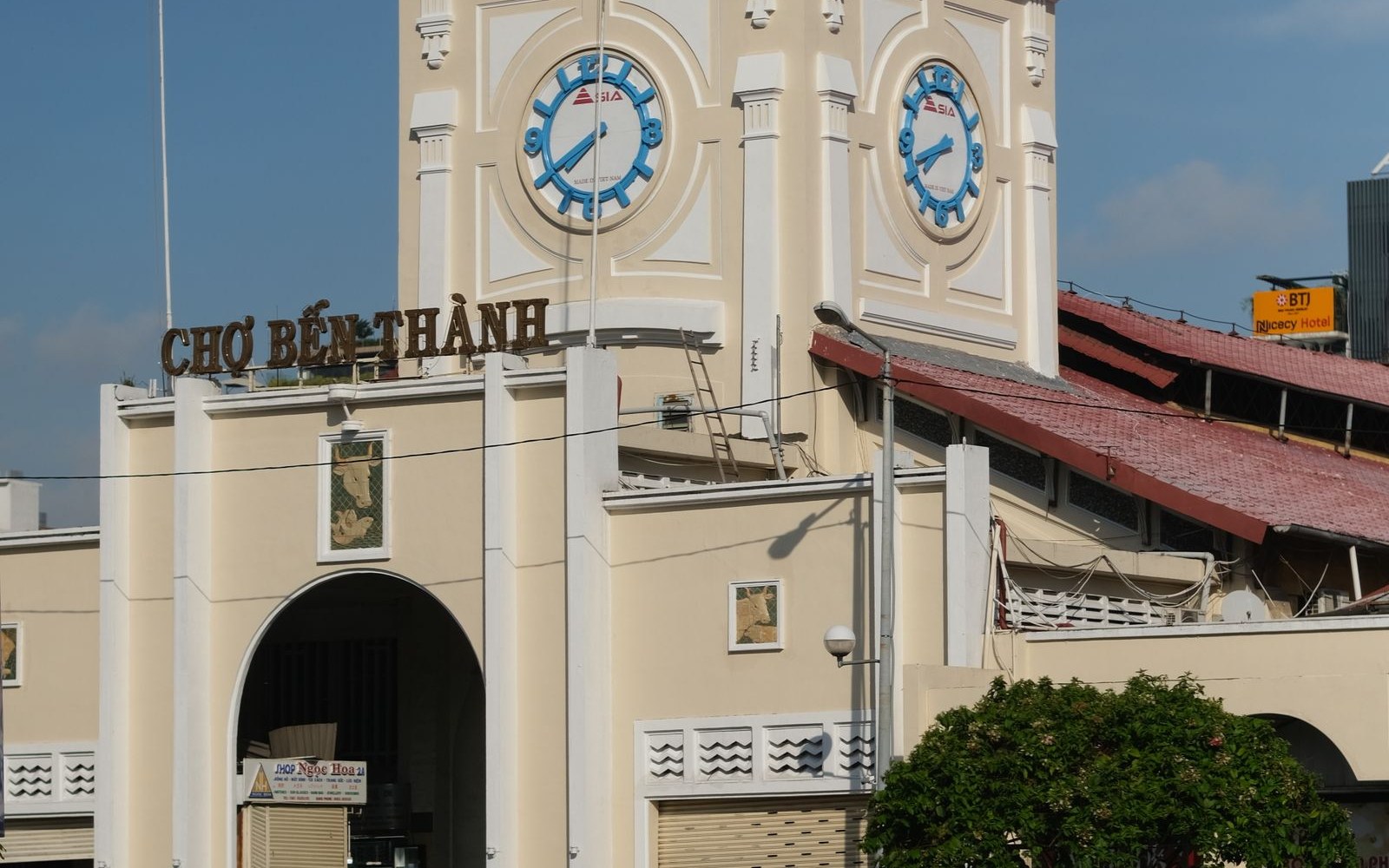
At 12 to 15 minutes, Bến Thành Market marks the outer edge of the walk. It was built between 1912 and 1914, and the clock tower over its south gate has become an unofficial emblem of the city. For more, read the century-old story of Bến Thành Market.
Fifteen minutes at seven in the morning is easy. Fifteen minutes at noon in April is another matter. If you leave late, walk to Opera House station and ride Line 1 one stop to Bến Thành station, beside the market. What to buy and how to bargain are covered in our practical guide to shopping at Bến Thành.
Two walks from the front door
Treat these as outlines. Linger wherever you like.
An early-morning loop
- Set off early. Walk along Hồ Huấn Nghiệp to Đồng Khởi, then turn so the river is at your back.
- The Opera House. About seven minutes in. Look at the façade while Lam Sơn Square is still empty.
- Cathedral and post office. Continue to the top of Đồng Khởi. If the post office has opened, go in for the vaulted hall.
- Back via Nguyễn Huệ. Follow the walking street down to Bạch Đằng.
- Breakfast. From the river it is about five minutes back. Head up to The Nest on the 12th floor for the breakfast buffet, or take a coffee at Bason Café on the ground floor.
Late afternoon into evening
- Swim first. The 24-metre infinity pool on the 15th floor is open until 6:00 pm.
- Metro to Bến Thành. One stop from Opera House station. Photograph the clock tower once the heat has eased.
- Walk back. Around 12 to 15 minutes to the hotel.
- Close the evening. ROOTY Bar on the 15th floor stays open until 1:00 am, or KL Spa, inside the hotel itself, is open until 10:00 pm for tired feet.
Walking in the Saigon heat
Saigon is warm all year. The average temperature is about 28 °C, and the highest ever recorded, 40 °C, came in April. The dry season runs from December to April, with plenty of sun and little rain. The rainy season usually lasts from May to November, and a downpour caught mid-walk will soak you in no time.
- Pick your hours. Go before 9:00 am or after 4:00 pm, and keep the middle of the day for the pool or a nap.
- Pack light. A wide-brimmed hat, water and sunscreen, plus a folding umbrella in the rainy months.
- Mind your shoes. Wear soft, worn-in soles. The morning loop adds up to a fair number of steps.
- Crossing the road. Use the crossings, keep a steady pace and never stop or run halfway; motorbikes will judge your line and ride around you.
- Take a break. Head back to the hotel, where the sauna and steam room are open from 6:00 am to 8:00 pm. For aching feet, KL Spa offers Foot Reflexology; book on +84 909 375 438.
When the metro beats walking
Metro Line 1 opened on 22 December 2024. It runs for 19.7 km with 14 stations, and the first three, Bến Thành, Opera House and Ba Son, are underground.
Two situations call for it. One is a scorching midday when you still want to see Bến Thành. The other is a trip just outside the circle, to the old Ba Son shipyard for instance: about a kilometre, or 15 to 20 minutes on foot, against a single stop by train from Opera House station. The yard has gone, but two centuries of Ba Son shipyard history are worth reading first.
Frequently asked questions
How long is the walk from The Myst Dong Khoi to Nguyễn Huệ walking street?
About four minutes. A one-minute walk along Hồ Huấn Nghiệp street brings you to Đồng Khởi, and Nguyễn Huệ is a few minutes further on: a pedestrian street 670 metres long and 64 metres wide since it was rebuilt in 2015. The Bạch Đằng riverside on the Saigon River is only about five minutes from the hotel.
Can you walk to Bến Thành Market from the hotel?
Yes. Bến Thành Market is about 12 to 15 minutes on foot, the furthest point in the hotel’s walking circle, and easy early in the morning. In the midday heat, ride Metro Line 1 from Opera House station one stop to Bến Thành station, which is right beside the market.
What is the nearest metro station to The Myst Dong Khoi?
Opera House station on Metro Line 1 is the closest. One stop towards the terminus brings you to Bến Thành station, beside the market; one stop in the other direction is Ba Son, near the site of the old shipyard. Line 1 opened on 22 December 2024 and runs for 19.7 km with 14 stations.
When is the best time to walk around central Saigon?
Early morning, before about 9:00 am, and late afternoon once the sun has softened are the most comfortable times. The city averages around 28 °C, the dry season runs from December to April and the rainy season usually from May to November. At midday, the hotel’s 15th-floor pool is open from 6:00 am to 6:00 pm.
Is Saigon’s Notre-Dame Cathedral under restoration?
Yes. Restoration of Notre-Dame Cathedral began on 29 June 2017, and the latest estimate is that the work will continue until 2027. You can still see the building from Paris Commune Square, at the top of Đồng Khởi street beside the Central Post Office. If you want to go inside, check the opening arrangements before you walk up.
When was the Saigon Opera House built?
Construction began in 1898 and the Opera House opened on 1 January 1900, in the Flamboyant style of the French Third Republic. Its façade statues and decorations were removed in 1943 and restored in 1998 for Saigon’s 300th anniversary. It stands on Lam Sơn Square facing Đồng Khởi street, about a seven-minute walk from The Myst Dong Khoi.
Stay a minute from Đồng Khởi
The Myst Dong Khoi is at 6-8 Hồ Huấn Nghiệp, Sài Gòn Ward. Walk to the cathedral in the morning, swim on the 15th floor at midday and watch the streets light up from ROOTY Bar at night, all without calling a car. Every room has a balcony for putting your feet up.
Curated by Silverland Hospitality.
Others
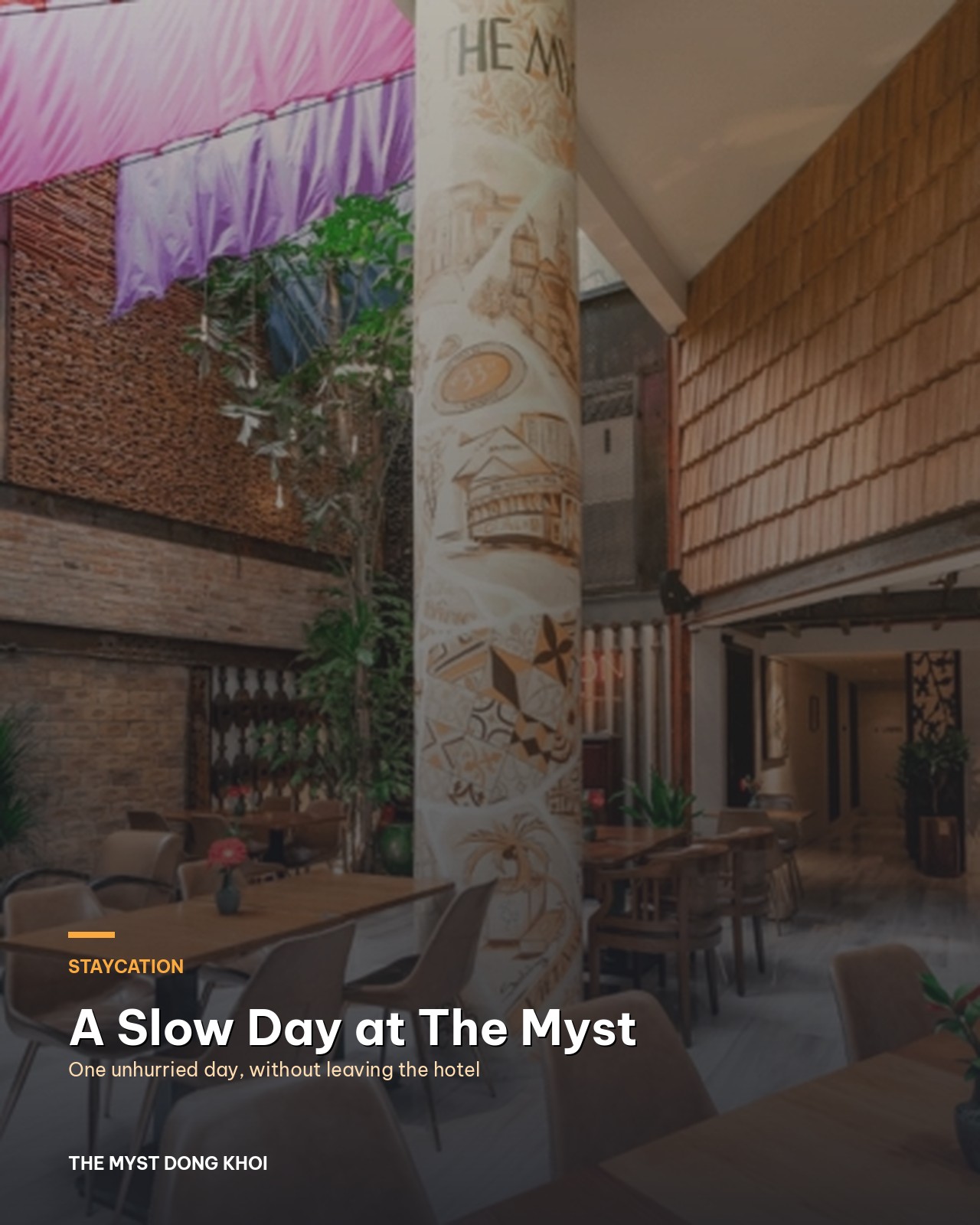
A hotel staycation in Saigon: one slow day without leaving The Myst Dong Khoi
Half past nine on a Saturday, and the hardest decision so far is whether to order a second coffee at...

KL Spa: a hotel spa in District 1 for tired feet, stiff shoulders and slow evenings
It is eight in the evening and you are walking back from Nguyễn Huệ walking street. You have been on...

A rooftop pool hotel in District 1: swimming, sauna and gym at The Myst Dong Khoi
Six in the morning, and the lift doors open on the 15th floor. Nobody has touched the water yet. Down...
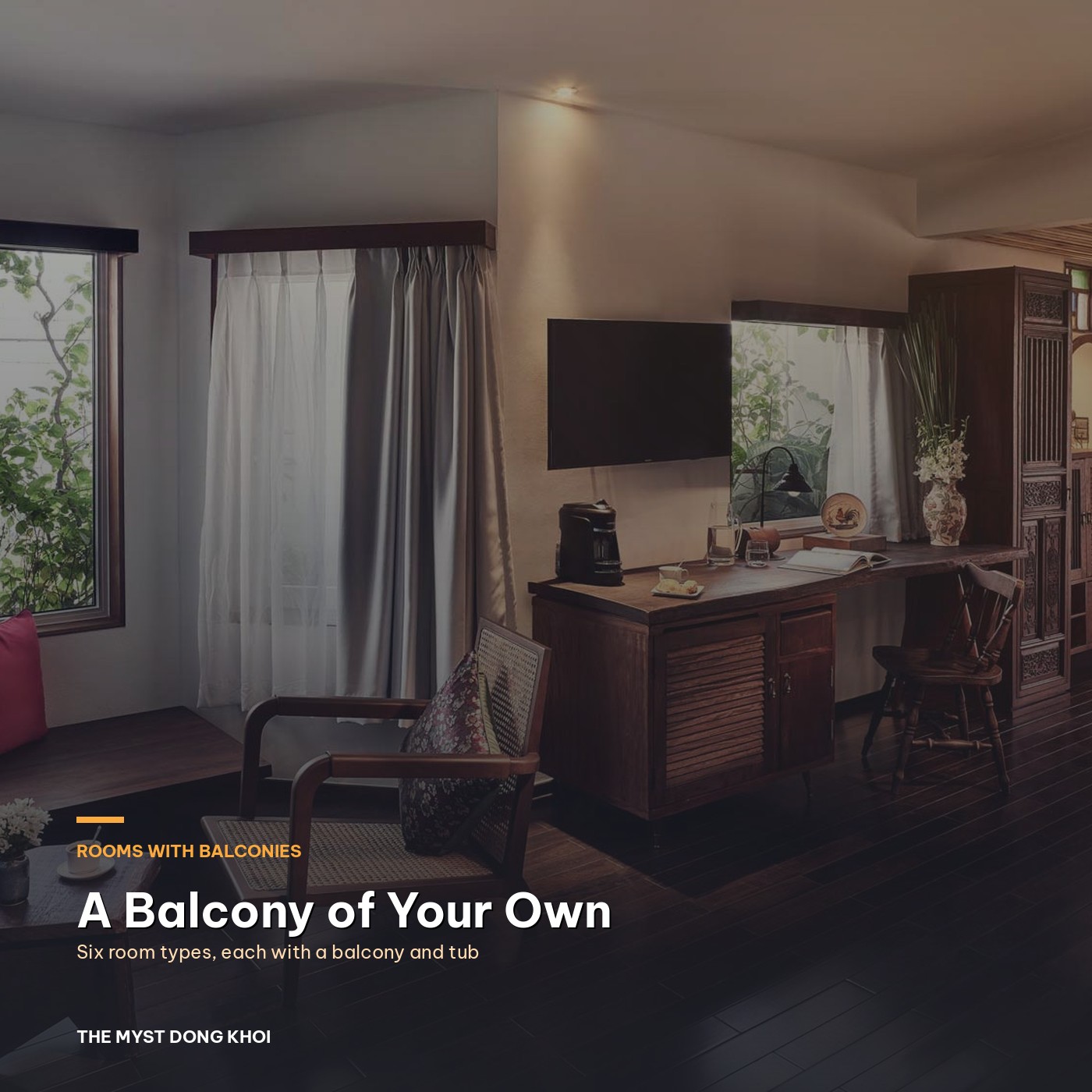
Choosing a hotel room with a balcony in Saigon: the six room types at The Myst Dong Khoi
Six in the morning, and the glass door slides back onto the balcony. The leaves in the planters are still...
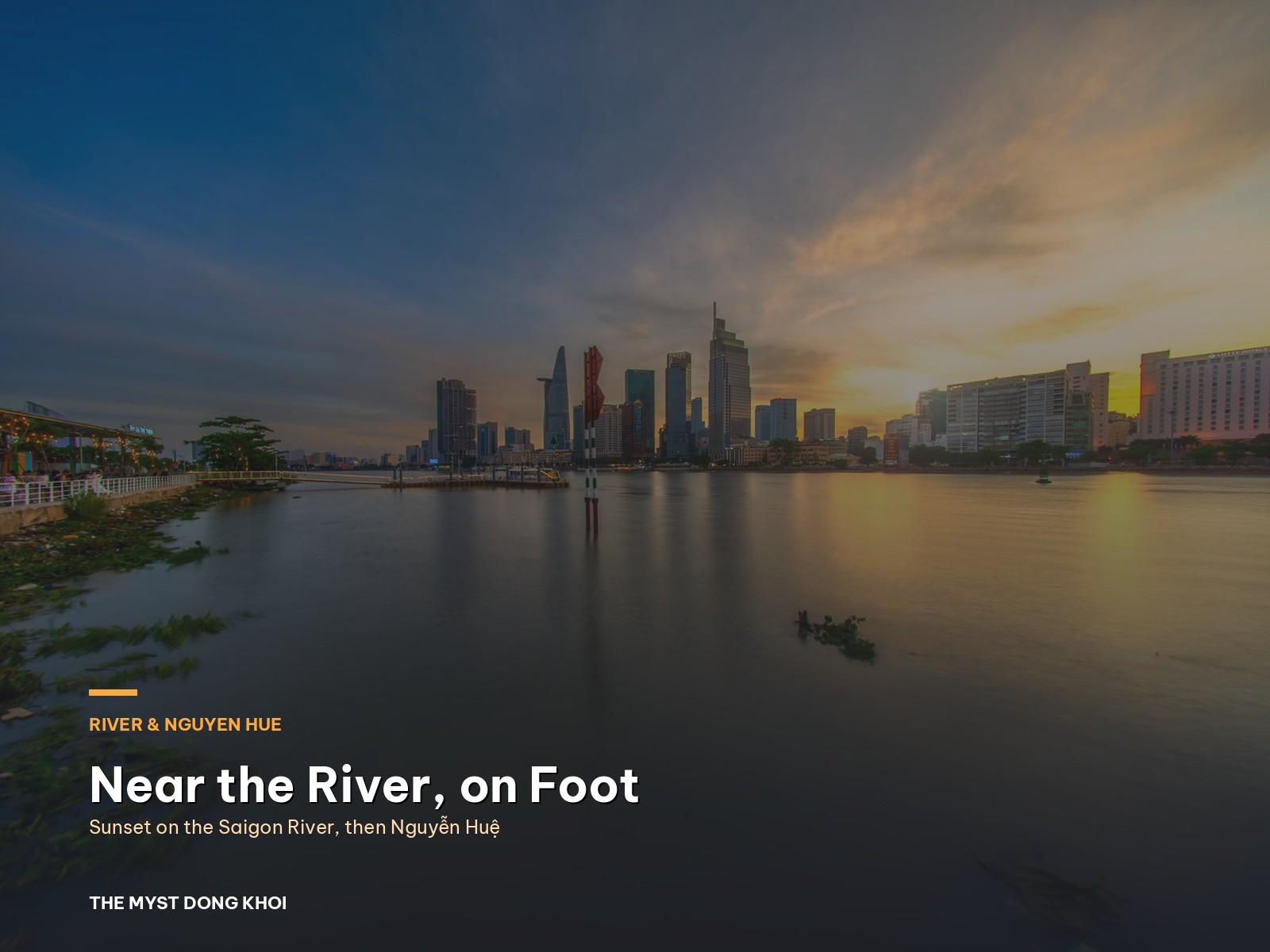
A hotel near the Saigon River and Nguyễn Huệ: one evening on foot
By five o’clock the sun has started to ease off Hồ Huấn Nghiệp. It is a minute’s walk to Đồng...
A hotel near the Saigon River and Nguyễn Huệ: one evening on foot
By five o’clock the sun has started to ease off Hồ Huấn Nghiệp. It is a minute’s walk to Đồng...