
How to Choose a Restaurant for a Business Meeting in Saigon
A meeting held over a good table has a way of going better than one held across a desk. The setting relaxes people, the pace slows a little, and the conversation finds room to breathe. But the wrong room can undo all of that: a table wedged beside a loud one, a kitchen that lands […]

A meeting held over a good table has a way of going better than one held across a desk. The setting relaxes people, the pace slows a little, and the conversation finds room to breathe. But the wrong room can undo all of that: a table wedged beside a loud one, a kitchen that lands the main course mid sentence, a menu that leaves your guest with nothing to order. This is a practical guide to picking the right venue for a business meeting in Saigon, built around five criteria that matter more than the star rating, with a note on when a private room earns its keep.
At a glance. A good restaurant for a business meeting needs five things: a central, easy to reach location; a room quiet enough to actually talk in; service that is attentive but reads the timing; a menu flexible enough for any guest; and an impression that reflects well on you without shouting. In central District 1, The Nest on the twelfth floor of The Myst Dong Khoi fits the brief, with meeting rooms on hand when the group grows.
Table of Contents

What a good meeting venue really needs
Start by being honest about what the meal is for. You are not choosing a restaurant to eat at so much as choosing a room to hold a conversation in, one where money, trust or a decision might change hands. The food matters, but it is the supporting act. What you are really buying is an hour where your guest feels at ease, can hear every word, is not distracted, and comes away with a quiet sense that you chose well.
That reframes the whole shortlist. The flashiest place in town is often the worst choice for this: too loud, too crowded, too busy performing. The five criteria below are the ones that actually move the needle, roughly in the order they tend to matter.
1. Location and access
The venue should be easy for your guest to reach, not for you. If they are coming from an office in the Đồng Khởi business area or from a hotel nearby, a central address in District 1 saves everyone the awkward apology for arriving late and flustered. A place within a short walk or a five minute cab of the main business cluster is worth more than a celebrated spot half an hour out in traffic.
Think about the practical edges too. Is there somewhere to park, or a clear drop off point for a car? Is the entrance obvious, or will your guest be circling the block? For partners flying in, proximity to their hotel counts, and being able to point them toward comfortable accommodation nearby is a small courtesy that lands well. The easier the arrival, the better the mood when everyone sits down.
2. A room you can talk in
This is the criterion people underrate most, and regret most. A business conversation needs two things a busy restaurant rarely gives you: low enough noise that you can hear a soft voice across the table, and enough space between tables that the one beside you is not sharing your discussion. If you find yourself leaning in and repeating figures, the room has already failed you.
Listen for it when you scout. Hard floors, bare walls and a packed floorplan make an echo chamber. Carpet, drapes, upholstery and generous spacing soak sound up. A calm room also lets you keep things discreet, which matters when the numbers or the names on the table are not for the neighbours. If the meeting is lighter, a first introduction rather than a negotiation, a relaxed afternoon tea in a quiet room can carry the conversation just as well as a full lunch, at a gentler pace.
3. Service that gets the timing right
Good meeting service is felt more than seen. The water is refilled without a word, the plates clear at a natural pause, and nobody appears to take the order the moment you reach the crux of the discussion. Bad timing can quietly wreck an hour: a server hovering, a dish that arrives when you need both hands free, a bill that takes twenty minutes to settle while your guest checks their watch.
What you want is attentive but unobtrusive, and reliable on the clock. If you have ninety minutes before your guest is due back at their desk, the kitchen has to hold that pace. It helps to say so quietly when you book, along with anything else that matters. A team used to hosting working lunches will read the room without being asked, and that instinct is worth seeking out.
4. A menu that suits everyone
You rarely know in advance exactly how your guest eats. Someone may be vegetarian, someone may avoid pork or shellfish, someone may want nothing heavier than a salad before an afternoon of meetings, and someone may relax fully and expect a proper lunch. A menu that flexes across all of that, without a fuss, spares everyone an awkward moment.
Look for range and adaptability rather than a long list. A kitchen that moves easily between Vietnamese and Western dishes gives every guest something familiar and something to try. A few genuine vegetarian options, and a willingness to adjust a plate, signal a place that hosts guests rather than just feeds them. A considered wine list matters too: sometimes a shared glass sets the right tone, and sometimes the meeting stays dry, so the option should be there without being pushed. When in doubt, a lighter format is the safer default for a first meeting.
5. The right impression
The venue speaks for you before you say a word. You want it to say considered, established and quietly confident, not extravagant. Overspending on a first meeting can read as trying too hard, or worse, as a signal you expect something in return. The aim is a setting that makes your guest feel respected and comfortable, and reflects a business that pays attention to detail.
A view helps, in the sense that it gives the eye somewhere pleasant to rest during a pause, and a well kept room does the quiet work of suggesting you take care with things. But the real impression is made by the fit: the right level of formality for the relationship, a room that matches the seriousness of the conversation, and an ease that lets your guest focus on you rather than the surroundings.
When to book a private room
A regular table is fine for most meetings. But there are moments when a private room, or a properly equipped meeting room, is worth the extra arrangement. Reach for one when the discussion is genuinely confidential, when you need to lay out documents or run a short presentation, when the group is larger than four or five, or when you simply cannot risk being interrupted or overheard.
The trade off is atmosphere. A private room is more controlled but less warm, and for a relationship you are trying to build gently, the softer setting of a good table can serve you better. A useful rule of thumb: if the meeting is mostly about people, take a quiet table; if it is mostly about content, confidentiality or numbers, take the room. Many central hotels, including The Myst Dong Khoi, keep meeting rooms for exactly the larger or more formal case, so you can scale up without changing venue.
Meeting at The Nest
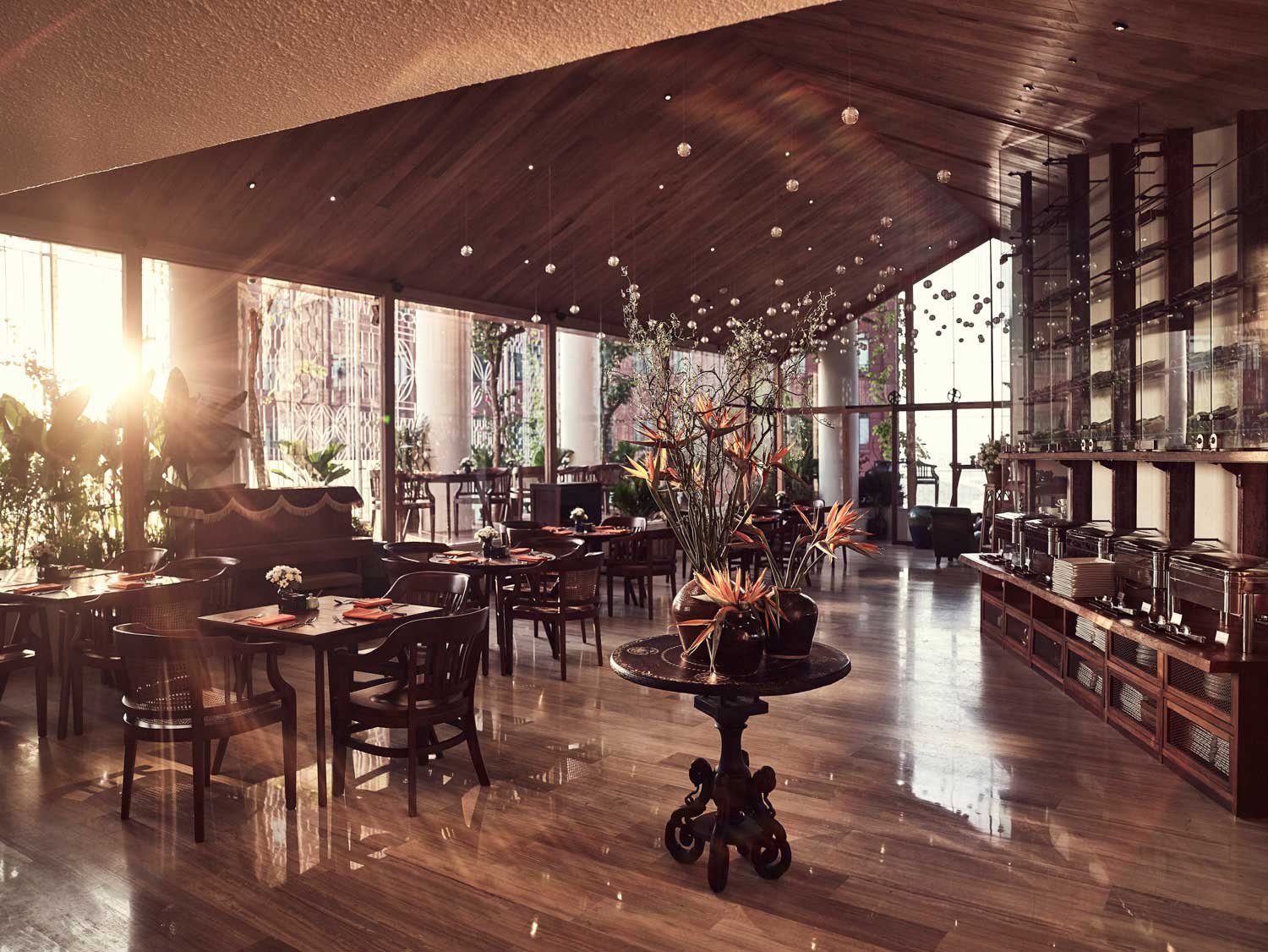
The Nest sits on the twelfth floor of The Myst Đồng Khởi, on Hồ Huấn Nghiệp in the heart of District 1, a short walk from the Đồng Khởi business area. Measured against the five criteria, it holds up well. The location is central and easy to reach; the room is calm and well spaced, the kind of place a conversation can actually happen, with wrought iron flower frames at the windows and the city and Saigon River below.
Service is discreet and attentive, and the kitchen works in a Vietnamese local fusion and Western style that gives mixed guests room to choose, with around forty five wines should a glass suit the occasion.
For a full working lunch, the restaurant serves through the middle of the day. For a lighter first meeting, afternoon tea offers a slower, gentler setting, and our note on the occasions that suit afternoon tea in a hotel covers where a working catch up fits. When the group is larger or the agenda more formal, the hotel has meeting rooms to hand. The simplest way to get the details right, from timing to any dietary needs, is to tell the team what the meeting is when you arrange the table.
Frequently asked questions
What makes a restaurant good for a business meeting?
Five things matter most: a central, easy to reach location; a room quiet and well spaced enough to talk and stay discreet; service that is attentive but reads the timing; a menu flexible enough for guests with different needs; and a setting that reflects well on you without being extravagant. The food is important, but the room and the service usually decide how the meeting goes.
Where is good for a business lunch in District 1?
District 1 has plenty of options, but for a working lunch you want somewhere central, calm and reliable rather than the busiest name in town. The Nest, on the twelfth floor of The Myst Dong Khoi on Hồ Huấn Nghiệp, is a short walk from the Đồng Khởi business area, with a quiet room, city views and a menu that spans Vietnamese and Western dishes.
Is a business lunch or dinner better for a first client meeting?
A lunch is usually the safer choice for a first meeting. It is shorter, more relaxed, easier to keep professional, and comes with a natural end when everyone returns to work. Dinner suits a relationship that is already warmer, or a moment worth marking. For a very first introduction, an even lighter format such as afternoon tea can work well.
When should I book a private room instead of a table?
Choose a private or meeting room when the discussion is confidential, when you need to lay out documents or present, when the group is larger than about four or five, or when an interruption would be costly. For a relationship you are still building, a quiet table often feels warmer. Book the room when the meeting is mostly about content or numbers.
How do I handle guests with dietary needs at a business meal?
Choose a venue with a flexible menu that spans different styles and can adjust a dish, and mention any known needs quietly when you book. A kitchen that moves between Vietnamese and Western cooking usually has vegetarian and lighter options, so every guest finds something without a fuss. Asking in advance also spares an awkward moment at the table.
Can I hold a business meeting at The Nest at The Myst Dong Khoi?
Yes. The Nest is well suited to working lunches and quieter meetings, with a calm twelfth floor room, discreet service, city and river views, and a Vietnamese local fusion and Western menu. Afternoon tea works for a lighter first meeting, and the hotel has meeting rooms for larger or more formal groups. Let the team know what the meeting is when you arrange the table.
Arrange a business lunch or meeting at The Nest
The Nest sits on the twelfth floor of The Myst Đồng Khởi, a boutique heritage hotel in the heart of District 1, moments from the Đồng Khởi business area. Our team is glad to hold a calm table for a working lunch, arrange a lighter meeting over afternoon tea, or set up a meeting room for a larger group. Tell us what the occasion is and we will get the details right.
→ Discover dining at The Myst Dong Khoi
→ Stay with us and wake above the city
Crafted by Silverland Hotels.
Others
Marseille Roof Tiles: From the Clay Pits of Marseille to the Roofs of Saigon
In 2004, when a few damaged tiles were taken down from the roof of Notre-Dame Cathedral in Saigon, the words...
The Ba Son Shipyard: Two Centuries on the Saigon River
Ride Saigon’s Metro Line 1 out of Opera House station and the next stop is called Ba Son. Most passengers...
Old Saigon, detail by detail: inside a cultural design hotel Saigon can call its own
Turn off Đồng Khởi into Hồ Huấn Nghiệp street and within a minute you reach a tall building with greenery...
The Myst Dong Khoi awards: what each recognition tells you before you book
Stand on Hồ Huấn Nghiệp street in the early evening and look up. The windows and balconies of The Myst...
What Is a Cultural Luxury Hotel? How to Spot One Before You Book
It is eleven at night and you have seven booking tabs open for a trip to Saigon. Every hotel calls...

Wedding Color Palette 2026 and 2027: Six Schemes to Love
Color is the first decision that touches everything else. Before the flowers are chosen or the invitations are printed, a...